A NEW LOOK AT EXOPLANETARY HABITABILITY RAISES FUNDAMENTAL QUESTIONS ABOUT THE VERY NATURE OF PHOTOSYNTHESIS AND LIFE BEYOND EARTH.
The core of the issue lies in the specific quality of light emitted by red dwarf stars, the most common type in our galaxy. While these stars appear to offer a potentially vast number of habitable planets, recent analyses suggest their light spectrum may be insufficient to power the fundamental process of photosynthesis. This could mean that even if planets orbit within a red dwarf's "habitable zone," the building blocks for complex, oxygen-producing life, as we understand it, might be absent.
THE "RED LIMIT" OF PHOTOSYNTHESIS
The challenge isn't simply about the amount of light, but its specific wavelength and energy. Red dwarfs emit a disproportionately large amount of infrared light compared to stars like our Sun. Photosynthesis, the process by which plants convert light energy into chemical energy, relies on specific wavelengths.
Insufficient Energy for Water Oxidation: Red dwarf light provides significantly less usable energy for water oxidation, a crucial early step in photosynthesis. This reaction is vital for the release of oxygen.
The "Red Limit": Life, even with extensive adaptation, may be fundamentally constrained by the "red limit." This suggests an inherent difficulty in evolving to efficiently utilize the dominant infrared wavelengths for the energy demands of complex photosynthesis.
Comparison to Our Sun: In contrast, stars like our Sun emit a broader spectrum of light, including more energy in the wavelengths crucial for photosynthesis, making them more "efficient" power sources for plant life.
IMPLICATIONS FOR ALIEN LIFE AND CIVILIZATIONS
The findings cast a shadow over the long-held optimism surrounding red dwarf systems as prime candidates for extraterrestrial life.
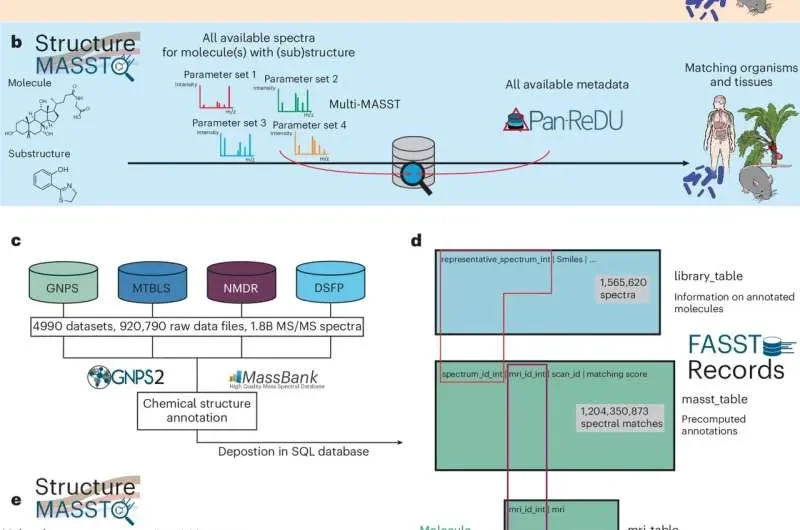
Read More: New StructureMASST tool helps find molecules in samples
Reduced Potential for Complex Ecosystems: If photosynthesis is significantly hampered, the development of complex ecosystems, reliant on a robust energy foundation, becomes less probable.
Debate on Advanced Civilizations: This raises questions about the likelihood of advanced civilizations arising around red dwarfs, as complex life often serves as a precursor. The conditions for life, let alone advanced life, could be extraordinarily rare in such systems.
Beyond Tidal Lock: While research continues on various factors influencing habitability, such as tidal locking, the fundamental limitations of light quality present a distinct and significant hurdle.
BACKGROUND: THE SEARCH FOR HABITABLE WORLDS
Red dwarf stars have long been a focus of exoplanet research due to their sheer abundance. Their smaller size and dimmer nature mean that a planet can orbit much closer to the star and still reside within the theoretical "habitable zone"—the region where liquid water could exist on the surface. This proximity, however, also exposes planets to potentially harsh stellar activity, including flares, which further complicates habitability. This new research adds another layer to the complex equation of finding life beyond our solar system, shifting focus from mere proximity to the fundamental quality of the energy available.