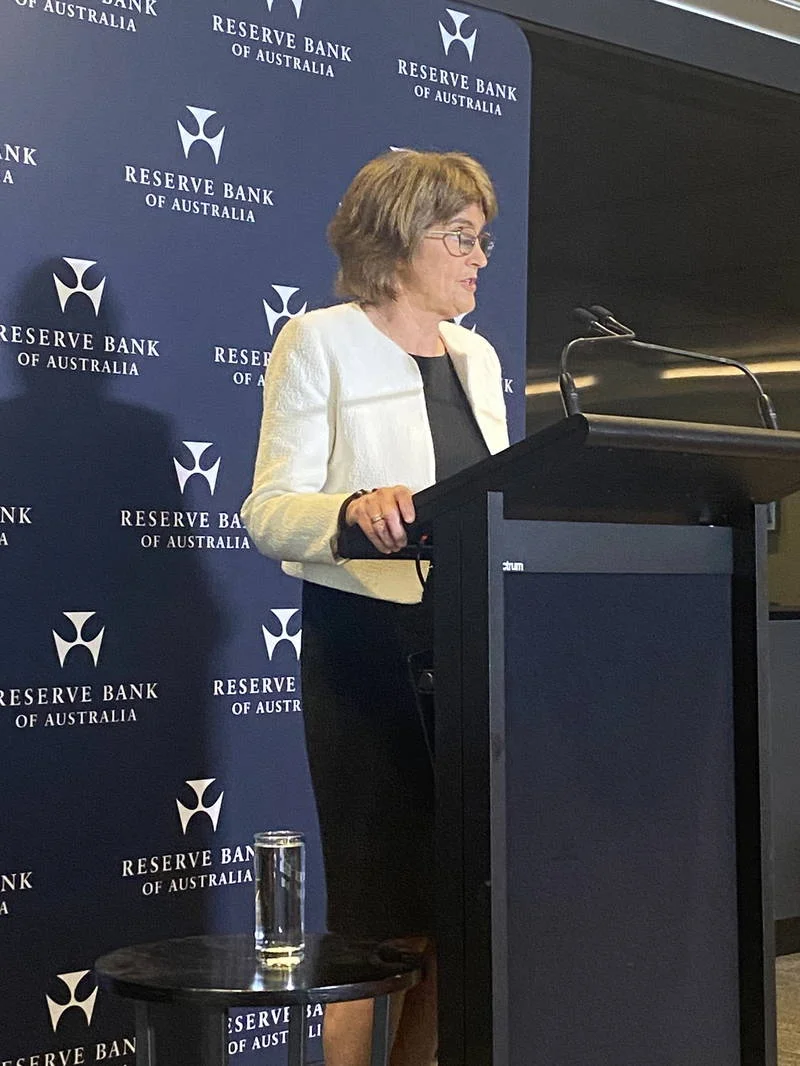
The Reserve Bank of Australia (RBA) has once again tightened its grip on the nation's purse strings, raising the official cash rate to 3.85 per cent. This marks the first such increase in over two years, a move Governor Michele Bullock insists was a "right thing to do" to combat stubbornly high inflation. But for millions of Australians already grappling with the rising cost of living, this decision feels less like a responsible measure and more like a fresh blow to their already strained budgets. The central bank's rationale centers on inflation being "too strong" and expected to remain above the target band for longer than anticipated. Yet, amidst this assertion of control, a disquieting undercurrent of uncertainty prevails: what comes next, and at what human cost?
A History of Shifting Sands: RBA's Recent Policy Rollercoaster
The RBA's path to this rate hike has been anything but a straight line, leaving many to question the consistency and foresight of its monetary policy decisions. We've seen a recent history of holding rates steady, then a surprise decision to keep rates on hold in July 2025, defying economists' expectations of a cut. This was followed by a pivot, with Governor Bullock even putting a rate hike on the table in December 2025, signaling a shift in their stance. Now, just months later, the unexpected hike has arrived.
Read More: Retirees Need Cars But Worry About Money
July 2025: RBA holds rates at 3.85%, surprising many who expected a cut. Governor Bullock cited the timing of upcoming inflation data and the proximity of the next decision as factors.
December 2025: Governor Bullock signals potential for future rate hikes, moving away from any talk of further cuts.
February 2026: The RBA unanimously hikes rates for the first time in over two years, citing persistent inflation.
This fluctuating approach begs the question: Is the RBA genuinely adapting to a complex economic landscape, or are its decisions driven by reactive measures that create more instability than they solve?
Inflation: The Villain, But Is the Cure Worse Than the Disease?
Governor Bullock's primary justification for the rate increase is the persistent strength of inflation. The RBA's Monetary Policy Board concluded, unanimously, that inflation has surged since mid-2025 and will likely linger above the 2-3 per cent target band for an extended period. The report highlights several contributing factors:
Read More: Superquiz Puzzles Are Still Available for Subscribers
Stronger-than-expected household spending: Australians, despite cost-of-living pressures, are still spending more than anticipated.
Robust investment and housing activity: These sectors are also contributing to demand-side inflationary pressures.
Bullock herself acknowledged the "pain" this will cause for borrowers, stating, "leaving inflation unchecked would ultimately be worse for households and the broader economy." But is this an accurate assessment of the trade-offs?
| Factor | RBA's Stance | Potential Downside |
|---|---|---|
| Inflation Control | Primary objective, preventing long-term damage. | Immediate financial hardship for mortgage holders, potential drag on economic growth. |
| Interest Rate Hikes | Necessary tool to curb spending and cool demand. | Increased borrowing costs, reduced disposable income, risk of pushing struggling households into insolvency. |
| Labour Market | Aim to preserve hard-won gains. | Will higher rates stifle job growth and lead to increased unemployment? |
The RBA is attempting to walk a "narrow path," balancing inflation control with safeguarding employment. But when the path is this narrow, and the consequences of a misstep so severe, one has to wonder if the RBA has the necessary precision instruments or if it's relying on a blunt hammer.
The Crystal Ball Remains Cloudy: Uncertainty About Future Moves
Perhaps the most unnerving aspect of the RBA's recent pronouncements is the palpable sense of uncertainty regarding future monetary policy. Governor Bullock, known for her aversion to providing forward guidance, seemed genuinely unsure about what the bank's next move will be. This lack of clarity is particularly troubling given the updated economic forecasts:
Read More: India's Market Rules Made Simpler to Help Businesses and Investors
Inflation Target: Inflation is not predicted to return to the 2-3 per cent band until June 2027.
Core Inflation: Core inflation is expected to take a further year, until mid-2028, to reach the middle of the target range.
Bullock herself contrasted the current situation with the post-COVID tightening cycle, noting, "it was quite clear that we had to go up and we had to go up quickly." Today's scenario, however, is different. The RBA is hiking rates when the economic picture is far from clear-cut.
Why the ambiguity? Is it a strategic play to keep markets guessing, or a genuine reflection of an unpredictable economic environment? And crucially, how does this uncertainty impact the financial planning and confidence of everyday Australians?
Political Fallout and the Government's Economic Narrative
The timing of this rate hike is particularly inconvenient for the current government. Having taken credit for bringing inflation under control in the lead-up to last year's federal election, this move now represents a significant blow to their economic credentials. Experts who warned that a rate hike would be an "overreaction" and risk derailing economic recovery are now looking prescient.
Read More: Protests in Melbourne During Israeli President's Visit
The RBA's decision directly impacts mortgage holders, a large segment of the population. The narrative that inflation was "under control" now seems premature, and the government may find itself having to explain why this is happening again, and what they are doing to mitigate the impact on their constituents.
The RBA's Core Function: A Glimpse Behind the Curtain
Understanding the RBA's role is crucial to deciphering these complex decisions. At its heart, the Reserve Bank is the "government's bank" and the "banker's bank." It facilitates interbank transactions, manages Australia's banknotes, and most importantly, sets the cash rate – the interest rate banks charge each other for overnight borrowing.
Interbank Transactions: Money moving between different banks goes through the RBA.
Monetary Policy Influence: The cash rate influences all other interest rates in the economy, from loans to savings.
Note Distribution: The RBA prints and distributes all of Australia's banknotes.
Read More: Money Spent, Project Slow: Questions About Sector 7G Funds
While these functions are essential for the smooth running of the economy, the RBA's recent policy actions raise fundamental questions about its effectiveness in managing inflation without causing undue hardship. Is the current monetary policy toolkit sufficient for the challenges ahead, particularly given the backdrop of weak productivity growth which, as Bullock noted, is "outside the remit of the central bank to fix"?
Conclusion: A Tightrope Walk with Unknown Destination
The RBA's decision to hike interest rates is a clear signal that inflation remains a significant concern. Governor Bullock stands by the decision, framing it as a necessary, albeit painful, measure to prevent greater economic damage down the line. However, the lack of clear forward guidance, coupled with forecasts indicating a prolonged period of elevated inflation, leaves a cloud of uncertainty hanging over Australia's economic future.
Read More: Many Protests Happen in Australian Cities
Are we witnessing a necessary recalibration of monetary policy in the face of unexpected economic headwinds, or a reactive move that could stifle growth and further strain household budgets? The "narrow path" the RBA is treading is fraught with peril, and the ultimate consequences of this latest rate hike remain to be seen. The critical questions now are:
How will the government respond to the political fallout and the perceived failure to maintain economic stability?
What specific measures, beyond interest rate adjustments, can be implemented to genuinely address the root causes of inflation and boost productivity?
And most importantly, how will everyday Australians, particularly those with mortgages, weather this prolonged period of economic pressure?
The RBA has made its move. Now, all eyes are on the unfolding economic reality and the ability of policymakers to navigate the challenges ahead without leaving too many people behind.
Read More: Northern Ireland Gets £400 Million for Health and Schools
Sources:
'Inflation is too strong': RBA hikes rates for first time in more than two years — as it happened
AS IT HAPPENED: RBA hikes rates, but not sure what comes next
RBA interest rates decision: Reserve Bank increases cash rate to 3.85% in blow to mortgage holders
AS IT HAPPENED: RBA shocks economists with interest rate call
RBA governor puts rate hike on table, says no more cuts on the horizon — as it happened