


Recent analyses cast a critical eye on Chancellor Rachel Reeves's performance, highlighting concerns about economic growth, tax policy, and the handling of official information. A series of reports and commentary suggest that her decisions are facing significant headwinds and drawing sharp criticism from various quarters, raising questions about the long-term implications for the United Kingdom's financial standing.
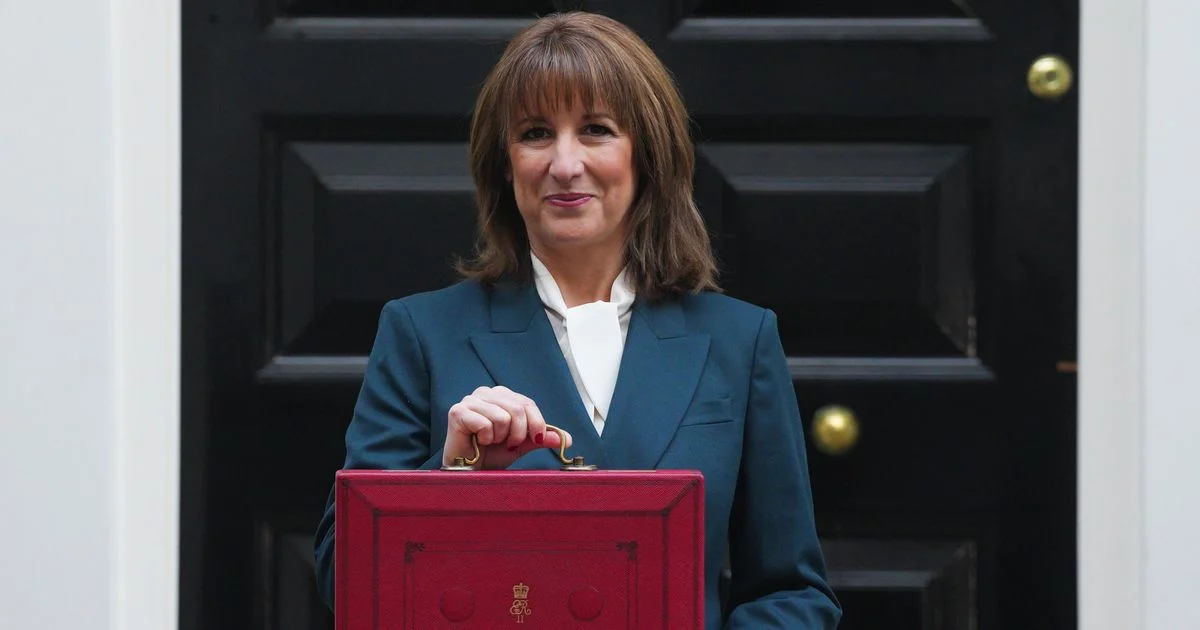
The period under review has seen a surge in commentary regarding Chancellor Rachel Reeves's policy choices and their perceived impact. From tax strategies to the management of governmental communication, a consistent theme emerging is that of significant challenges and public debate. Specific attention has been drawn to her approach to taxation, with some experts positing that certain measures could stifle economic expansion. Concurrently, a notable incident involving the premature release of official economic forecasts has led to investigations and questions about the integrity of information dissemination. These events, alongside broader discussions about the UK's economic direction in the post-Brexit era, have amplified the scrutiny on the Chancellor's leadership.
Read More: President Trump Asked Soldiers to Vote Republican at Fort Bragg
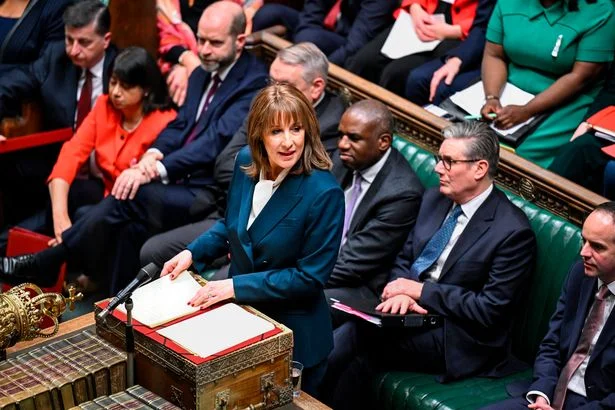
Key actors involved include Rachel Reeves, the Chancellor; the Office for Budget Responsibility (OBR), an independent fiscal watchdog; various political commentators and analysts; and the general public represented through media outlets.
Central events under examination include specific tax policies, a significant budget leak incident, and ongoing debates surrounding the UK's economic relationship with Europe.
Fiscal Policies and Economic Growth Concerns
A central point of contention revolves around Rachel Reeves's approach to taxation and its potential impact on economic growth.
Taxation Strategy: Some analyses suggest that Reeves has opted for a strategy of raising multiple smaller taxes rather than implementing a single significant one. This approach is viewed by some as a response to forecasts of limited fiscal headroom.
"The alternative route, chosen after some vacillation, is to carry on raising many small taxes instead of one big one." (Article 3)
Impact on Jobs and Workers: There are assertions that a specific tax measure, described as a "NI raid," has had a detrimental effect on jobs and working individuals, contradicting stated aims of protecting such groups.
"Her NI raid turned out to be a direct tax on jobs, and on the working people Labour had claimed to protect." (Article 1)
Expert Opinions on Tax Choices: A tax expert, Dan Neidle, is cited as viewing a particular tax as "the worst possible tax of all," indicating significant disagreement on its economic wisdom.
"Dan Neidle, a tax expert sympathetic to Labour, said this was the worst possible tax of all." (Article 1)
Doubts on Productivity Data: Concerns have been raised about the validity of data used to support economic strategies, such as the Northern Growth Strategy. Specifically, claims about regional productivity growth have been questioned by economists.
"Mr Swinney said: 'The UK’s productivity performance over the past 15 years has totally flatlined, impacting on money in people’s pockets and how prosperous they feel.' 'This data potentially complicates that picture further, rather than adding clarity on how we are going to get the economy firing again and how we are going to make people feel more prosperous.'" (Article 16)
OBR Budget Leak: "Worst Failure" and Investigation
An early leak of key budget details has resulted in significant repercussions for the Office for Budget Responsibility (OBR) and raised questions about the security of sensitive financial information.
Read More: It Will Take Many Years for Men and Women to Earn the Same
OBR's Assessment: The OBR itself has characterized the incident as its "worst failure" in its 15-year history. The reasons cited for this significant lapse were reportedly related to IT issues.
"The Budget watchdog has said the early leak of key details of Rachel Reeves's speech was not a case of 'intentional leakage'. The Office for Budget Responsibility (OBR) declared it as the 'worst failure' in the organisation's 15-year history with the reason behind the blunder revealed to be related to IT issues." (Article 2)“It is the worst failure in the 15-year history of the OBR.” (Article 2)
Resignation of OBR Chair: The chair of the OBR, Richard Hughes, resigned in the wake of the incident, stating his action was intended to "restore confidence" in the organisation.
"Richard Hughes says budget mistake was 'technical but serious error' and he's resigning to help 'restore confidence in OBR'" (Article 6)
Parliamentary Discourtesy: The premature release of the budget details was officially deemed a "massive discourtesy to Parliament."
"It was a serious error, there’s an investigation that’s going on. It was a massive discourtesy to Parliament." (Article 2)
Rejection of Misleading Claims: Despite the early release of forecasts, an OBR official has stated that Reeves's speeches did not intentionally mislead the public regarding the UK's financial challenges.
"Reeves has rejected claims she misled the public about the country's finances after the OBR's economic forecasts revealed they were better than widely thought." (Article 17)
Brexit's Lingering Impact and International Relations
The ongoing discourse surrounding the United Kingdom's relationship with the European Union and its post-Brexit economic landscape has also become a focal point, with Rachel Reeves's remarks on the matter drawing strong reactions.
Read More: New Cabinet Secretary Pick Faces Questions
"Brexit Betrayal" Accusations: Statements suggesting closer ties with Europe have led to accusations of a "Brexit betrayal," with some critics arguing that Britain's future is "inextricably bound with that of Europe."
"Rachel Reeves sparks major Brexit betrayal row after declaring 'Britain's future lies with Europe'" (Article 8)"Reform UK claimed the Chancellor's remarks was a sign the 'betrayal is underway'" (Article 8)
Economic Realities of Trade: Commentators point to the significant portion of UK trade with the EU as an undeniable economic reality, suggesting that political positions may be at odds with these fundamental dependencies.
"The truth is, economic gravity is reality, and almost half of our trade is with the European Union." (Article 8)
Potential Trade Deal Implications: There are concerns that closer alignment with EU regulations could jeopardize trade relations with other major economies, such as the United States.
"It would also risk provoking Donald Trump and torpedoing a trade deal with the world’s largest economy." (Article 7)
Economic "Hole" Attributed to Brexit: Some analyses attribute the UK's economic difficulties directly to Brexit, describing it as a "Brexit-shaped hole" impacting national prosperity.
"Reeves and Keir Starmer could see the problem when they arrived in office last year, which is why they made growth their paramount objective. Of course it is: there’s a great big hole in the roof. Britons are that family – and the giant hole in the roof is Brexit." (Article 5)
Personal Conduct and Accountability
Beyond policy decisions, a separate incident concerning property regulations has also led to public scrutiny of Rachel Reeves.
Read More: Australia May Change Taxes to Help Economy
Property Licensing Issue: Reeves faced questions regarding a property she let out, specifically the apparent lack of a required license. She stated she was unaware of the necessity for such a license.
"She let out her home through a letting agent and was not aware of the problem before Wednesday." (Article 4)
Receipt of Apology and Confidence: Keir Starmer accepted an apology from Reeves regarding the matter and publicly stated his full confidence in her. However, subsequent information emerged suggesting emails had indicated a license was necessary.
"Keir Starmer accepted an apology from Reeves, who said she had not known a licence was required, and declared the matter closed. On Thursday, his official spokesperson said he had full confidence in Reeves." (Article 4)
Comparison to Public Accountability: This personal situation has been contrasted with the accountability expected of the public, with one article drawing a parallel to an individual who had to repay a significant sum due to a similar licensing oversight.
"I do not see why Rachel Reeves should escape the repercussions that others like me are subjected to." (Article 13)
Broader Criticisms and Calls for Resignation
Overall, the Chancellor's tenure has been characterized by a barrage of critical commentary, with some commentators suggesting her position is untenable.
Read More: UK Leader Says Voting Reform or Green Risks War
Incompetence and Untrustworthiness: Accusations of "economic illiteracy and untrustworthiness" have been leveled against Reeves, with some arguing she is unfit for her role.
"Rachel Reeves’ combination of economic illiteracy and untrustworthiness makes her unfit to be Chancellor." (Article 14)
"Shambolic Budget" Accusations: The handling of a recent budget has been described as "shambolic," with accusations of a humiliating U-turn on income tax plans.
"The Chancellor's lost control: Rachel Reeves accused of presiding over most shambolic Budget in history after humiliating U-turn on income tax hikes" (Article 15)
Calls for Resignation: There have been direct calls for Reeves to resign, with the argument that she should "put country first."
"It's time for her to put country first and resign What is to be done about Rachel Reeves?" (Article 14)
Perceived Inability to Balance Books: Some commentary suggests that internal party dynamics may be preventing Reeves from implementing necessary fiscal measures to restore credibility.
"Rachel Reeves wakes up to brutal truth that will destroy her – it's written on her face The Labour Chancellor is not in a good place. Labour won’t let her do what she knows she must, balance the books and restore credibility." (Article 9)
The Guardian: Provided in-depth analysis of economic policy, Brexit's impact, and the political maneuvering surrounding fiscal decisions.
The Express: Published several critical pieces focusing on alleged economic blunders and their potential to harm Britain.
The Daily Star & GB News: Reported on specific incidents like the OBR leak and the "Brexit betrayal" accusations.
The Daily Mail: Contributed commentary on the Chancellor's performance, including the property licensing issue and budget handling.
TaxResearch.org.uk: Offered a perspective on why the Chancellor had "failed the British public" economically.
BBC News: Reported factually on the OBR leak, the investigation, and the resignation of its chair.
Read More: Big Cricket Match Helps Sri Lanka's Money




)
