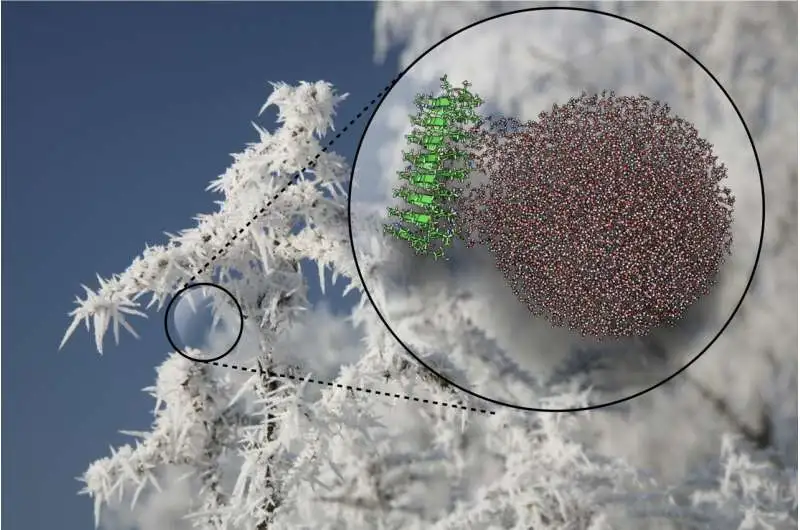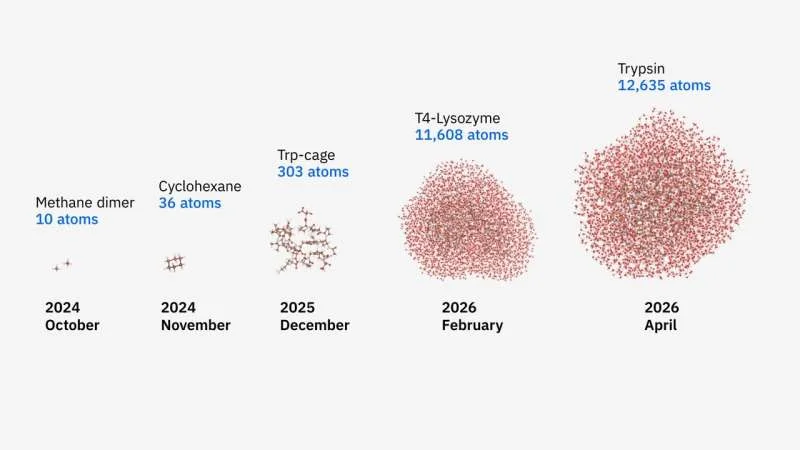
A new computational approach, dubbed 'quantum-centric supercomputing,' has achieved the simulation of a protein complex comprising 12,635 atoms. This marks the largest known molecular simulation performed using quantum hardware to date. The collaboration, involving researchers from Cleveland Clinic, RIKEN, and IBM, employed a heterogeneous quantum-classical workflow to tackle this complex chemical structure.
The core of this advancement lies in a hybrid strategy. Classical computers handle the less intricate parts of the molecular model, while quantum processors are deployed for specific, more challenging clusters. These quantum-intensive sections are where entanglement between atoms is strongest, a regime where traditional computational methods face significant accuracy limitations. The quantum computer then utilizes a technique called 'sample-based quantum diagonalization' (SQD) to process these complex regions.
The simulations modeled protein-ligand chemistry, specifically involving proteins like T4-Lysozyme and Trypsin in a liquid water environment. Researchers highlighted a dramatic improvement, citing a 40-fold increase in system size and a 210-fold gain in accuracy compared to benchmarks from just six months prior. This rapid scaling suggests that quantum computing is transitioning from experimental curiosity to a practical tool for scientific inquiry, particularly in the life sciences.
Read More: New Protein Tech Helps Make Ice Faster for Medicine

The workflow is designed to adapt as quantum hardware evolves. As quantum processors gain more qubits, reduce error rates, and deepen circuit capabilities, the quantum component of the workflow can handle increasingly difficult molecular clusters without requiring a fundamental redesign of the simulation strategy. This modularity is key to sustained progress.
This development signifies that quantum computing can now be considered a useful tool for real-world chemistry problems. The IBM Heron quantum processors, with up to 94 qubits in this instance, were instrumental in calculating the quantum-mechanical behavior of these fragments. This integration of quantum precision for specific computational demands represents a new paradigm in scientific simulation.

Background: The Shifting Landscape of Computational Chemistry
The pursuit of quantum computing for chemistry stems from the inherent difficulties classical computers face in accurately modeling molecular behavior. As the size and complexity of molecular systems increase, the computational resources required for precise electronic structure calculations escalate rapidly. This limitation has long constrained the scope of chemical simulations.
Read More: Delhi High Court Orders Apple to Cooperate in App Store Probe
The advent of quantum computing offers a potential solution by leveraging quantum phenomena like superposition and entanglement to perform calculations intractable for classical machines. The 'quantum-centric supercomputing' model, as described by IBM, represents an effort to bridge the gap between current quantum hardware capabilities and the demands of complex scientific problems. It optimizes resource allocation by using classical and quantum systems where they are most effective.
This latest simulation milestone builds upon recent progress in the field. The ability to model biologically meaningful molecules at this scale suggests a future where quantum computers could accelerate discoveries in drug development, materials science, and fundamental biological processes. The collaboration between academic institutions like Cleveland Clinic and RIKEN with technology giants like IBM underscores the multi-faceted effort required to advance this nascent technology.
Read More: Climate Projections Revised: 1.5°C Goal Now Unlikely