Recent discussions and published materials highlight a widening engagement with the intricate performance engineering of artificial intelligence systems, particularly focusing on the interplay between GPUs, CUDA, and optimized software frameworks like PyTorch. These conversations, amplified by meetups and technical documentation, underscore a collective push towards maximizing efficiency and minimizing computational costs in AI development.
The core of these discussions revolves around deeply technical aspects of AI hardware and software optimization. Key themes include:
GPU Architecture and Programming: Detailed exploration of NVIDIA's GPU architecture, including Tensor Cores, Transformer Engine, Streaming Multiprocessors, and the nuances of CUDA programming. This encompasses optimizing thread execution, memory hierarchies, occupancy, and leveraging advanced features like mixed precision and specialized libraries such as CUTLASS.
Distributed Training and Inference: Strategies for scaling AI models across multiple nodes and GPUs are central. This involves optimizing communication using NVLink, NVSwitch, and NCCL, understanding topology awareness, and implementing data parallelism for high-throughput training and low-latency inference.
Memory Management and Data Handling: Significant attention is paid to efficient memory utilization, both on-chip and in system memory. Techniques for overlapping computation with data transfers, optimizing data locality with technologies like NVIDIA GPUDirect Storage, and processing multi-modal data with NVIDIA DALI are discussed.
Software Optimization Frameworks: The role of PyTorch and its compiler,
torch.compile, is examined for performance tuning. Efforts to write custom kernels using OpenAI Triton and exploring backends like PyTorch XLA are part of this.Advanced Inference Techniques: Optimizations for generative AI, including disaggregated prefill and decode architectures, dynamic request batching, speculative and parallel decoding, and tuning KV cache utilization, are critical areas of focus.
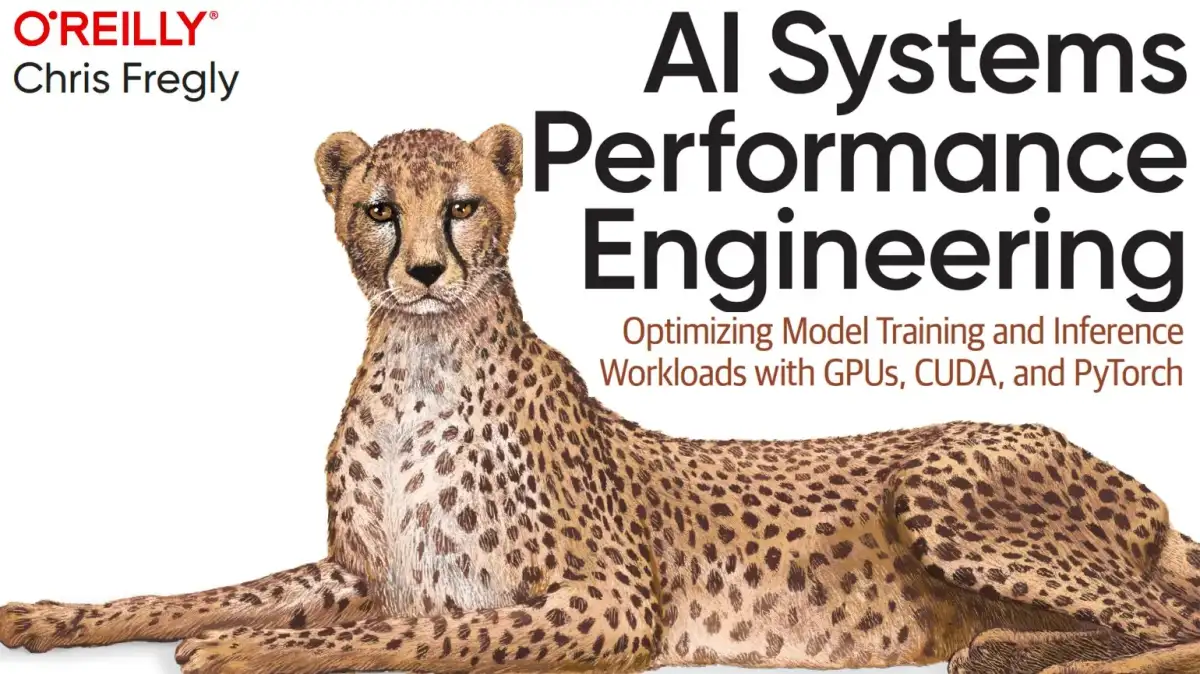
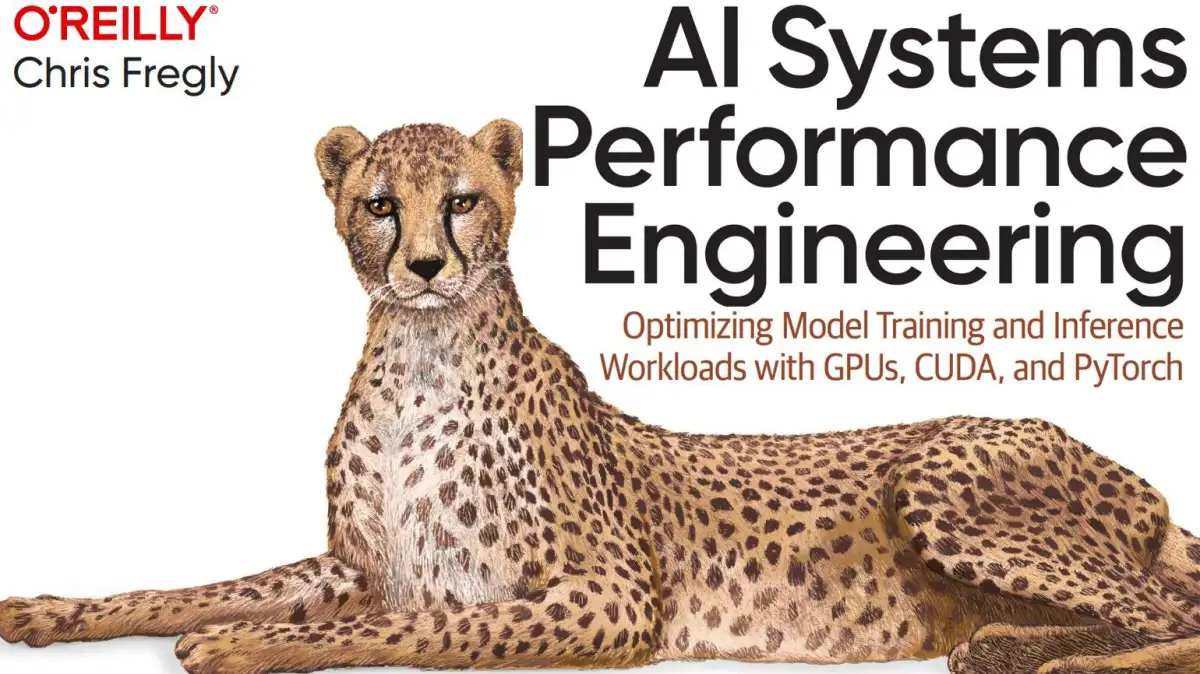
The materials emerge from various forums, including dedicated 'AI Performance Engineering' meetups in cities like Washington D.C. and Munich, and a substantial GitHub repository detailing code, tooling, and resources. A recently published O'Reilly book, "AI Systems Performance Engineering," by Chris Fregly, appears to be a central reference point for many of these technical deep dives.
"This book is useful for AI/ML engineers, systems engineers, researchers, and platform teams building or operating training/inference at scale. You can apply these immediately: ✅ Performance tuning mindset and cost optimization ✅ Reproducibility and documentation best practices ✅ System architecture and hardware planning ✅ Operating system and driver optimizations ✅ GPU programming and CUDA tuning ✅ Distributed training and network optimization ✅ Efficient inference and serving ✅ Power and thermal management ✅ Latest profiling tools and techniques ✅ Architecture-specific optimizations"
The author, Chris Fregly, is presented as a prominent figure in this field, with past experience at Amazon Web Services (AWS) on projects like SageMaker and Bedrock, and a consistent presence in technical discussions and podcasts. Recent podcast appearances and articles detail his insights into the evolution of AI systems engineering, emphasizing a practical, empirical methodology.
Read More: Anthropic Buys Stainless for Over $300 Million, Affecting OpenAI and Google

The scope of these discussions extends to bleeding-edge hardware architectures, including NVIDIA's Grace CPU & Blackwell GPU, and the implications of multi-million GPU clusters. Emerging areas also touch upon AI-discovering algorithms, automated GPU kernel optimization, and the use of reinforcement learning agents for runtime tuning.
The AI Performance Engineering community appears to be actively engaged, with meetups and online resources contributing to a shared knowledge base. This collective effort aims to tackle the inherent complexities of building and scaling modern AI workloads efficiently, from the silicon level up to application-specific optimizations.
Read More: New Free Tool Helps Students Use Teacher Feedback Better