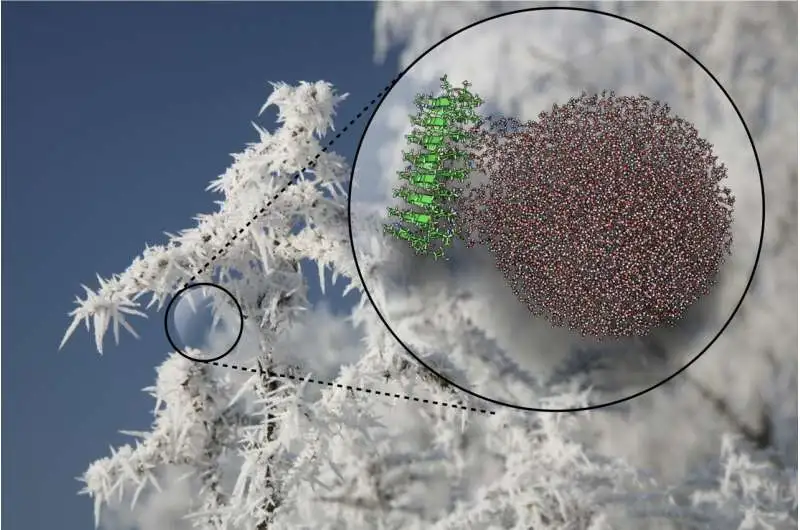
Researchers have identified that Ice-Nucleating Proteins (INPs), harvested from the bacterium Pseudomonas syringae, can be successfully anchored onto synthetic surfaces to catalyze ice formation at temperatures higher than the standard freezing point. The process relies on the proteins forming a single-molecule layer that aligns with the ice-binding face directed outward, a discovery that challenges previous assumptions regarding the instability of natural proteins in non-biological environments.
The core insight: INPs can serve as structural templates on abiotic materials, potentially replacing complex bioengineering methods currently used to mimic natural freezing environments.
Technical Dynamics of Nucleation
The translation of these biological functions into technical applications depends on the specific structural orientation of the protein.
Spatial Orientation: By anchoring these proteins in a flat, uniform layer, the outward-facing molecular configuration acts as a scaffold that forces water molecules into crystalline arrays.
Thermal Thresholds: These proteins allow ice to initiate at elevated temperatures, effectively controlling the phase change of water with greater efficiency than traditional artificial nucleation methods.
Structural Integrity: Authors like Tobias Weidner highlight that the primary hurdle in this field has been the tendency of proteins to lose their functional shape when removed from their native organic substrates.
Applications and Industrial Utility
The ability to manipulate ice growth at a molecular level holds weight across several distinct domains, ranging from large-scale atmospheric adjustments to precise medical procedures.
Read More: Clean air efforts may weaken Atlantic ocean current
| Field | Application | Objective |
|---|---|---|
| Cryomedicine | Tissue Preservation | Replacing toxic cryoprotectants like DMSO with biocompatible protein alternatives. |
| Meteorology | Artificial Snow | Utilizing the bacteria's natural propensity to seed cloud droplets for precipitation. |
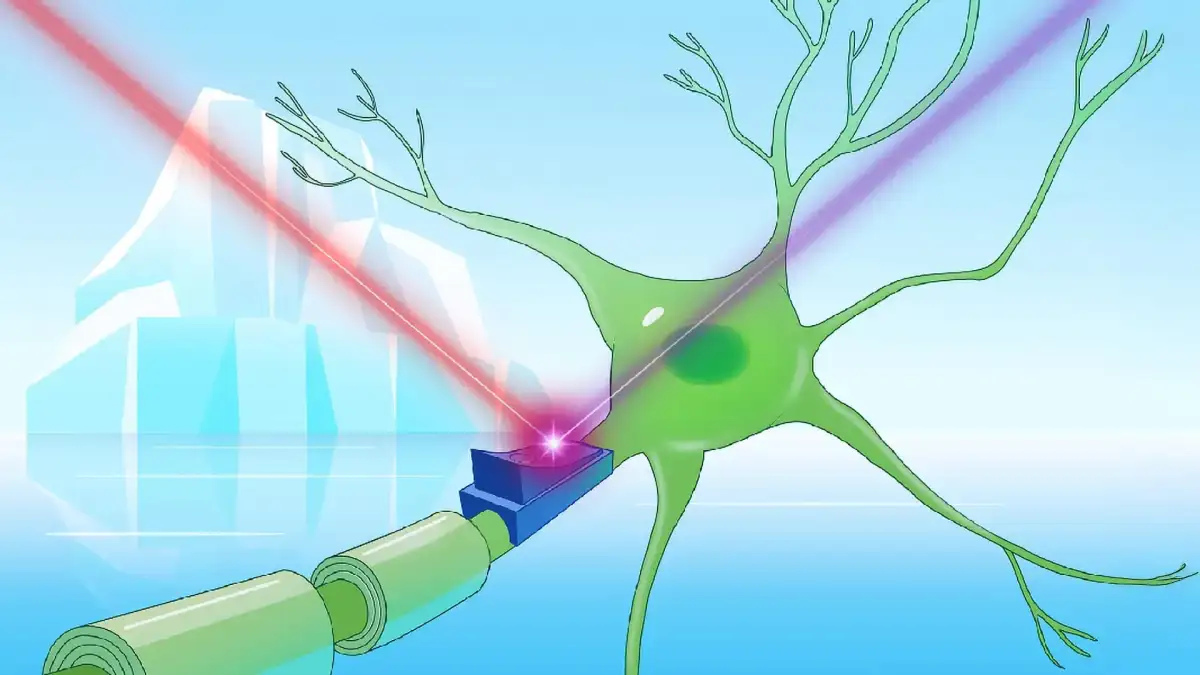
| Neuroscience | Optogenetics | Employing cold-adapted proteins like cryorhodopsins as light-activated molecular switches. |
Reflective Context
The pursuit of "Ice-Binding Proteins" (IBPs) is part of a broader trajectory in materials science that seeks to bridge the gap between biological evolution and synthetic design. While Pseudomonas syringae represents a natural vector for ice growth, other research is simultaneously attempting the reverse: creating antifreeze proteins from scratch.
Recent advancements in generative protein design—specifically utilizing models like AlphaFold2, RFdiffusion, and ProteinMPNN—have enabled scientists to move beyond modifying existing sequences. By calculating "three-helix bundle" geometries, engineers are now attempting to design de novo proteins that can either inhibit or promote ice recrystallization.
This dual-track progress—utilizing existing microbial tools versus computationally designing new molecular backbones—suggests a pivot in how industrial systems interact with phase-change thermodynamics. The move toward "bio-inspired" materials signals a shift away from harsh chemical catalysts toward precise, protein-mediated control over matter.
Read More: MIT Robots Learn New Skills Without Retraining
' Cryopreservation ' ' Ice-Nucleating Proteins ' ' Protein Design '