Oval Office Meeting Highlights Space Achievements, Then Diverges
President Donald Trump welcomed the Artemis II crew to the White House on Wednesday, April 29, 2026, acknowledging their "groundbreaking journey" around the moon. The meeting, held in the Oval Office, featured the four astronauts – Reid Wiseman, Victor Glover, Christina Koch, and Jeremy Hansen – and occurred nearly three weeks after their splashdown. Trump, who initiated the 'Artemis program' during his first term, spoke of the mission’s significance, calling it the "start of a new era" of space exploration.
The White House visit marked the first time a president engaged in direct, albeit remote, communication with astronauts beyond low-Earth orbit in over five decades. Trump himself had spoken to the crew via satellite during their lunar flyby on April 7th. During the Oval Office reception, Trump's conversation with the astronauts and the press quickly pivoted from space achievements to other pressing matters, including the Supreme Court's decision on voting rights, Iran negotiations, and inquiries about former FBI Director James Comey and UFOs.
Read More: Taiwan Holds Nantou County Drills to Prepare for State Collapse
A Glimpse of the Cosmos, A View of the News Cycle
The Artemis II mission, a precursor to returning astronauts to the lunar surface, achieved a significant milestone by circling the moon. The crew conducted scientific observations, photographing lunar terrain features and studying the solar corona during a lunar eclipse on April 6th. Notably, Commander Reid Wiseman became the oldest person to travel beyond low-Earth orbit, and Jeremy Hansen made history as the first non-U.S. citizen to journey to the moon.
However, the White House event was characterized by Trump's redirection of the narrative. He inserted personal reflections, stating, "I would have had no trouble making it, I’m physically very, very good," referencing the astronauts' physical demands. His remarks also touched upon the establishment of the Space Force. Following the meeting, coverage of the event was quickly overshadowed by Trump's public statements regarding Iran and other political topics.
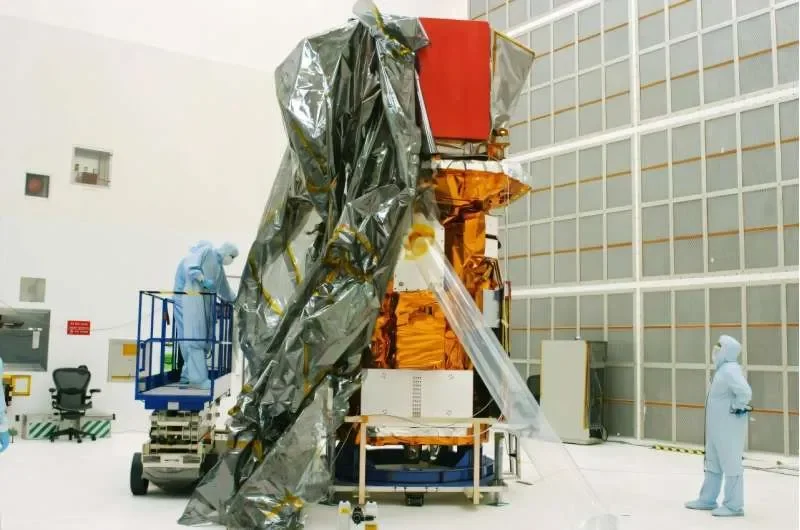
Read More: NASA Robot Mission Launched to Raise Swift Telescope Orbit, Add 10 Years
Program Genesis and Broader Context
The Artemis program, aimed at establishing a "permanent presence on the moon" and pushing toward Mars, was conceptualized during Trump's initial presidency. The mission's success underscores a renewed focus on deep space exploration. Yet, the White House gathering on April 29th also occurred on a day marked by a significant Supreme Court ruling that appeared to weaken aspects of the Voting Rights Act, a development Trump acknowledged and commented upon during the press availability. The presence of NASA Administrator Jared Isaacman alongside the crew provided a further official touchpoint for the space agency's achievements.