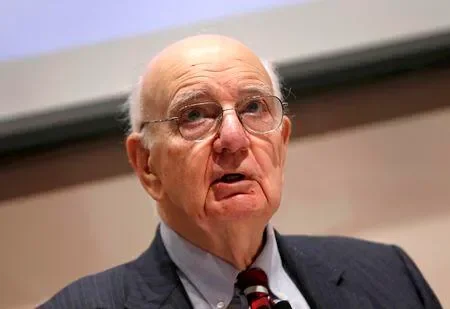
Jerome Powell, the current chair of the Federal Reserve, on Saturday invoked the legacy of Paul Volcker, his predecessor, highlighting Volcker's "courage and integrity" in the face of political pressure and his resolute stance against inflation. Powell, speaking via pre-recorded remarks at the American Society for Public Administration's annual conference, was honored with the Paul Volcker Public Integrity Award. He specifically referenced Volcker's controversial decision to significantly raise interest rates in the early 1980s to combat runaway inflation, a move that led to a recession but ultimately restored price stability. Powell’s remarks underscore a perceived parallel between Volcker’s historical actions and his own current defense of the Federal Reserve's independence.
Powell directly stated that Volcker "set the standard for public policymakers to follow," emphasizing that "independence and integrity are inseparable." He elaborated, "we need independence to do what is right, and we need integrity to use that independence wisely.” These comments arrive at a critical juncture for Powell, who has indicated his intention to remain at the central bank beyond his current term, which concludes in May. This decision is contingent on the completion of an ongoing investigation, the specifics of which are not detailed, though its resolution appears to be a deciding factor in his tenure.
Read More: Iran oil sanctions temporarily lifted for oil already on ships in Tehran
The Fed chair’s praise for Volcker’s "willingness to resist" political pressure is particularly noteworthy. This theme resonates as Powell himself navigates considerable public and political challenges. Reports indicate he has been a target of criticism, including from figures within the Trump administration, who have advocated for lower interest rates. Powell’s own commitment to maintaining his position until the current investigation concludes has reportedly frustrated those eager for a change in leadership at the Fed, specifically a successor perceived as more aligned with demands for looser monetary policy.
Powell’s decision to stay on, even after his term expires, and his invocation of Volcker’s principled, albeit economically disruptive, approach, signal a defense of institutional autonomy in monetary policy. This stance is framed against a backdrop where his actions have drawn explicit political opposition. One report mentions a pledge from a "top Republican" to impede the confirmation of a potential nominee, Kevin Warsh, until the Department of Justice probe is resolved, further illustrating the contentious environment surrounding the Fed.
Read More: Iran's Strategy: Prolonging War Despite Losses to Hurt US and Israel Economy
Background: A Legacy of Price Stability
Paul Volcker, who served as Fed chair under Presidents Carter and Reagan, is widely credited with breaking the inflationary spiral of the 1970s. His aggressive monetary tightening, while painful in the short term, is seen by many economists as essential for long-term economic health. Jerome Powell, who took the helm of the Federal Reserve in 2018, has faced his own battles with inflation and economic headwinds, drawing comparisons to the challenges Volcker confronted decades ago. The ongoing "DOJ probe" and the circumstances surrounding Powell's tenure extension suggest a period of significant institutional tension for the Federal Reserve.