

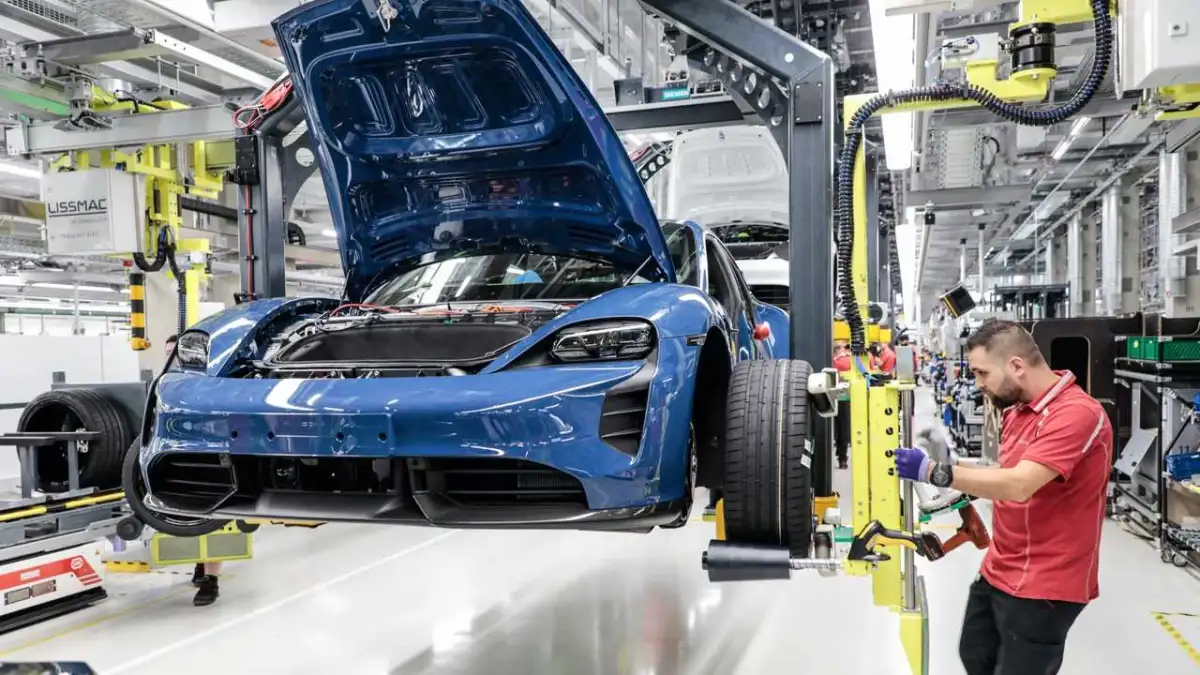
The German carmaker Porsche finds itself navigating a complex period, marked by significant financial recalibrations and a strategic pivot away from an accelerated electric vehicle (EV) rollout. This adjustment has precipitated a substantial €3.9 billion writedown, a financial accounting measure reflecting the revised valuation of its EV investments. Simultaneously, the company is implementing job reductions, with reports indicating the elimination of nearly 1,900 positions across its Zuffenhausen and Weissach facilities in Germany.

Recent financial disclosures paint a stark picture. Porsche's operating profit has seen a dramatic decline, falling to €413 million from the previous year's €5.6 billion. This downturn is attributed to a confluence of factors, including intensified competition in key markets, particularly China, where domestic manufacturers are gaining considerable traction.

The company's strategic recalibration extends beyond financial statements. Porsche is reportedly reassessing its commitment to a swift transition to electric mobility, a move that comes amidst reports of challenges in developing next-generation electric models, such as the 718 Boxster. This revised approach also involves a longer-term commitment to combustion engines and hybrid technologies than initially planned.

Several external pressures are also impacting Porsche's performance. Tariffs imposed by the US administration under Donald Trump have adversely affected sales in North America. Concurrently, the burgeoning success of Chinese EV manufacturers like BYD, XPeng, and Li Auto, offering advanced models and integrated technology, presents a formidable challenge to established European luxury brands. This intensifying competition is squeezing market share for foreign automakers.

This period of flux has also seen significant leadership changes. Michael Leiters assumed the role of Chief Executive on January 1st, following a series of profit warnings issued last year that contributed to Porsche's departure from Germany's DAX stock index. In a related move, Porsche announced intentions to part ways with two members of its Executive Board: Chief Sales Officer Detlev von Platen and Chief Financial Officer Lutz Meschke.
Porsche, a manufacturer known for its iconic sports cars like the 911, has publicly acknowledged the need for cost-cutting measures to maintain profitability. In a communication to its approximately 36,700 domestic employees, the company indicated negotiations with the IG Metall trade union regarding further cost-saving initiatives. The broader context for these adjustments includes a global slowdown in EV demand, with EVs currently accounting for 12.7% of Porsche's sales.
The situation at Porsche is not unique within the luxury automotive sector. Maserati, for instance, has reportedly canceled plans for an electric version of its MC20 sports car due to anticipated weak demand. The broader economic and geopolitical landscape, including trade policies and the rapid evolution of automotive technology, continues to shape the strategies of major players in the industry.