


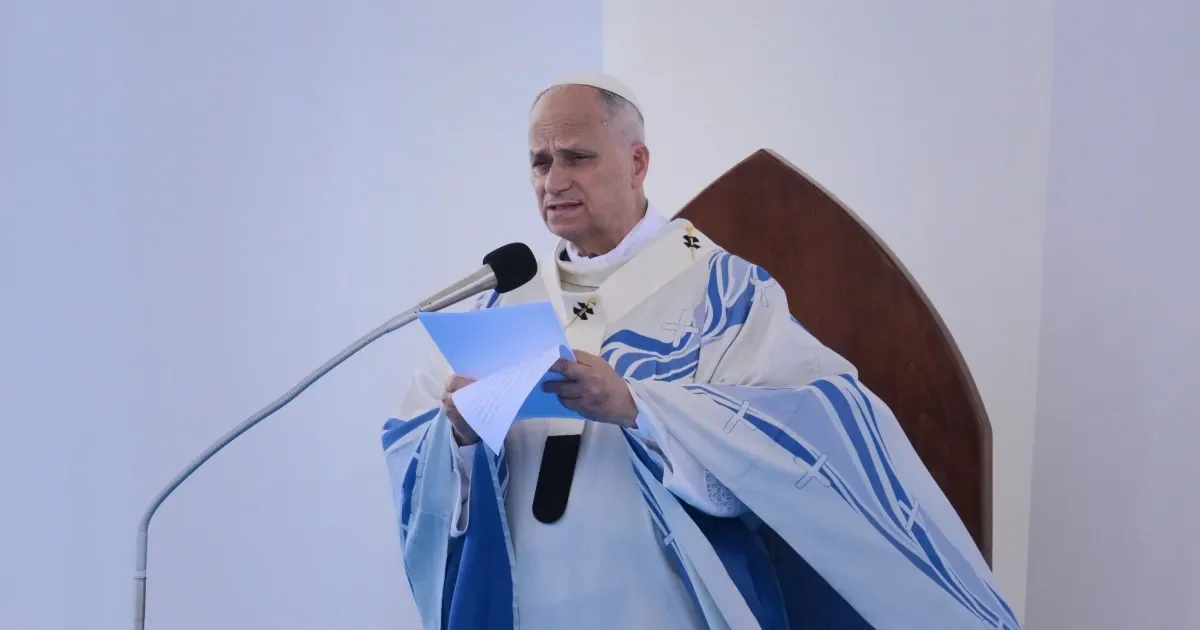
On the 250th anniversary of United States independence, Pope Leo XIV bypassed traditional national celebrations to visit the Italian island of Lampedusa, a primary transit point for migrants crossing the Mediterranean. The pontiff used the occasion to issue a formal appeal for the protection and integration of displaced persons, explicitly framing such acts as a fundamental recognition of human dignity.

The Pope’s presence at the Lampedusa migrant cemetery—where he observed a moment of silence—stands as a deliberate counterpoint to the political atmosphere currently prevailing in Washington.
In his homily, Leo called for a "comprehensive" approach from European leaders, urging the establishment of better support systems and long-term aid to developing nations to address the root causes of forced migration.
This visit serves as the latest inflection point in a widening rift between the Vatican and the Trump administration.
| Subject | Stance / Context |
|---|---|
| Pope Leo XIV | Advocacy for migrant welcome and protection as a moral imperative. |
| Trump Administration | Implementation of "hardline" immigration enforcement; policies labeled "troubling" by the Vatican. |
| JD Vance | Criticized the Pope's stance on migration, characterizing the Vatican’s position as problematic. |
Strategic Messaging and Diplomatic Friction
The timing of the visit carries explicit weight, effectively casting a shadow over the U.S. government’s current immigration strategy. Observers in the Catholic Church view the gesture as an extension of the Pope's consistent opposition to current administration policies. This tension is not nascent; it follows significant disagreements between the Pope and President Donald Trump regarding geopolitical conflicts, most notably the war in Iran.

Leo has been intensifying his public rhetoric, previously warning that "history will judge harshly" leaders who neglect or mistreat those fleeing desperation. By choosing to mark the U.S. birthday at a site synonymous with perilous sea crossings, the Pope has solidified a narrative where the duty of the state to its historical ideals is measured against its treatment of the global marginalized.
Read More: Cliffe Knechtle: God's 4 Answers to Prayer on US Campuses

Context: A Persistent Divide
The move echoes the early actions of Pope Francis, who also sought to center the plight of migrants early in his pontificate. Pope Leo XIV, the first American pope, has sought to balance his domestic origins with his role as a universal moral arbiter. The Vatican's appointments of bishops who entered the U.S. as migrants further underscores the ideological distance between the current papacy and the Trump administration's approach to border security.
As of July 4, 2026, the visit serves to underscore the Humanitarian obligations the Pope deems non-negotiable for Western powers, forcing a dialogue on whether the Independence celebrated in America is inclusive of those seeking refuge at its periphery.




