The Long Game: Roots Offer Hope for Food Systems
Perennial plants, which regrow year after year, are increasingly seen as a crucial element in addressing the compounding crises of climate change, food insecurity, and societal division. Their fundamental advantage lies in their extensive root systems, which anchor them firmly and allow them to draw resources more effectively than annual crops. This persistence means they invest more energy in their roots, a trait that confers significant ecological benefits.

Farmers and researchers are exploring these "living roots" as a means to build more resilient agricultural systems. The approach involves a fundamental shift from the typical planting and harvesting cycle of annual crops, which often deplete soil and require constant replanting. Instead, perennials offer a sustained presence, fostering a healthier environment.

The movement, detailed in a collection of essays and poems by figures like Liz Carlisle and Mark Streit Krug of The Land Institute, highlights how these systems can confer resilience in multiple ways. Beyond just producing food, the ecosystems supporting perennial crops appear to offer a buffer against environmental shocks.
Read More: New Wheat Makes Bigger Starch for Food and Industry

A Counterpoint to Annual Depletion
Traditional row cropping, common across regions like the Midwest, has demonstrably taken a significant environmental toll over time. The continuous tilling and replanting associated with annuals can lead to soil degradation. In contrast, perennial systems aim to reverse this trend.

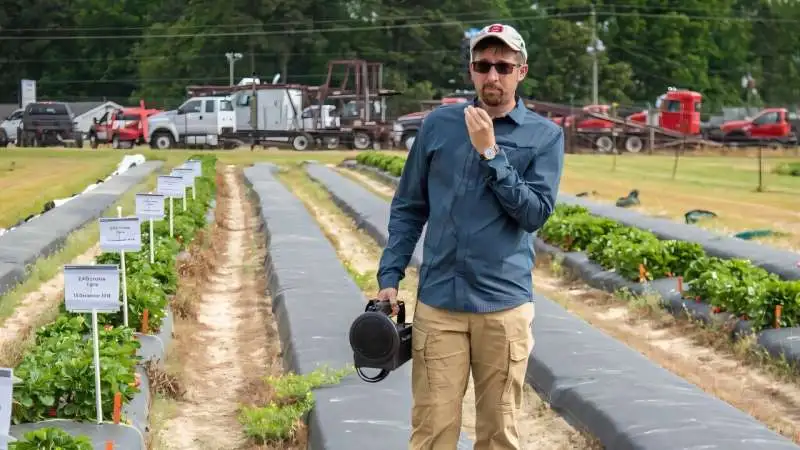
At Three Creeks Farm and Forest, for instance, the incorporation of perennial crops and agroforestry practices is transforming a 15-acre operation. Owner Emily Wright is cultivating multiple varieties of leafy greens alongside a forest, demonstrating a move towards diversification. This approach suggests a potential for conventional row crop farms to integrate more varied products, creating a more robust operational model.
Read More: Amazon Land Use Changes Cause Disease Clusters in Brazil
Rethinking Policy and Perception
The widespread adoption of perennial food systems necessitates a broader societal recalibration. This includes a critical reevaluation of existing agricultural policies, the recalibration of market incentives to favor these longer-term investments, and a concerted effort to raise public awareness.
The challenges posed by climate change are vast, affecting everything from global food supplies to the fabric of daily human existence and economic structures. Perennial agriculture, by its very nature, offers a different kind of vision. It is presented as a hopeful strategy to confront these intertwined crises, encompassing climate change, the alarming loss of biodiversity, and the pervasive issue of food insecurity.
The shift towards perennial crops is not merely an agricultural technique; it is framed as a fundamental transformation of our food systems, with the potential to enhance environmental sustainability, reduce carbon footprints, and foster more equitable outcomes. This approach champions 'regenerative agriculture', focusing on rebuilding soil health and ecosystem vitality.
Read More: Karnataka requests higher Totapuri mango limit for farmers in April 2026
Background:
The discussion around perennial crops is gaining traction as societies grapple with the escalating impacts of climate change and the inherent fragility of current food production models. Publications from institutions like the University of California, Santa Barbara, and organizations such as The Land Institute are central to this emerging discourse. The book "Living Roots," co-edited by Carlisle and Streit Krug, serves as a significant compilation of perspectives on this vital topic. The anticipated publication date for some of this material is noted as 2026, underscoring the forward-looking nature of this agricultural exploration.