The Pakistan electric two-wheeler market is experiencing a significant expansion, largely driven by a national strategy aimed at curbing CO₂ emissions and fostering electric mobility. The Pakistan Accelerated Vehicle Electrification (PAVE) scheme, launched recently, has become a pivotal element, targeting electric motorcycles and small vehicles to make emission-free transport financially accessible. This has spurred investment and a wider array of product choices, particularly in the scooter segment.
The PAVE scheme incentivizes both manufacturers and consumers, a move that has already broadened product availability and attracted new electric vehicle (EV) brands. This governmental push is reshaping a market historically dominated by a narrow range of internal combustion engine (ICE) commuter models, with high import duties previously limiting consumer options and market diversification.

Incentives and Infrastructure: The Policy Backbone
The government's approach to electrifying transport involves more than just subsidies. The PAVE scheme is central, focusing on electric motorcycles and small vehicles to ensure affordability. Emerging policies that support carbon credit trading could further unlock international funding for this transition. A key realization appears to be that long-term success hinges on parallel investments in charging infrastructure and continued financial incentives, moving beyond mere subsidies.
Read More: Tesla Model Y L 6-Seater US Launch Date and Price Details
Incentives have included:
Zero customs duty on EV-specific components.
Reduced sales tax on locally assembled electric bikes.
Exemption from sales tax on imported electric two- and three-wheelers.
Fixed sales tax rates for locally manufactured two- and three-wheelers.
Economic Drivers and Consumer Adoption
A primary catalyst for the growing interest in electric two-wheelers is the rising cost of gasoline. Running costs for electric bikes, estimated between Rs 1–1.5 per kilometer, present a stark contrast to petrol bikes, which cost roughly Rs 6–8 per kilometer. This economic advantage, coupled with increased product availability and a growing variety of models, is making electric options a compelling choice for daily commuting.
The market currently offers electric bikes and scooters in a price range of PKR 160,000 to PKR 400,000, with electric bicycles (pedal-assist) falling between PKR 40,000 and PKR 130,000. Battery replacements are also a notable cost, ranging from PKR 58,000 to PKR 98,000 for new sets.
Read More: 40 Die in Quetta to Peshawar Bus Crash in Balochistan on April 3 2026
Market Landscape and Future Outlook
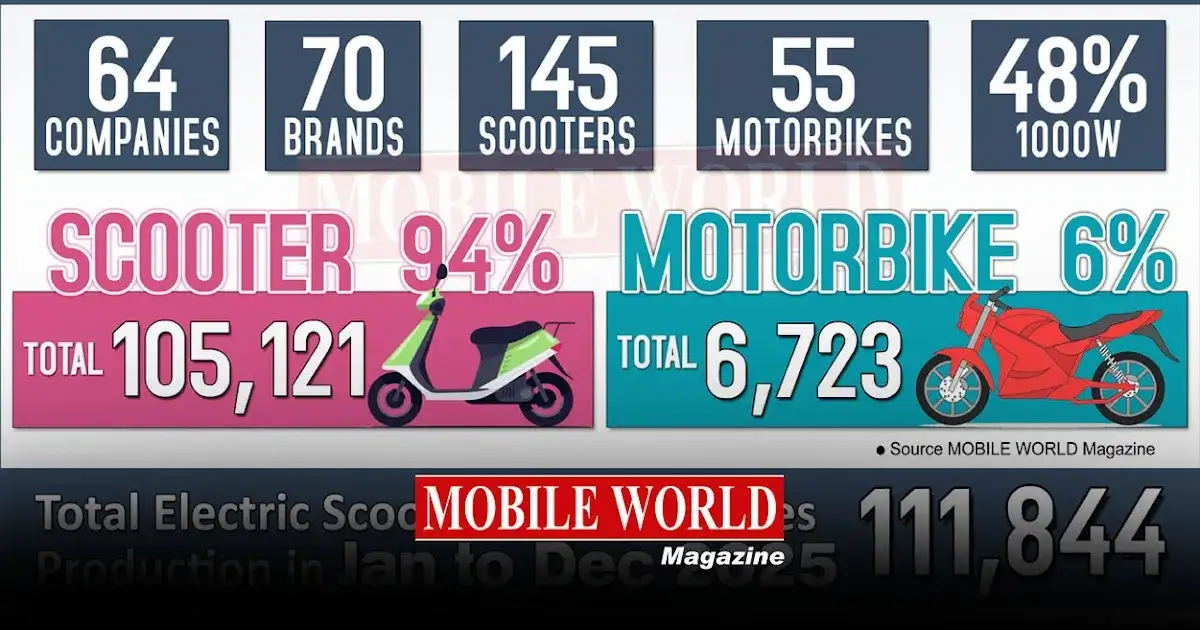
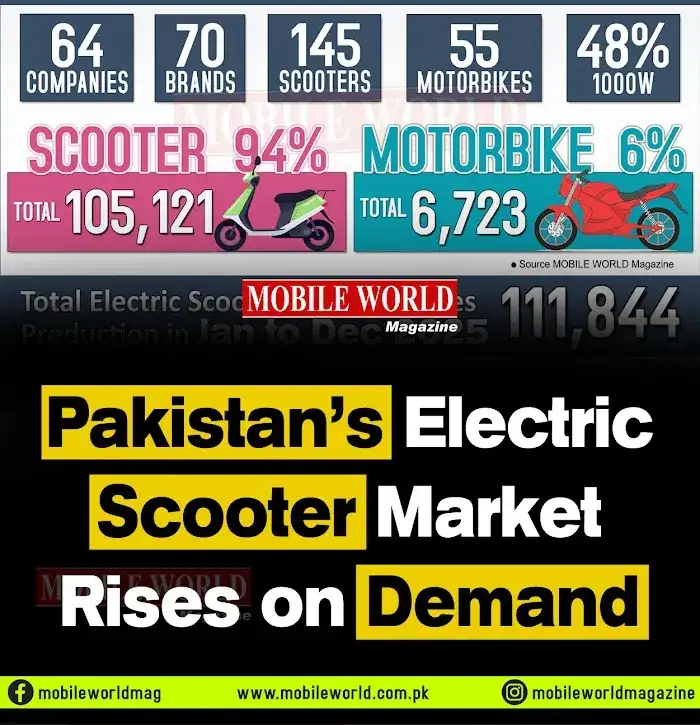
The industry hosts a considerable number of players, with approximately 64 companies operating under 70 brands, offering around 145 electric scooter models and 55 electric motorbike models. The 1000W power category appears to be the most popular, capturing 48 percent of the market. Prominent brands contributing to the market's diversity include Evee, United, Hi Speed, Revoo, Okla, Honda, Yadea, Metro, and Unique, among others.
Despite the momentum, challenges persist. Limited consumer financing options and a risk-averse banking sector remain hurdles for broader adoption. Furthermore, charging convenience is cited as a significant barrier for many riders, especially in dense urban areas. Technologies like battery swapping are being explored as practical solutions to this infrastructure gap, particularly given the feasibility of home charging in low-rise housing developments.
The historical context of Pakistan's motorcycle market reveals a long period where consumers had access to only a limited selection of locally produced ICE commuter bikes, with high import duties effectively stifling competition and product diversity. The current surge in electric two-wheelers positions Pakistan as a potentially fast-growing EV market and a case study for adoption in emerging economies.
Read More: New Cars Under $25,000 Drop to Only 11 Models in April 2026