

Official Approval Signals End to Decades-Long Debate on Oxford Street's Future
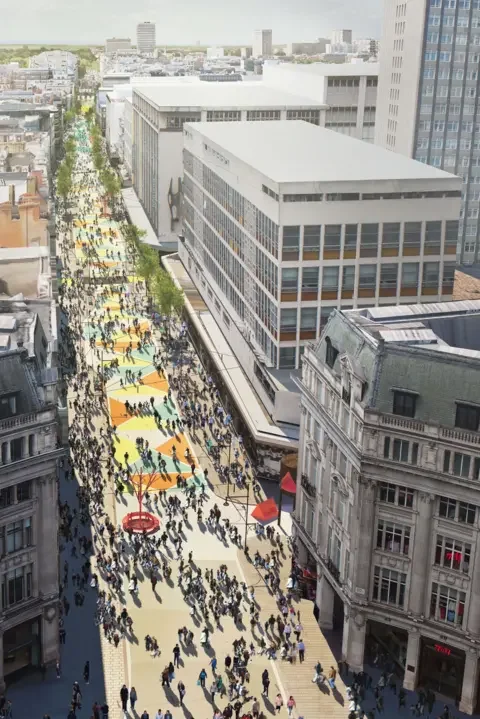
London's Oxford Street is set for a major change, with plans to pedestrianise a significant stretch officially approved. The move, championed by Mayor of London Sadiq Khan and Transport for London (TfL), aims to create a more inviting environment for shoppers and visitors by removing most vehicles from the renowned street. This decision marks a crucial step after years of discussion and consultation regarding the future of this prominent retail area.
Long Road to Pedestrianisation: From Ambition to Approval
The idea of turning parts of Oxford Street into a pedestrian-only zone has been a subject of debate for decades. While the street has seen gradual restrictions on general traffic over time, the vision of complete pedestrianisation has faced obstacles, including disagreements between the Mayor's office and Westminster council.
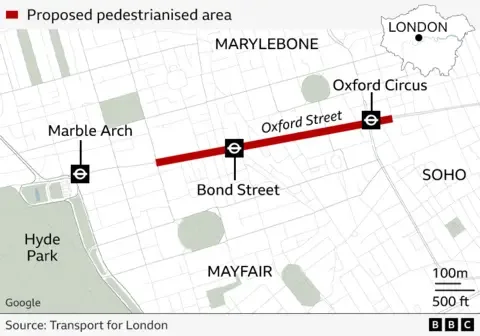
Recent efforts have focused on a specific section of Oxford Street, generally defined as the stretch between Orchard Street and Great Portland Street.
TfL conducted public consultations to gather feedback on the detailed plans for this transformation.
More than 2,700 responses were received during the second consultation phase, indicating significant public engagement.
Mayor Sadiq Khan has consistently advocated for pedestrianisation as a strategy to bolster businesses and invigorate London's economy, including its hospitality and nightlife sectors.
Key Changes to Traffic and Transport Networks
The approved plans will result in a substantial reduction in vehicle presence on Oxford Street, with specific provisions for essential services and altered bus routes.
Read More: Direct Train Swindon to Oxford Gets Government Backing for 2026 Launch
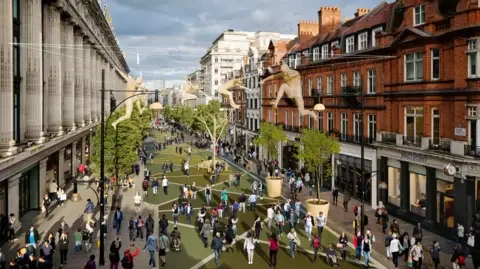
Traffic Restrictions: Private motorised vehicles, buses, taxis, private-hire vehicles, cycles, scooters, and pedicabs will be prohibited from accessing the traffic-free zone.
Delivery Access: Service and delivery vehicles will be permitted to access the area only between midnight and 7:00 AM.
Bus Re-routing: A majority of buses that currently operate on Oxford Street will be rerouted.
These buses are primarily expected to use Wigmore Street and Henrietta Place, which run parallel to Oxford Street to the north.
New bus stops and shelters are planned as part of this reconfiguration.
Existing Restrictions: General traffic is already banned from Oxford Street between 7:00 AM and 7:00 PM, Monday to Saturday. This existing ban will be superseded by the broader pedestrianisation.
Reshaping the Streetscape and Managing Traffic Flow
The transformation includes physical alterations to the street to accommodate increased pedestrian activity and manage surrounding traffic.

Traffic Diversions: Alternative routes have been identified for traffic that previously used Oxford Street.
Vehicles will be able to cross the pedestrianised section via specific streets like Duke Street, Harewood Place, Holles Street, Regent Street, Davies Street, Stratford Place, Vere Street, and New Bond Street, with directional restrictions in place.
Pedestrian Enhancements: The plans involve the installation of new and wider pedestrian crossings.
Noise Reduction: Studies suggest that the pedestrianisation will lead to a significant decrease in high traffic noise levels in the affected central London areas. Areas identified as benefiting from reduced traffic noise include Oxford Street itself, as well as surrounding streets like Bryanston Street, Wimpole Street, and Margaret Street.
Stakeholder Involvement and Future Steps
The approval of these plans follows extensive consultation, though some concerns have been raised by specific groups.
Westminster Council: While the council has previously opposed pedestrianisation, its role is now to support the implementation and ensure the changes benefit local communities.
Public Consultation: The plans are based on detailed proposals that were put before the public for feedback, with a significant number of respondents participating.
Mayor's Office: Alex Williams, Chief Customer and Strategy Officer at TfL, indicated that work with Westminster council will continue in the coming months. Mayor Sadiq Khan is expected to provide further details on the scheme's next steps.
Criticisms: Concerns have been voiced by some groups who suggest that a pedestrianised Oxford Street might become less accessible for elderly and disabled shoppers due to longer walks to relocated bus stops. There have also been raised concerns regarding potential impacts on crime rates.
Implementation Timeline and Broader Vision
The physical changes and traffic ban are expected to be implemented this summer, signalling the commencement of the "transformational scheme" for Oxford Street. The overarching aim is to revitalise one of the world's most famous shopping streets, enhancing its appeal to shoppers, visitors, and tourists.
Sources:
The Guardian: https://www.theguardian.com/uk-news/2026/feb/26/plan-to-pedestrianise-london-oxford-street-given-official-go-ahead
Transport for London (TfL): https://tfl.gov.uk/info-for/media/press-releases/2025/november/mayor-of-london-and-tfl-set-out-bold-proposals-to-deliver-pedestrianisation-along-oxford-street
Greater London Authority (GLA): https://www.london.gov.uk/md3475-traffic-and-highway-changes-enable-pedestrianisation-oxford-street-great-portland-street?ac-841087=841082
Evening Standard: https://www.standard.co.uk/news/london/oxford-street-pedestrianisation-sadiq-khan-traffic-ban-b1272622.html
LBC: https://www.lbc.co.uk/article/oxford-street-to-be-pedestrianised-mayor-of-london-sir-sadiq-khan-announces-5HjdTZF2/
Metro: https://metro.co.uk/2026/02/26/oxford-street-pedestrianisation-set-go-ahead-changes-coming-this-summer-27122726/




)
