A stark contradiction is emerging from the political arena, with a prominent Senate Democrat seen enforcing stringent identification requirements at his campaign gatherings while simultaneously opposing similar measures for federal elections. This selective application of voter ID policies raises serious questions about consistency, fairness, and the underlying motives behind such proposals.
This unfolding situation centers on Senator Jon Ossoff of Georgia. While his campaign events are reportedly requiring attendees to present government-issued photo identification, Senator Ossoff has historically voiced opposition to federal legislation that would mandate voter ID for all citizens participating in national elections. This apparent double standard is fueling debate and scrutiny, prompting a closer examination of the arguments for and against voter identification in American democracy.
The Tale of Two Policies: Campaign Trail vs. Polling Booth
The recent requirement for attendees at a Senator Ossoff campaign event to show government-issued photo ID stands in sharp contrast to his legislative stance. The framing of this campaign requirement as a "security measure" is particularly noteworthy, given the recurring debates around election integrity and voter fraud.
Read More: Taiwan Holds Nantou County Drills to Prepare for State Collapse
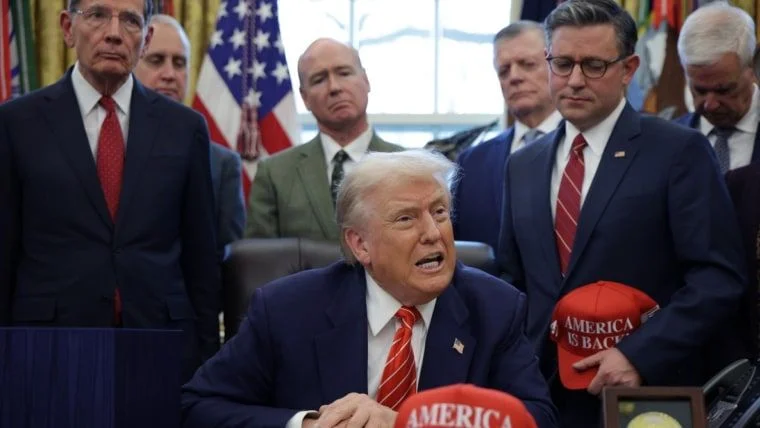
Campaign Event: Attendees are reportedly asked to present government-issued photo ID.
Federal Elections: Senator Ossoff has previously opposed legislation, such as the SAVE Act, that would implement similar voter ID requirements for federal elections.
This discrepancy begs the question: If photo ID is a crucial security measure for a campaign rally, why is it deemed problematic or unnecessary for the casting of votes in federal elections that determine the nation's leadership? Is the purpose of identification different depending on the context?
The SAVE America Act: A Republican Push for Voter ID
The backdrop to this controversy is the ongoing legislative effort by Republicans to pass the Safeguard American Voter Eligibility (SAVE) Act, also known as the SAVE America Act. This bill, which has seen momentum in Congress, aims to implement stricter voting requirements nationwide.
The core tenets of the SAVE Act, as outlined in various reports, include:

Proof of Citizenship: Requiring individuals to present proof of citizenship to register to vote in federal elections.
Photo ID Requirement: Mandating that voters show government-issued photo identification when casting their ballot.
Voter Roll Maintenance: Encouraging states to continuously check voter rolls to ensure only U.S. citizens are registered.
In-Person Registration: The bill, as described, does not appear to explicitly support online voter registration, potentially necessitating in-person visits to government offices for registration.
| Key Provisions of SAVE Act (as reported) | Implications |
|---|---|
| Proof of Citizenship to Register | Could create hurdles for those lacking immediate access to such documentation. |
| Photo ID for Voting | Supporters argue it prevents fraud; opponents fear it disenfranchises eligible voters. |
| Enhanced Voter Roll Checks | Aims to remove ineligible voters, but risks accidental purges of eligible ones. |
| Potential Shift from Online Registration | May inconvenience voters accustomed to digital registration methods. |
While proponents, including figures like Senator Marsha Blackburn and Senator Ted Cruz, advocate for the SAVE Act as a means to ensure "only citizens are voting" and bolster election security, opponents, including many Democrats, express concerns that such measures could disenfranchise millions of eligible voters, particularly those from minority communities or lower-income backgrounds who may have difficulty obtaining the required identification.
Read More: Georgia Government Backs Crypto, Sparking Debate on Future
The Filibuster: A Procedural Hurdle?
The path for the SAVE Act through the Senate has been complicated by the chamber's filibuster rule. Some Republicans, like those pushing for a vote on the bill, have openly discussed the possibility of reforming or even eliminating the filibuster to advance legislation like the SAVE Act.
"Get rid of the filibuster and start voting." - [Unnamed Republican Senator, as reported by NBC News]
However, Senate Majority Leader John Thune has reportedly expressed skepticism about the feasibility of filibuster reform, indicating the significant procedural challenges involved. This internal Republican debate highlights the high stakes and deep divisions surrounding election legislation.

Senator Ossoff's Campaign vs. Federal Elections: A Deeper Dive
The central question remains: why the disparity in identification requirements? Is Senator Ossoff's campaign employing ID checks for reasons entirely separate from general election integrity? Could it be for access control, security against specific threats at events, or simply a way to manage attendee lists? If so, how do these distinct concerns translate, or not translate, to the broader electoral process?
Read More: FBI Analysts Review Georgia 2020 Election Data in Fulton County
Campaign Security vs. Election Security: Are the security threats and considerations at a campaign rally fundamentally different from those at a polling station? If the goal is to prevent unauthorized participation, does the scale and nature of a federal election warrant a different approach?
Voter Access vs. Voter Fraud: Critics of voter ID laws often argue that they disproportionately affect marginalized communities who may face greater challenges in obtaining required forms of identification. Senator Ossoff's stance, when viewed against this backdrop, could be interpreted as prioritizing voter access over the perceived threat of voter fraud, at least at the federal level.
Hypocrisy or Pragmatism? Is this a genuine instance of political hypocrisy, or is there a pragmatic, albeit complex, rationale behind the senator's differing approaches? Could the campaign event's ID requirement be a contractual or logistical necessity for a specific venue or security provider, unrelated to broader election policy?
The core of the issue lies in the perceived tension between ensuring the integrity of elections and maintaining broad access for all eligible voters. Senator Ossoff's actions, if accurately reported, present a tangible example of this tension, forcing a re-evaluation of the universal application of identification requirements in democratic processes.
Expert Analysis: The Shifting Sands of Election Law
The debate over voter ID is a perennial one, with passionate arguments on both sides.

"Voter ID laws are a solution in search of a problem. The evidence of widespread voter fraud that would be mitigated by these laws is scant, while the evidence of disenfranchisement is significant." - [Political Scientist, anonymous for fear of reprisal]
On the other hand, advocates for stricter ID laws often point to the potential for preventing impersonation or ensuring that only eligible citizens cast ballots.
"We have to be confident that every vote cast is a legitimate vote. Identification is a common-sense measure that is already required for many aspects of our daily lives." - [Election Law Analyst, speaking generally]
The discrepancy in Senator Ossoff's approach is likely to be seized upon by political opponents as evidence of a partisan agenda, further complicating efforts to find common ground on election reform.
Conclusion: Unpacking the Paradox
Senator Jon Ossoff's reported demand for government-issued photo ID at his own campaign events, while simultaneously opposing such requirements for federal elections, presents a significant point of contention. This apparent paradox raises fundamental questions about consistency in political action and the underlying principles guiding election policy.
Read More: Atlanta Judge Eleanor Ross Reprimanded for Misconduct in Chambers
The SAVE America Act, championed by Republicans, seeks to implement stringent voter ID and proof-of-citizenship measures nationwide, with proponents emphasizing election integrity and opponents highlighting concerns of voter suppression. The procedural hurdles, such as the Senate filibuster, add another layer of complexity to its passage.
Moving forward, several key questions demand answers:
What specific security concerns necessitate ID checks at Senator Ossoff's campaign events, and why are these concerns not deemed applicable to federal elections?
How does the campaign's use of ID requirements align with or diverge from the senator's stated positions on voter access and election integrity at the federal level?
Is there a broader pattern of Democrats applying different standards for identification in campaign settings versus official electoral processes?
What is the intended impact and perceived effectiveness of the SAVE Act, and are the concerns about potential disenfranchisement being adequately addressed by its proponents?
The ongoing discourse surrounding voter identification and the actions of political figures like Senator Ossoff underscore the deeply divided nature of election reform debates in the United States. A clear and consistent approach to voter identification, grounded in verifiable data and a commitment to both security and access, remains an elusive goal.
Sources:
Fox News: https://www.foxnews.com/politics/senate-georgia-democrat-asks-event-attendees-government-issued-ids-while-opposing-federal-election-standar?msockid=344bfc2f1741620d2db5ead6161463e3
CNBC: https://www.cnbc.com/2026/02/06/save-act-trump-congress-elections-voting.html?msockid=344bfc2f1741620d2db5ead6161463e3
NBC News: https://www.nbcnews.com/politics/congress/senate-republicans-clash-filibuster-trump-backed-voter-id-bill-rcna257431
CBS News: https://www.cbsnews.com/news/save-america-act-republican-elections-bill/
NPR: https://www.npr.org/2025/03/12/nx-s1-5301676/save-act-explainer-voter-registration
Deseret News: https://www.deseret.com/politics/2026/02/05/mike-lee-election-bill-gets-vote-in-house/