
Oak Ridge National Laboratory (ORNL) is at the forefront of a burgeoning field termed 'autonomous science,' a paradigm shift driven by the integration of Artificial Intelligence (AI) and automation. This development promises to dramatically accelerate the pace of scientific discovery. The core idea is leveraging AI models, trained on vast scientific datasets, to provide reliable information and insights, thereby pushing research forward at an unprecedented speed.

Rob Moore, identified as a key figure in this area, is spearheading the development of these self-driving laboratories at ORNL. Moore, a former U.S. Navy submarine officer who joined ORNL in 2019, focuses on research into quantum materials. His work, along with that of his colleagues, highlights the increasing sophistication of AI in generating actionable scientific data.
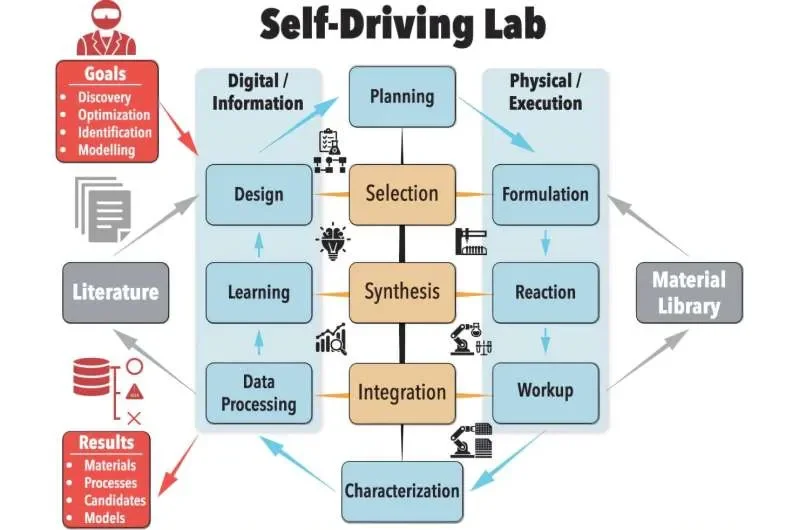
The concept of autonomous science extends beyond mere automation; it involves creating 'robotic co-pilots' for research. These systems, often referred to as 'self-driving laboratories' (SDLs), are designed to enhance collaboration and innovation across diverse scientific disciplines. SDLs can be deployed in two primary configurations: centralized facilities for complex, resource-intensive research, and distributed labs offering broader accessibility and flexibility for scientists globally. This dual approach aims to balance high-performance research capabilities with widespread participation.
Read More: Teens Using Cannabis Show Slower Thinking Skills, Study Says
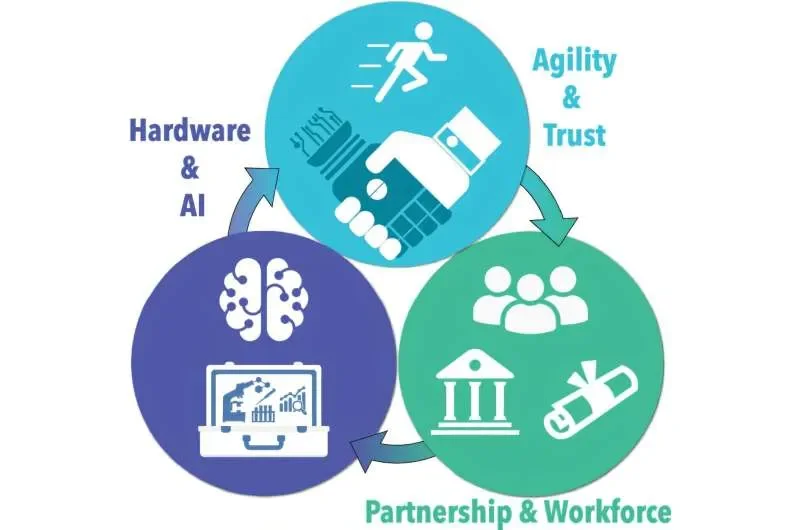
The influence of AI is not confined to laboratories. AI methods are becoming integral for learning from and utilizing big data, a necessity that spans numerous fields. These systems, designed to mimic human intelligence, are increasingly applied in everyday life and are now reshaping the entire scientific process, from fundamental discovery to the scaling of new technologies. Institutions like Carnegie Mellon University are actively involved in defining this AI-driven transformation of science.

Furthermore, the push towards autonomous systems is not limited to the lab bench. The development of 'autonomous agents for scientific discovery' involves orchestrating various components, including scientists, language models, code, and physics simulations. These systems utilize sophisticated tools and workflows such as virtual lab platforms, booking and orchestration systems, and specialized agents for data interpretation and statistical analysis. The aim is to create reproducible and auditable research pipelines.
Read More: John Ternus New Apple CEO, Tim Cook Becomes Chairman
While the focus is on advancing scientific understanding, the principles behind autonomous systems are also evident in areas like autonomous vehicles, where collision avoidance and smart urban integration are pressing research questions. The potential for AI to transform scientific exploration is significant, with ongoing investment in platforms designed for AI-driven discovery potentially positioning regions like Pittsburgh as leaders in future innovation, particularly in biomanufacturing.