A single project, OpenClaw, incurred a staggering $1.3 million in OpenAI API costs within a month, processing 603 billion tokens via 7.6 million requests. This massive expenditure, primarily for coding agents performing tasks like auditing pull requests, identifying vulnerabilities, and drafting code fixes, underscores a significant trend in the burgeoning AI industry. The bill, reportedly covered by OpenAI itself, makes public the substantial, real-world cost of large-scale autonomous AI operations.

This event exposes the high financial stakes and potential economic models at play as AI transitions from experimental phases to production-level deployment, particularly in code generation.

Subsidized Consumption and "Tokenmaxxing"
The enormous bill for OpenClaw is framed by some as an example of "tokenmaxxing," a practice where developers and engineers prioritize maximizing AI token consumption as a performance metric. This behavior raises critical questions about the long-term profitability of AI companies like OpenAI and Anthropic.
Read More: Galaxy Z Fold 8 to remove screen crease this summer
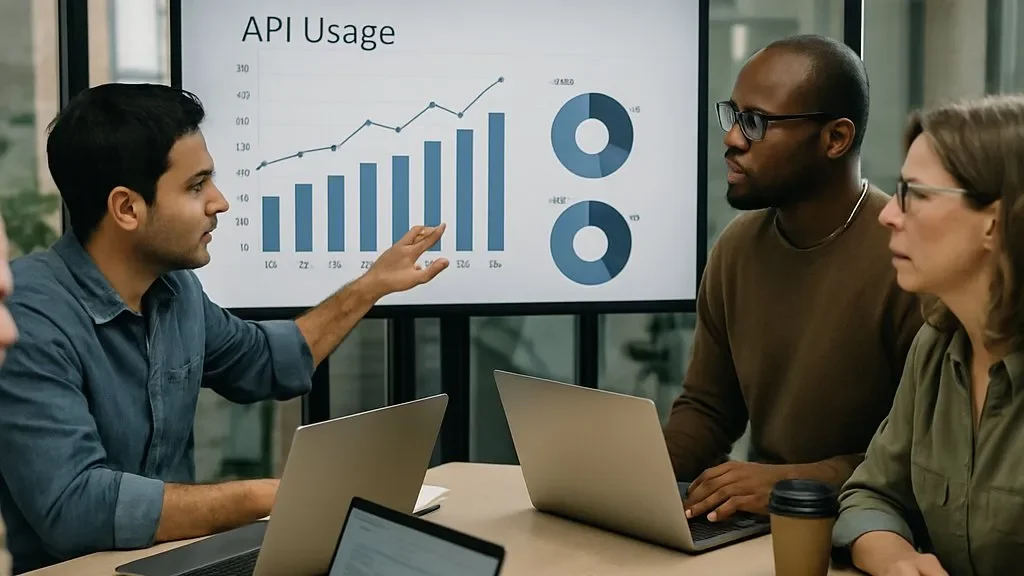
The underlying costs of computation are often masked when platforms subsidize access, leading to a discrepancy between user-billed amounts and actual operational expenses.
This consumption model could be unsustainable if prices are eventually adjusted to reflect true costs, potentially impacting companies reliant on current usage levels.
AI Agents and Shifting Development Roles
OpenClaw's deployment of 100 coding agents highlights a potential shift in software development. These agents are designed to handle repetitive, high-volume tasks:
Auditing and merging pull requests.
Tracking vulnerabilities in commit history.
Deduplicating GitHub tickets.
Writing code patches and even opening new pull requests.
This automation suggests that the role of human developers may evolve, with tasks of significant volume being offloaded to AI agents. The core question emerging is not if AI will write substantial amounts of code, but rather the associated costs and who will bear them.
Competitive Landscape and Pricing Dynamics
The AI coding assistant market is becoming increasingly competitive, with tools like Codex, Claude Code, and Cursor vying for developer attention. These platforms often offer compressed inference pricing, significantly undercutting their listed API rates.
This pricing strategy aims to capture and retain user engagement, suggesting a focus on user acquisition over immediate revenue.
The economic model is influenced by "Token Economics," which can involve multipliers on token usage, effectively doubling per-token pricing and emphasizing a return on tokens rather than raw throughput.
Security practices are noted as having a direct impact on monthly cost statements.
Broader Implications and Future Trajectory
The OpenClaw situation serves as a stark illustration of the "AI bubble" concerns. It positions AI agents as a disruptive force, moving beyond proof-of-concept demonstrations towards production deployments.
Rival systems like Hermes-Agent have reportedly surpassed OpenClaw in daily inference volume on platforms like OpenRouter.
There's a view that OpenClaw should be seen as a "laboratory" rather than a replicable model, and that its use of advanced AI tools requires careful handling, akin to "nitroglycerin."
Some foresee a future where enterprise beta programs emerge, and OpenAI might launch official products based on such autonomous agent capabilities.
The conversation around AI, particularly concerning its financial implications and its capacity to automate complex tasks like coding, remains fluid and subject to rapid evolution.
Read More: APi Group secures $500 million in new funding on May 15 2026