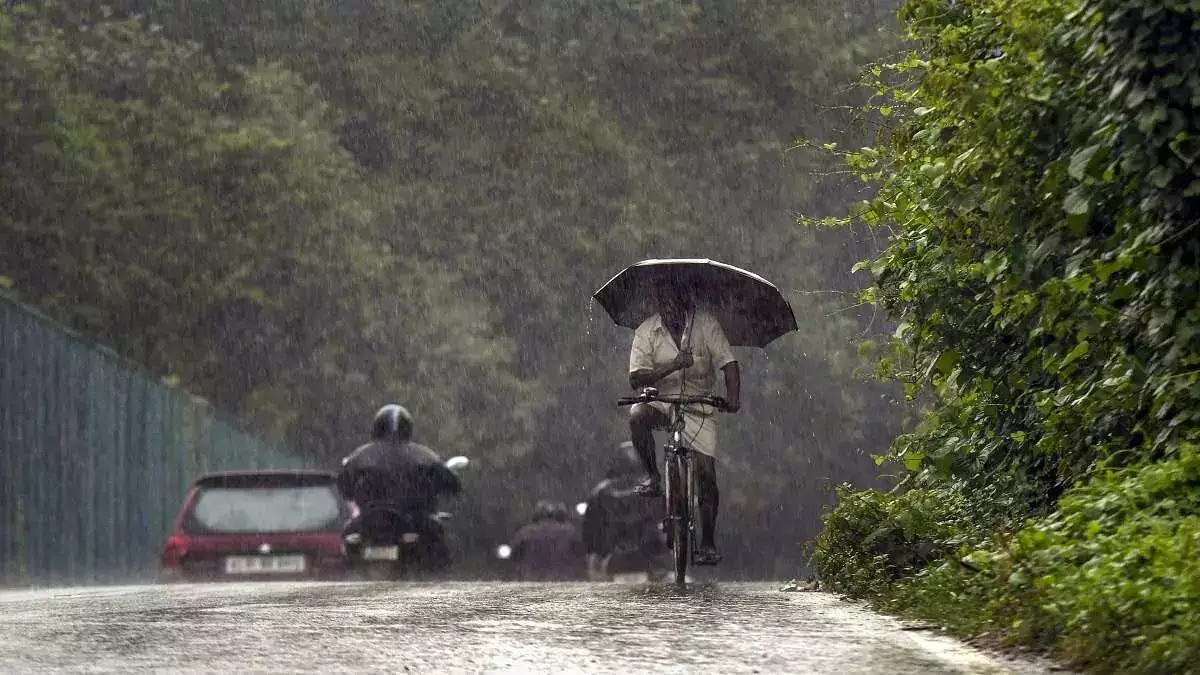
Flood warnings are actively in place across significant portions of Ontario's cottage country, encompassing regions like Muskoka, Parry Sound, and North Bay, with specific areas including Haliburton, Bala, and Mattawa being cited. This widespread alert comes as communities grapple with rising water levels, a direct consequence of recent warm temperatures and persistent rainfall.
Several municipalities, including Bracebridge, Minden, and Parry Sound, have been placed under a flood warning and outlook by the Ministry of Natural Resources and Forestry (MNRF) as of April 14. This designation signifies a heightened risk of flooding. The North Bay Mattawa Conservation Authority has also issued a flood watch for vulnerable areas within its watershed. Environment Canada's new color-coded weather alerts are now in effect, signaling various levels of weather-related threats.
Recent heavy downpours have led to immediate concerns, with some areas anticipating up to 75 millimetres of rain. Residents are being urged to stay informed about changing conditions. Provincial police are advising drivers to meticulously check current road conditions, potential closures, and travel advisories via platforms such as 511on.ca and municipal511.ca, and to monitor local weather forecasts.
Read More: Mumbai Red Alert July 2026 Causes School Closures and Train Delays
Waterways Swell, Warnings Escalate
The situation paints a broad picture of elevated water levels across the province. Last spring, Stoco Lake neared 10-year flood levels, and the Moira River in Tweed reached similar thresholds. Following 50 millimetres of rain on April 5, the Grey Sauble Conservation Authority declared a flood watch, though it has since been rescinded for that specific area.
Officials in Muskoka Lakes issued a voluntary evacuation advisory for residents near the Moon River in April 2019, during a period of heavy rain and warnings for the Muskoka Region. Drone footage from that time highlighted the extent of localized flooding in low-lying areas. Measures such as log removal to improve water flow and lake level management were undertaken.
Read More: Ford Sells $28.9M Jet After Public Anger
More recently, rainfall warnings have been prominent in eastern Ontario and western Quebec, with some locations bracing for up to 80 millimetres of rain. Communities surrounding the nation's capital, including Kingston, Cornwall, Renfrew, Pembroke, Bancroft, and Barry's Bay, were under these warnings. Ottawa itself was forecast to receive up to 45 millimetres of rain, with the possibility of thunderstorms.
In Montreal, authorities reported rising water levels on the Outaouais and des Prairies rivers, raising concerns about potential bank overflow. The province's flood monitoring website indicated multiple minor floods and areas under surveillance, attributed to a partial snowmelt contributing to higher river levels and ice movement.
A Coordinated, Yet Fragmented, Response
The monitoring and dissemination of flood information appear to be a multi-agency effort. Conservation Authorities, the Ministry of Natural Resources and Forestry (MNRF), and Environment Canada all play roles. When flooding is deemed possible or imminent, Conservation Authorities (or the MNRF in their absence) issue alerts to municipal emergency management officials and the media. The MNRF Surface Water Monitoring Centre tracks forecasts and water levels province-wide, sharing this data with Conservation Authorities.
Read More: Oklahoma heat wave reaches 101 degrees on April 7 2026
Organizations like the Central Lake Ontario Conservation Authority (CLOCA) actively monitor weather, creek flows, snowpack, and ice conditions to forecast potential floods and their severity. They also maintain water monitoring networks comprising stream gauges, rain gauges, and temperature probes. In cases of flooding emergencies, residents are directed to contact their local municipal emergency contacts.
However, the severity of flooding has, in at least one instance, prompted more drastic measures. A town in Ontario's cottage country declared a state of emergency due to flooding in November 2024.