In a seismic political shift, Pauline Hanson's One Nation has secured its first-ever federal Lower House seat, decisively winning the Farrer byelection in regional New South Wales. The result marks the end of a 77-year unbroken hold on the seat by the Liberal Party, signalling a profound fragmentation of the traditional political landscape.
One Nation candidate David Farley emerged victorious, leading the two-candidate-preferred count with approximately 60 per cent of the vote against independent Michelle Milthorpe's 40 per cent. Farley also held an early lead in the primary vote, securing 46.44 per cent shortly after polls closed, a stark contrast to the combined Liberal and National primary vote which languished at a combined 23.2 per cent in one poll, and even lower in others.

The Coalition vote has collapsed dramatically. The Liberal candidate, Raissa Butkowski, garnered 9.36 per cent of the primary vote, while The Nationals' Brad Robertson secured 9.10 per cent. This unprecedented decline in support for the major parties underscores the success of One Nation's insurgent campaign in capturing voter frustration.
Read More: Scotland Election Gives Pro-Independence Parties More Seats
A Shift in the Electoral Terrain
Early results from rural communities consistently showed strong support for One Nation, a trend that persisted across much of the electorate. While the independent candidate, Michelle Milthorpe, performed creditably, particularly in the regional city of Albury where she led in some booths, she was ultimately unable to overcome the surge of One Nation support.
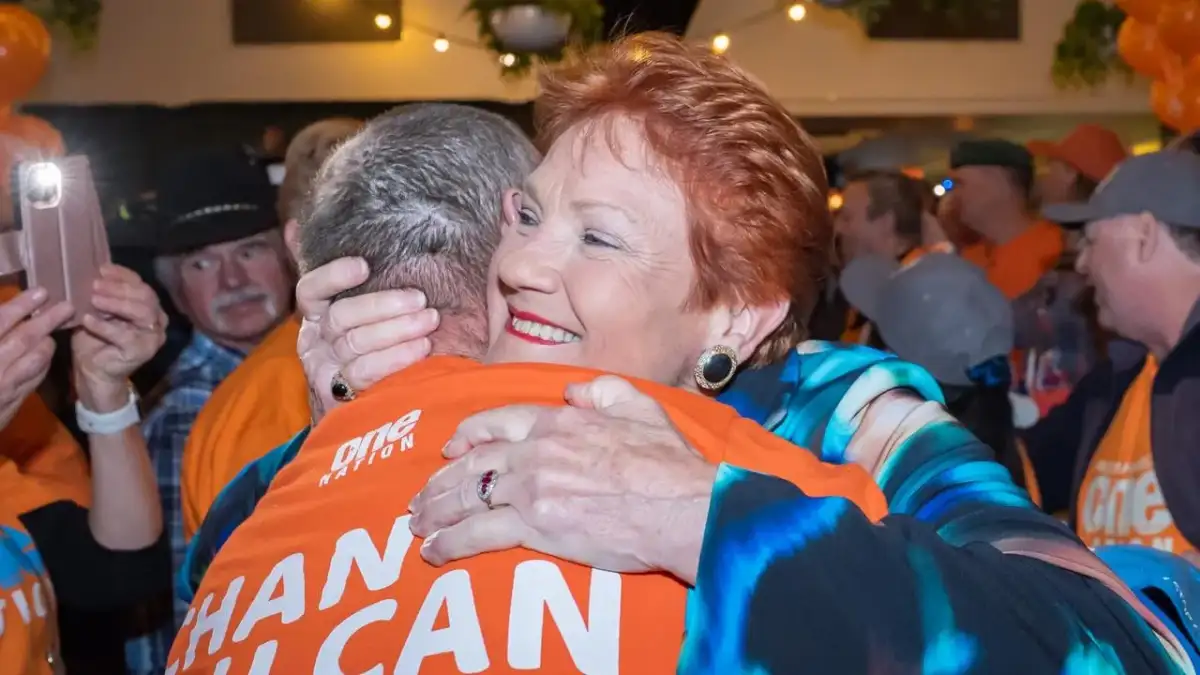
"Pauline Hanson's One Nation is the 'last hope' for Australians," declared leader Pauline Hanson, thanking her supporters on Sky News following the projected win. Candidate David Farley echoed this sentiment, expressing gratitude to campaign donors and noting that voters had come from Liberal, National, and Labor backgrounds.
One Nation's victory is being framed as a critical test of the party's electoral strength, particularly its ability to translate poll power into tangible parliamentary representation. The campaign saw David Farley, a former National member and businessman, appeal to voters reportedly disillusioned with established political parties.
Read More: One Nation Tries to Win Farrer Seat in New South Wales Election
Broader Implications and Context
This byelection outcome is viewed by some analysts as a potential harbinger of broader political realignments. While it is cautioned that a byelection win does not automatically guarantee success in a general election, the result highlights a discernible trend of voters moving away from major parties in favour of minor parties and independents.
The political atmosphere surrounding the Farrer contest was notably intense. Reports emerged of the Australian Electoral Commission investigating disputed signage related to the Milthorpe campaign. Amidst the domestic political developments, external global events, including tensions in the Strait of Hormuz and naval engagements involving Iranian tankers, were also being reported concurrently.
The Farrer seat, historically a Liberal stronghold, has now witnessed a significant departure from its established electoral pattern. One Nation's success here represents a new chapter in Australian federal politics, challenging the long-standing dominance of the two major parties.
Read More: SNP Wins 58 Seats But No Majority in Scottish Election