


Key Relationship Milestones Offer Varied Impacts on Older Adults' Happiness
For individuals over the age of 50, the question of how romantic relationships influence happiness and overall wellbeing is a subject of ongoing research. While common belief often links marriage to a definitive boost in life satisfaction, recent studies suggest a more nuanced picture. The evidence indicates that for older adults, the act of moving in with a partner may provide a more significant and measurable increase in wellbeing than the legal status of marriage itself. Conversely, the breakdown of a relationship, while often assumed to be detrimental, does not appear to cause a statistically significant decline in happiness for this age group.
Background: Focusing on Gains in Later Life
Much of the existing research on aging and relationships has concentrated on the negative impacts of loss, such as the death of a spouse or a painful separation. However, a shift in focus towards "gain events"—moments when a new romantic partner enters an older person's life—is providing new insights. Studies have specifically examined how events like moving in together and marriage affect depressive symptoms and life satisfaction among individuals aged 50 to 95.
Read More: UK Puberty Blocker Trial Paused for Young People Due to Safety Worries
Evidence of Relationship Event Impacts
Several studies have compared the wellbeing of individuals before and after significant relationship transitions:
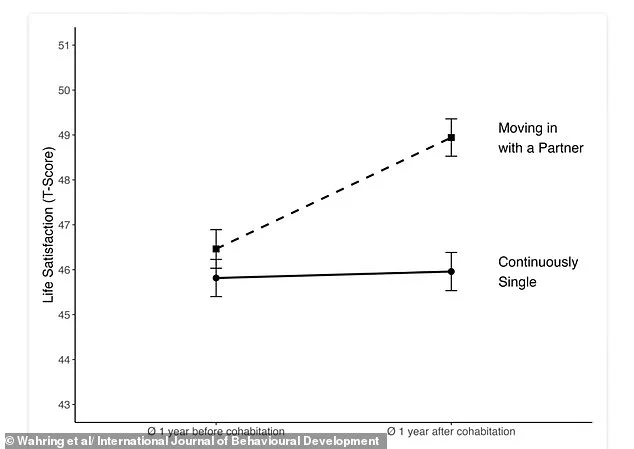
Moving In vs. Marriage: Research indicates that life satisfaction often increases significantly when individuals move from living alone to cohabiting with a romantic partner. This elevated level of satisfaction tends to be maintained after moving in.
Marriage's Additional Effect: While moving in with a partner appears to be a substantial turning point for life satisfaction, the subsequent act of marriage does not consistently show a further significant increase in happiness. In some instances, the happiness level observed when living together and anticipating marriage is not surpassed by marriage itself.
Gender Neutrality: Contrary to assumptions that men might benefit more from stable relationships than women, studies have found no significant gender differences in how these relationship events impact happiness in later life.
Separation's Milder Impact: Unexpectedly, relationship breakdowns in this older age group have not led to a measurable decline in wellbeing, challenging common expectations.
| Relationship Event | Impact on Wellbeing | Notes |
|---|---|---|
| Moving in with a partner | Significant increase in life satisfaction. | This transition appears to be a key factor in boosting happiness. |
| Marriage | Little to no additional boost in life satisfaction beyond that of cohabitation. | The legal status itself may not add substantially to the happiness derived from living together. |
| Separation/Breakup | No measurable decline in wellbeing. | This finding is contrary to common expectations. |
| Cohabitation (pre-marriage) | Peak happiness observed when living with a partner and planning marriage. | Suggests anticipation and shared living are highly valued. |
| Single vs. Married | Some studies suggest single individuals have lower life satisfaction and health compared to married people. | However, this contrasts with findings that cohabitation offers a more distinct wellbeing boost than marriage. |
The Distinct Value of Cohabitation
The central finding across multiple studies is that the transition to cohabitation with a romantic partner is a powerful driver of increased life satisfaction for older adults. This boost appears to be more pronounced and consistently measured than any additional benefit derived from the legal act of marriage. One study's findings suggest that peak happiness is often experienced when older adults are living with their partner and contemplating marriage, implying that the shared domesticity and companionship of cohabitation are central to their wellbeing.
Marriage's Health and Social Ties
While the additional happiness boost from marriage beyond cohabitation is debatable, other research points to potential benefits of marriage, particularly when compared to being single. Some studies suggest that married individuals, regardless of age, may report higher life satisfaction and better health outcomes than their single counterparts. Married individuals, especially in the United States, have also reported stronger family support, which contributes to their overall wellbeing. Marriage has also been linked to certain health advantages, including a lower risk of depression and, in some cases, improved survival rates for serious illnesses like cancer. Additionally, later-life marriages are sometimes characterized by deeper emotional compatibility and may lead to more frequent sexual activity, which is associated with cardiovascular health and stress reduction.
Read More: Gogglebox Ellie Warner Not Rushing Marriage With Nat Eddleston After Valentine's Day
Expert Perspectives
Researchers Iris Wahring from the University of Vienna, in collaboration with teams from Humboldt University in Berlin, the University of British Columbia, and Stanford University, have spearheaded investigations into these "gain events" in later life. Their work has systematically compared the effects of moving in and marriage on depressive symptoms and life satisfaction. Their findings underscore that the event of establishing a shared life appears more influential on wellbeing than the formal marital status for older adults.
Conclusion and Implications
The current body of research indicates that for individuals aged 50 and above, the decision to move in with a romantic partner provides a significant and measurable enhancement to their life satisfaction. While marriage is associated with positive outcomes, especially when contrasted with remaining single, it does not consistently offer an additional wellbeing boost beyond that already achieved through cohabitation. The resilience of this age group to relationship breakdowns also presents a notable finding.
Read More: Teva New Schizophrenia Injection Accepted by FDA on February 20 2026 Helps Adults Stay Healthy
Future research could explore the qualitative differences in relationships that lead to marriage versus those that remain cohabitations. Understanding the long-term sustainability of wellbeing gains from cohabitation and the specific factors that contribute to marital happiness in later life remains an important area of inquiry. The findings collectively suggest that for older adults, the practical realities of shared living and companionship hold a greater immediate impact on happiness than the legal institution of marriage.
Sources
Daily Mail: Study says getting married late in life provides NO boost to wellbeing - but moving in with a new partner does. Published 15 minutes ago. https://www.dailymail.co.uk/sciencetech/article-15577595/married-later-life-boost-wellbeing-study.html
Phys.org: Marriage or moving in? Study explains what lifts happiness after 50. Published 2 days ago. https://phys.org/news/2026-02-marriage-happiness.html
University of Vienna: Happiness in old age: living together counts more than a marriage certificate. Published 2 days ago. https://www.univie.ac.at/en/news/detail/happiness-in-old-age-living-together-counts-more-than-a-marriage-certificate
PsyPost: Marriage provides little additional life satisfaction boost beyond that of partnership and cohabitation. Published September 22, 2025. https://www.psypost.org/marriage-provides-little-additional-life-satisfaction-boost-beyond-that-of-partnership-and-cohabitation/
Medical Xpress: Marriage tied to higher health and happiness than single life, study finds. Published October 1, 2025. https://medicalxpress.com/news/2025-10-marriage-linked-health-happiness.html
Welltica: Why Getting Married Late in Life Could Save Your Health. Published April 10, 2025. https://welltica.com/why-getting-married-late-in-life-could-save-your-health/
National Geographic: There are real health benefits to getting married—even later in life. Published September 24, 2024. https://www.nationalgeographic.com/science/article/marriage-health-longevity-benefits


.2.jpg)

:max_bytes(150000):strip_icc():focal(749x0:751x2):format(webp)/Joan-Vassos-and-Chock-Chapple-120624-3-a75291feb2a046888f52dcdf3c9273e0.jpg)