

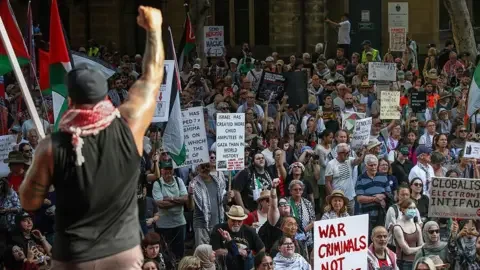
New South Wales police have ended a significant restriction on public protests, which had effectively banned marches in certain areas. This move comes shortly after the departure of Israeli President Isaac Herzog from Australia. The restriction, implemented under the Major Events Act, had granted police expanded powers for the duration of Herzog's visit, leading to controversies surrounding protest management.
The stakes are high for the principle of free assembly in Australia. For weeks, tensions have been building around the right to protest during a high-profile state visit. The application of special police powers and alleged heavy-handed tactics have drawn sharp criticism, leading to arrests, injuries, and an official investigation into police conduct. The lifting of these restrictions signifies a return to more standard protest protocols, but the underlying issues and public scrutiny remain.
Read More: Bundaberg Burnett River Flood Peak Expected Wednesday Morning
Timeline of Events and Key Actors
The period surrounding Israeli President Isaac Herzog's visit to Australia was marked by heightened security measures and significant protest activity.
Early February 2026: Restrictions on protests in New South Wales (NSW) were announced and extended, coinciding with the expected arrival of President Herzog. NSW Police Commissioner Mal Lanyon confirmed these extensions, stating that community safety was a priority when addressing geopolitical protests.
February 8, 2026: A court challenge by the Palestine Action Group (PAG) seeking to overturn the NSW government's use of special powers during President Herzog's visit was scheduled for an urgent hearing. The PAG argued that the broad application of these powers, particularly concerning the "major event declaration" under the Major Events Act, was an unreasonable infringement on protest rights.
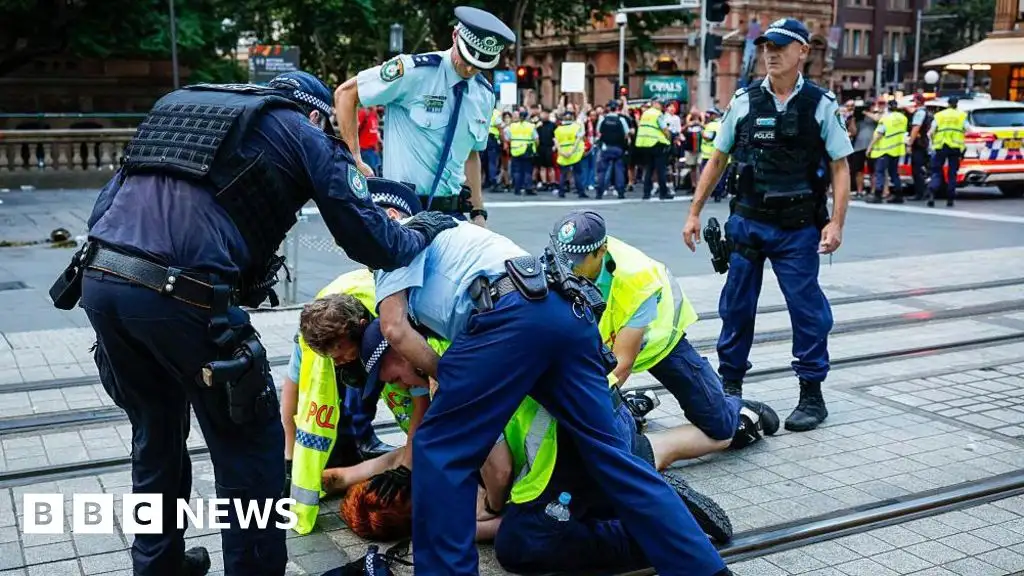
February 10, 2026: President Herzog arrived in Sydney for a four-day visit. On the same evening, a large protest occurred near Sydney's Town Hall. Reports indicate clashes between police and protesters, with video footage emerging that appeared to show police using physical force, including punching and pepper spraying individuals. Police reported 27 arrests, with 10 individuals charged and 10 officers assaulted.
February 11, 2026: Following the protest events, the NSW Police watchdog announced an independent inquiry into how officers handled the demonstrations.
February 12-14, 2026: NSW Premier Chris Minns defended the actions of the police, describing the situation as "impossible." Human Rights Watch released a statement expressing concern over the use of "apparent excessive force" by NSW police against protesters. The PAG called for the resignation of Commissioner Lanyon and Premier Minns. The controversy also extended to allegations of police dragging away Muslim men who were praying.
February 17, 2026: NSW Police Commissioner Mal Lanyon announced the cessation of the protest restrictions, citing President Herzog's departure from the country as the primary factor.
Key Actors:
Isaac Herzog: Israeli President, whose visit to Australia was the catalyst for the special security measures and subsequent protests.
Mal Lanyon: NSW Police Commissioner, who implemented and later lifted the protest restrictions. He defended police actions, citing community safety.
Chris Minns: NSW Premier, who defended police actions and invoked special powers, calling the situation "impossible."
Palestine Action Group (PAG): Organizers of the protests against President Herzog's visit, who legally challenged police powers and called for investigations into police conduct.
NSW Police: The law enforcement agency that managed security during the visit, implementing restrictions and responding to protests.
Police Watchdog: An independent body that announced an inquiry into police handling of the protests.
Human Rights Watch: An international organization that commented on the use of force by NSW police.
Evidence of Protest Restrictions and Their Lifting
The implementation and subsequent removal of protest restrictions by NSW police are documented across several reports, highlighting the legal and practical measures taken.
Implementation:
Public Assembly Restriction Declaration (PARD): NSW Police Commissioner Mal Lanyon imposed a PARD, effectively banning marches in designated areas. This declaration was in place for 90 days, with the commissioner reviewing its necessity every two weeks.
Major Events Act: Police were granted expanded powers under the Major Events Act for the duration of President Herzog's visit. This legislation allowed police to "move people on" if their behavior obstructed traffic, caused fear, harassment, or intimidation. It also allowed for searches within designated event areas and could prohibit public assemblies.
Court Challenges: The Palestine Action Group (PAG) launched a legal challenge to these powers, arguing they were an overreach and used to suppress legitimate protest. A court ultimately dismissed the PAG's challenge, upholding the government's use of the powers.
Commissioner's Justification: Commissioner Lanyon stated that groups protesting geopolitical issues could not supersede community safety concerns. He also noted that confrontation between protesters and officials could impact the state's reputation.
Lifting of Restrictions:
President's Departure: The primary stated reason for lifting the restrictions was President Herzog's departure from Australia. Commissioner Lanyon confirmed the cessation of the ban, directly linking it to the conclusion of the visit.
Official Announcement: The announcement of the restriction's end was made on February 17, shortly after the President's departure.
The use of the Public Assembly Restriction Declaration (PARD) and expanded Major Events Act powers significantly curtailed protest activities in specific areas of Sydney during President Herzog's visit. These measures were legally challenged but upheld in court before being lifted upon the conclusion of the visit.
Allegations of Excessive Force and Police Conduct
Video evidence and eyewitness accounts have raised serious questions about the conduct of NSW police during the protests.
Physical Confrontations: Footage appeared to show police charging, punching, and pushing protesters. One widely shared video depicted officers repeatedly punching a man in a white shirt.
Treatment of Praying Men: Reports and videos indicated that police moved in on and removed a group of Muslim men while they were praying near Sydney Town Hall. While police later suggested an agreement was in place for the prayer to conclude before intervention, this point has been disputed.
Pepper Spray Use: Several individuals, including legal observers and journalists, reported being pepper sprayed by police. Human Rights Watch verified footage showing police using pepper spray.
Injuries: A state Member of Parliament was among those who reported being injured during the clashes.
Aggression Levels: Journalists covering the protests noted that police appeared more aggressive than they were accustomed to seeing in Sydney, questioning the immediate provocation for such tactics.
Police Justification: NSW Police Commissioner Mal Lanyon defended the officers' actions, stating they showed restraint and acted appropriately to manage the situation and prevent conflict. Premier Chris Minns described the police's situation as "impossible."
Multiple reports and visual evidence point to physical altercations between police and protesters, including allegations of excessive force such as punching and pepper spraying. The treatment of praying individuals and reported injuries have also been central to the controversy.
Read More: Ireland's Global Role: EU, UN, and Culture Beyond Rugby
Legal Challenges to Police Powers
Protesters and advocacy groups actively sought legal recourse against the special powers granted to NSW police.
Court Challenge by Palestine Action Group (PAG): The PAG lodged a legal bid to overturn the police powers enacted under the Major Events Act. They argued that these powers were too broad and disproportionately affected the right to protest.
Major Events Act Application: The government contended that the powers were necessary for the safety of President Herzog and the community, citing potential reputational damage if confrontations occurred. The broad geographical and temporal scope of the "major event declaration" was specifically questioned by the PAG's legal team.
Court Rulings: The NSW Supreme Court dismissed the PAG's challenge, determining that the government had appropriately used its powers under the Major Events Act. Justice Robertson Wright presided over the hearing, noting the urgency but ultimately ruling against the protesters' application.
Nature of Powers: The powers granted included the ability to move people on, close specific locations, and issue orders to prevent disruption or ensure public safety. These were invoked following a declaration under the Major Events Act.
Comparison to Terrorism Laws: One report noted that a PARD can be imposed after an event is declared an act of terrorism, raising questions about the proportionality of such measures for a visiting dignitary.
The Palestine Action Group's legal challenge against the broad police powers, enacted under the Major Events Act during President Herzog's visit, was unsuccessful. The court upheld the government's justification for these powers, which included crowd control and safety measures.

Official Investigations and Public Response
The events surrounding the protests have prompted official investigations and a divided public and political response.
Independent Inquiry: Following the protest violence, the NSW police watchdog announced it would launch an independent inquiry into the conduct of officers during the demonstrations.
Calls for Accountability: The PAG welcomed the inquiry and demanded the resignation of NSW Police Commissioner Mal Lanyon and NSW Premier Chris Minns, citing police overreach and violence.
Official Defenses: Premier Chris Minns defended the police, stating they were in an "impossible situation." Commissioner Lanyon maintained that police actions were justified and demonstrated restraint.
Advocacy Group Statements: Human Rights Watch issued a statement criticizing the use of "apparent excessive force" by police. Various pro-Palestinian advocates expressed vows to continue challenging the restrictions.
Community Events: Jewish community organizations hosted events during President Herzog's visit, indicating a different segment of the community's engagement with the presidential trip.
An independent inquiry into police conduct has been launched. While some groups are calling for the resignation of senior officials, the government and police leadership have defended the actions taken during the protests, characterizing the situation as challenging but manageable.
Expert Analysis and Commentary
The application of special police powers and the subsequent handling of protests have been subject to analysis by legal experts and commentators.
Read More: Thomas Weatherall leaves Heartbreak High Season 2 on Netflix ending Malakai's story

"These arrangements are not a ban on protests or marches." – NSW Government Press Release
"Given the urgency of the challenge, Justice Robertson Wright did not hand down reasons. That is not consistent with a genuine right to protest." – The Conversation, citing the lack of immediate detailed reasoning from the court.
"Letting the police commissioner decide whether members of the public should be allowed to march down the street to express their opposition to a politician is a totally unnecessary attack on rights." – CPA (Communist Party of Australia)
"The police were ‘definitely more aggressive than I'm accustomed to seeing from police in Sydney.’" – Andrew Quilty, journalist, quoted by Human Rights Watch.
"Police can move people on if their behaviour or presence obstructs traffic or causes fear, harassment or intimidation, they said." – Summary of police powers under Summary Offences Act.
Commentary suggests a conflict between the government's assertion that protests were not banned and the practical effect of the implemented restrictions. Legal observers have questioned the speed and transparency of court decisions regarding protest rights. Critics argue the powers granted to police represent an infringement on fundamental freedoms, while journalists have reported an observed increase in police aggression during the events.
Conclusion and Implications
The conclusion of Israeli President Isaac Herzog's visit has led to the immediate lifting of protest restrictions in New South Wales, marking the end of a contentious period. The Police Commissioner's decision to cease the Public Assembly Restriction Declaration (PARD) directly linked this action to the President's departure, implying the restrictions were specific to the visit's security requirements.
The events have highlighted a significant tension between national security, the protection of visiting dignitaries, and the fundamental right to public assembly and free expression. While the court system upheld the government's invocation of special powers under the Major Events Act, substantial public and expert criticism remains regarding the proportionality and application of these powers. The emerging video evidence of police conduct, coupled with eyewitness accounts, has led to an independent inquiry, the outcomes of which will be crucial for understanding accountability and potential future policy adjustments.
Read More: White House Uses Movie Clips In War Videos, Critics Say It Trivializes Real Conflict
The situation has underscored the challenges faced by law enforcement in balancing diverse public interests during high-profile events. The political response, with the Premier defending police actions as necessary in an "impossible situation," indicates a cautious approach from the government. However, the calls for resignations and the ongoing scrutiny from civil liberties groups suggest that the debate over protest rights and police powers in New South Wales is far from settled. The precedent set by these events, and the findings of the upcoming police inquiry, will likely inform future responses to public demonstrations in the state.
Next Steps:
The independent inquiry into police conduct will proceed.
The findings of this inquiry will be publicly released and may lead to recommendations for police training, policy, or disciplinary actions.
Ongoing public and advocacy group monitoring of police powers and protest rights in NSW.
Sources
The Guardian:
NSW police end restriction on protests now Israeli president has left the country
Court challenge over march against Israeli president’s visit to be decided at Monday morning hearing
An ‘impossible’ situation or ‘unhinged’ police? Inside the chaos at Sydney’s anti-Herzog protest
NSW police say agreement to allow Muslims to finish prayer at Sydney protest didn’t reach officers
BBC News:
Herzog visit: Australian police defend actions after protest violence
Sydney police to be investigated by watchdog after anti-Herzog protest violence
ABC News:
NSW protest restrictions extended ahead of Israel president's visit
Chris Minns positions himself as the anti-protest premier. Will it pay off?
The Conversation:
Isaac Herzog visit: protesters lose challenge to sweeping special police powers. What now?
Human Rights Watch:
SBS News:
Minns invokes special powers, urges calm ahead of Israeli president's visit
NBC News:
Australia urges calm after violent clashes in Sydney during Israeli president's visit
CPA (Communist Party of Australia):
Index on Censorship: