New Findings Offer Unprecedented Control Over Light's Journey
Researchers have devised a way to make light bend and twist in ways previously confined to theory. This new technique, detailed in recent publications, centers on 'generalized optical meta-spanners'. These are not just fancy lenses; they represent a fundamental shift in how we can direct light, allowing for multiple, distinct paths simultaneously. This could mean optics that do more than one thing at a time, a significant leap for fields reliant on light manipulation.
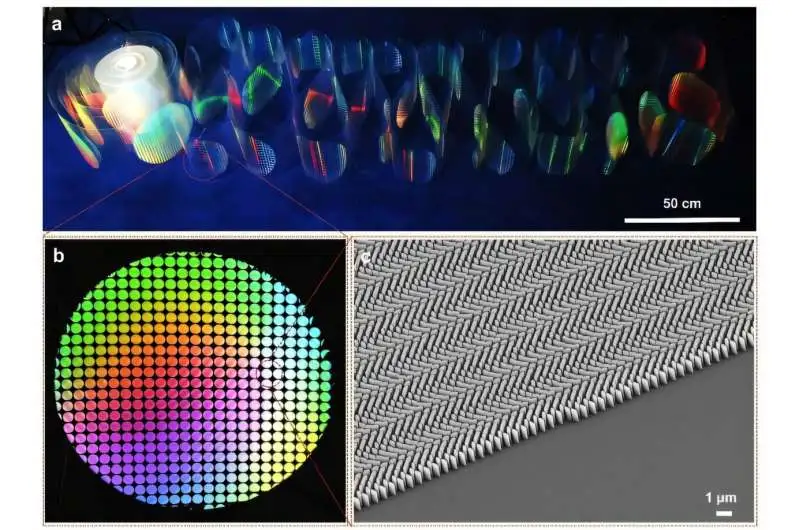
The core of this advancement lies in cascaded Janus meta-optics. This approach allows for bidirectional asymmetric modulation of light. Imagine a surface that can steer light differently depending on the direction it comes from, and even based on its polarization. This intricate control is key to the meta-spanners' ability to choreograph light into complex, predetermined paths.
Read More: Poor Sleep May Show Early Dementia Signs
Further development is seen in scalable generalized meta-spanners. This work points towards systems that can handle parallel multitasking optical manipulation. This suggests not just guiding one light path, but many, independently and concurrently. The potential applications range from advanced imaging to novel optical computing architectures.
Background: A Shift in Optical Design
Traditional optical elements, like lenses and prisms, have long been the workhorses of light manipulation. They operate on well-understood principles of refraction and reflection. However, these methods offer limited flexibility, especially when dealing with complex light behaviors or the need for multiple simultaneous functions.
Meta-optics, on the other hand, represent a newer frontier. They utilize engineered nanoscale structures – the 'meta-atoms' – to interact with light in highly tailored ways. This allows for effects that go beyond the capabilities of conventional materials. The recent work builds upon this foundation, pushing the boundaries of what's achievable with these advanced optical surfaces. The names Yanqiu Li, Lei Zheng, Reinhard Caspary, and Bernhard Roth appear in connection with the 'cascaded Janus meta-optics' research, signaling key contributors to this area.
Read More: Failed Startups Sell Old Chats to Train AI