A 1,300-pound NASA satellite, the Van Allen Probe A, is slated for an uncontrolled re-entry into Earth's atmosphere on March 10th. After nearly 14 years in orbit, the spacecraft, originally designed to study Earth's radiation belts, will largely burn up upon its descent. Experts suggest that while most of the satellite will disintegrate, there is a small possibility that some fragments could survive and reach the ground.

The uncontrolled nature of the re-entry means NASA engineers cannot direct its trajectory, leaving the precise landing spot uncertain. The U.S. Space Force has projected the re-entry with a plus or minus 24-hour window. While the event is generating some public concern, the risk of harm from falling debris is considered extremely low, with one estimate placing the chance of injury to any individual at 1 in 4,200.
Read More: Lab Recreates Dying Stars, Shows Hydrogen Makes Life's Building Blocks

Van Allen Probe A's Mission and Legacy
The Van Allen Probe A, along with its twin, was launched in 2012 as part of a mission to gain a deeper understanding of Earth's Van Allen radiation belts. These belts, composed of charged particles trapped by the planet's magnetic field, shield Earth from solar storms, cosmic radiation, and solar wind. The probes gathered significant data, contributing to the discovery of a transient third radiation belt that can form during intense solar activity. This research is vital for predicting the impact of solar events on satellites, astronauts, communication systems, and power grids. The mission extended well beyond its initial two-year design life, continuing data collection for nearly seven years before fuel depletion led to its retirement.

The Broader Context of Space Debris
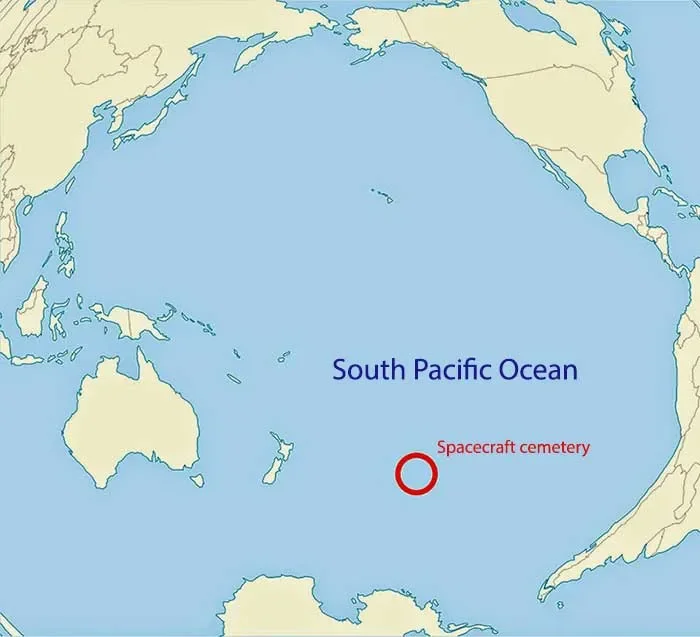
The re-entry of defunct satellites is not an uncommon occurrence. Thousands of pieces of space debris and retired spacecraft return to Earth's atmosphere annually. Many of these objects, especially those in lower orbits, eventually succumb to atmospheric drag and burn up. For larger or higher-orbiting satellites, however, the fate can be less predictable, with some remaining in orbit for extended periods. NASA's 'spacecraft graveyard' concept, as described by its Space Place initiative, highlights the finite lifespan of these orbital machines.
Read More: New StructureMASST tool helps find molecules in samples

“Defunct satellites and rocket debris re-enter Earth's atmosphere regularly and rarely cause harm.”
The re-entry of Van Allen Probe A is part of a larger, ongoing phenomenon of 'space junk' descending back to our planet. The scientific community largely views these events as routine, with significant efforts dedicated to tracking and mitigating the risks associated with space debris.
What to Expect During Re-entry
As Van Allen Probe A enters the atmosphere, it is expected to undergo a "fiery fall" due to the intense heat generated by friction with the air. The majority of the approximately 1,323-pound (600 kg) spacecraft is predicted to burn up during this process.
"Most of the approximately 1,323-pound spacecraft, Van Allen Probe A, will burn upon re-entry…"
However, the possibility of some surviving fragments reaching the surface means that a precise landing location cannot be determined beforehand. This uncertainty is inherent in uncontrolled re-entries, where factors like atmospheric density and the object's precise orbital path at the moment of descent play crucial roles.
Read More: Pentagon Shares Decades of UFO Data, Including Moon Mission Files