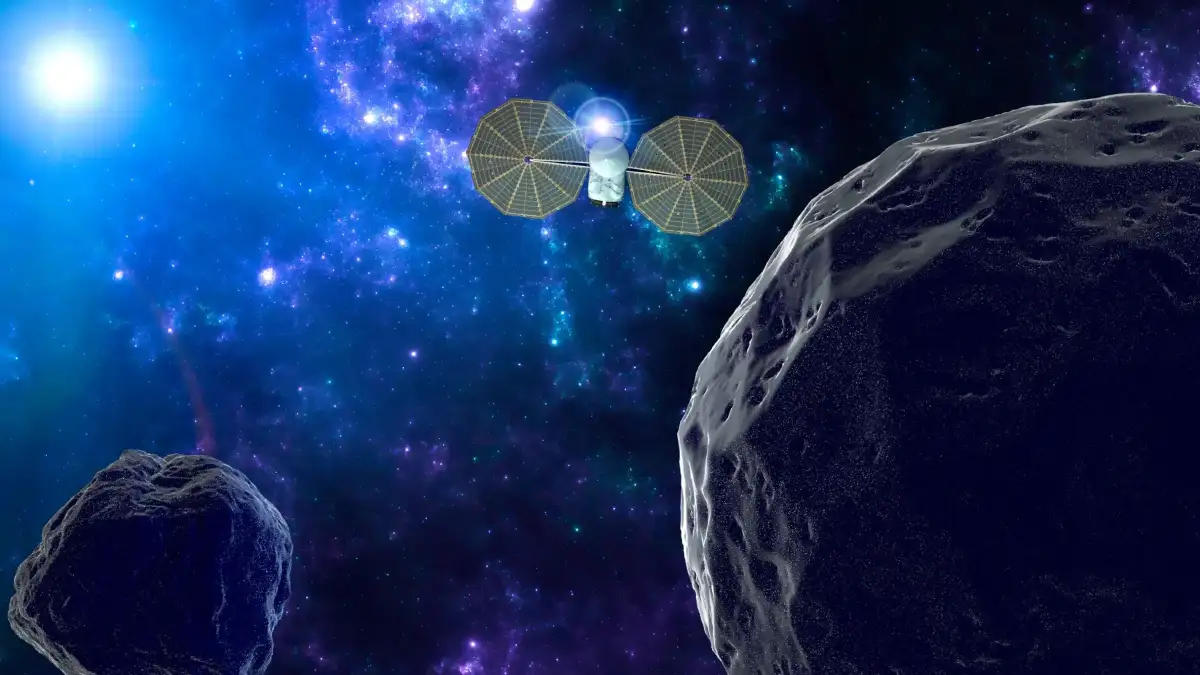
Washington D.C. – May 27, 2026 – NASA has outlined an ambitious plan to establish a lunar base, or "city," within the next six years. This announcement arrives as the agency navigates complex international collaborations and domestic shifts, including a potential shift in the management of its Jet Propulsion Laboratory.
The agency's immediate focus involves the Artemis program, with recent astronaut missions having successfully completed extended lunar orbits, pushing the boundaries of human distance from Earth. The upcoming phases of Artemis aim to build upon these foundational journeys, setting the stage for sustained human presence on the Moon.
Strategic Realignment and Contractual Adjustments
NASA has recently undergone a significant organizational "realignment," ostensibly to accelerate mission delivery. This restructuring coincides with the agency's decision to compete contracts for the management of the Jet Propulsion Laboratory, a move that signals a potential alteration in how key research and development facilities operate.
Read More: US Space Force Victus Haze Mission Successfully Tests Orbital Intercepts
This period also sees NASA celebrating significant milestones, including awards for its Artemis moon coverage and tips for skywatchers in May 2026. The Atmospheric Waves Experiment (AWE) instrument recently concluded its data-collection phase, having exceeded its two-year mission to study atmospheric gravity waves and their impact on energy transfer into space.

International Ambitions and Technological Debates
The race to leave a significant footprint on the Moon is becoming increasingly global. While NASA pushes forward with its lunar ambitions, there is a growing question of whether future lunar landings will be spearheaded by American or Chinese efforts. This underscores a broader, quiet competition in space exploration.
Furthermore, the potential for a conflict between SpaceX and NASA on "crucial aspects" has been noted. The specifics of this disagreement remain unclear but suggest potential friction points in the privatized space industry's integration with governmental objectives.
Read More: Chrome mimeHandler API lets extensions handle file types
Ground-Up Lunar Habitation: A Long-Term Vision
Beyond immediate missions, NASA and other agencies are exploring innovative approaches to long-term space habitation. Reports indicate research into constructing habitats on Mars using materials like urine, suggesting a pragmatic, resource-conscious approach to off-world living. This echoes historical construction methods, such as the use of rice flour in mortar for parts of China's Great Wall. The overarching vision appears to hinge on a high degree of automation for these ambitious colonization projects.
Background: The Evolving Lunar Landscape
NASA's current lunar initiatives build upon decades of space exploration. The agency's history includes extensive interplanetary probe programs initiated in the 1960s. International partnerships are also a cornerstone, with payload exchanges occurring between NASA and the European Space Agency (ESA). Recent successes, such as the Artemis II mission completing a historic lunar flyby, underscore the renewed momentum in lunar exploration. The successful return of the Artemis II crew, including their "astonishingly ordinary" on-mission experiences, highlights the practical challenges and triumphs of human spaceflight. The possibility of seeing the Moon even during daylight hours, a phenomenon explored in public outreach, serves as a reminder of the celestial body's constant presence in human consciousness.
Read More: JWST Finds Oldest Barred Spiral Galaxy M1149-BSG-z5