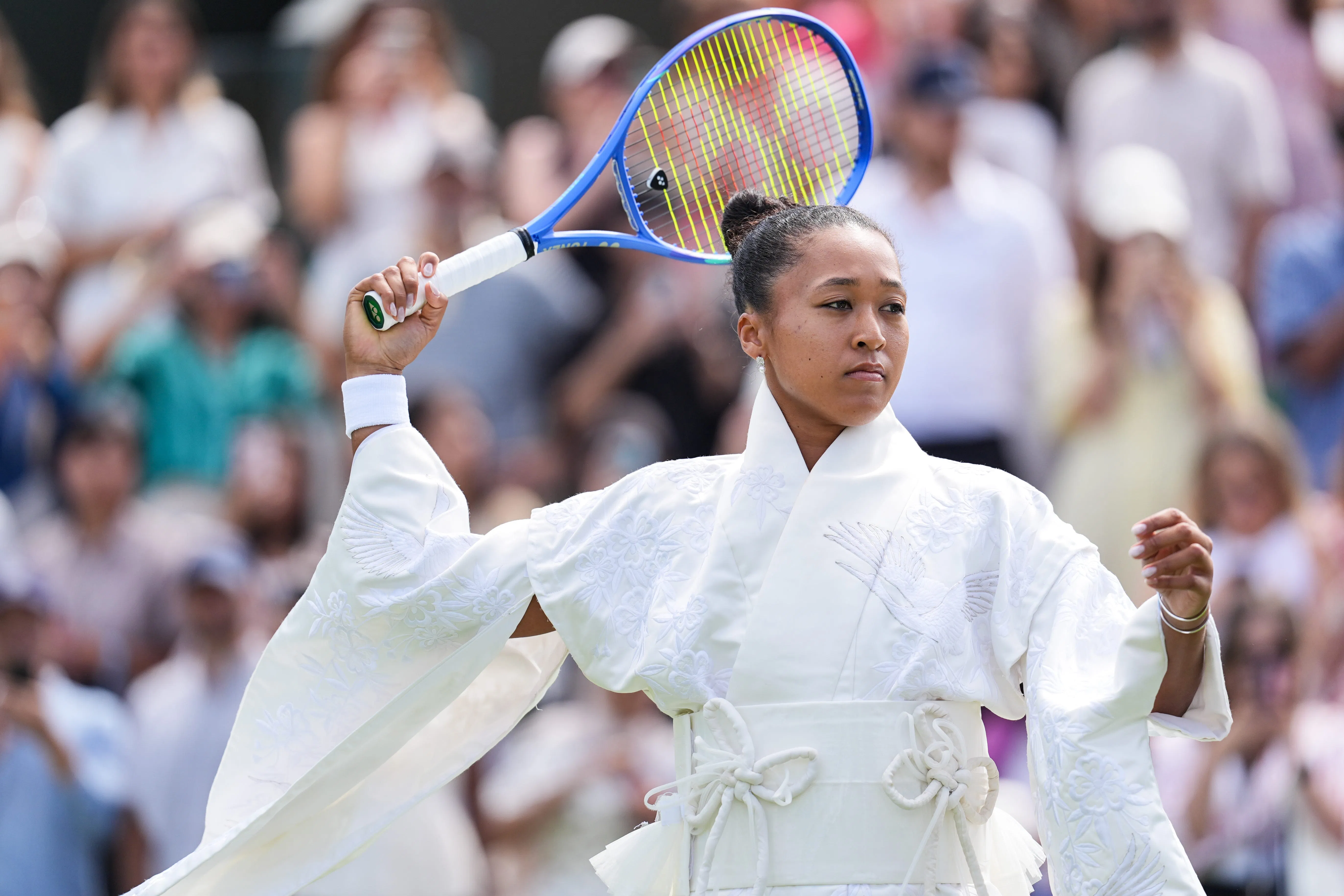
Naomi Osaka has effectively challenged the restrictive sartorial codes of the All England Club during the current 2026 tournament. By arriving in a layered ensemble constructed from repurposed vintage kimonos and a deconstructed Western wedding gown, Osaka utilized the ritualized walk-on sequence to intersect personal history with rigid sporting tradition. Following this display, she defeated Elsa Jacquemot (6–1, 7–5) to advance into the second round.
The core technical maneuver involves a detachable layered garment system that complies with Wimbledon's mandate for "all-white" attire while maintaining a high-visibility, avant-garde silhouette.

| Design Element | Cultural/Technical Function |
|---|---|
| Shiromuku Fabric | Integration of traditional Japanese bridal attire. |
| Detachable Layers | Pragmatic shift from ceremonial display to performance kit. |
| Nike Custom Kit | Mandatory sporting infrastructure beneath aesthetic layers. |
| Mikimoto Jewelry | Explicit reinforcement of Japanese craft provenance. |
The ensemble is framed as a dialogue between Japanese ceremonial dress and the strict formality enforced by the All England Club for nearly 150 years.
The outfit functions as a palimpsest; the performative outer layer serves as a transient, "living art" facade, which is stripped away to reveal the standardized professional gear required for active play.
Spectacle in this context acts as a calculated deviation from the "sea of white" typically produced by the tournament's Dress Code regulations.
Contextualizing the Spectacle
The tension between Individual Expression and the All England Club mandates has long been a feature of professional tennis. While Wimbledon demands adherence to a monochromatic palette to minimize visual disruption, athletes increasingly utilize the pre-match "walk-on" to circumvent these constraints.
Osaka’s methodology here reflects a broader strategy observed earlier in the 2026 season, where she deployed cascading overskirts and corsets at the French Open to echo architectural silhouettes. By bridging the gap between historical heritage garments and modern athletic apparel, the athlete transforms the court transition into a space of symbolic reclamation rather than passive compliance. The reliance on vintage materials—specifically the shiromuku—places the display within a broader postmodern inquiry into how traditional iconography survives within the hyper-commercialized environment of Grand Slam tennis.
Read More: FIFA World Cup 2026 Revenue Reaches $15 Billion With New Ticket Prices