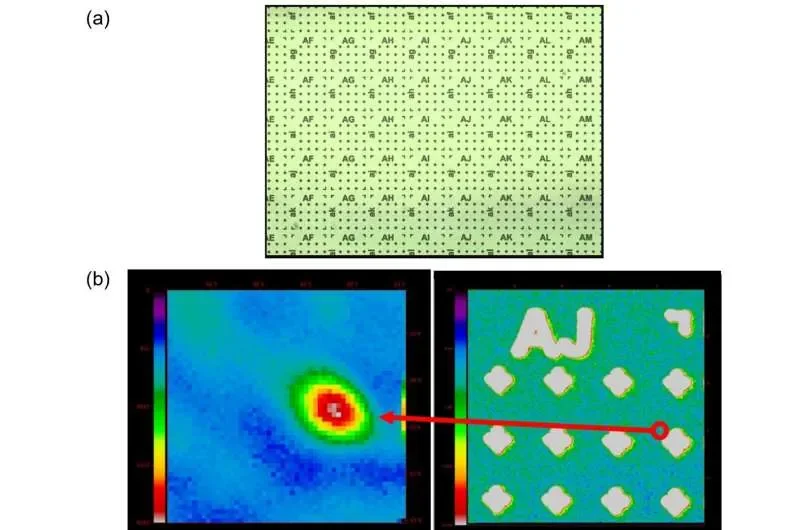
Breakthrough Device Offers Sensitive Detection Capabilities
A novel electrochemical sensor, operating at the nanoscale, has demonstrated remarkable precision in identifying phosphates. This development signals a significant step forward in analytical chemistry, promising enhanced capabilities for various scientific and industrial applications.
The sensor's design leverages nanotechnology to achieve its high sensitivity. Early findings indicate its potential utility in fields requiring meticulous analysis of minute chemical concentrations.
Methodology and Preliminary Results
While specific technical schematics remain under wraps, the underlying principle involves electrochemical reactions triggered by the presence of phosphate ions. The sensor's ability to operate at such a small scale allows for the detection of substances that might evade larger, less refined instruments.
Further details regarding the sensor's construction and the methodology behind its performance are anticipated to be released in subsequent reports. The initial success, however, points towards a new frontier in detection technology.
Read More: Indigenous Data Rights Now Key in Conservation Genomics
Background: The Significance of Phosphate Detection
Phosphates are ubiquitous compounds with critical roles in biological systems, acting as essential components of DNA and cellular energy transfer. In environmental science, elevated phosphate levels can be indicative of pollution, contributing to eutrophication in water bodies. Industrial applications, such as in water treatment and material science, also necessitate accurate phosphate monitoring. Existing detection methods, while functional, often involve complex laboratory procedures or are limited in their sensitivity. This new nanoscale sensor could potentially streamline and improve these processes.