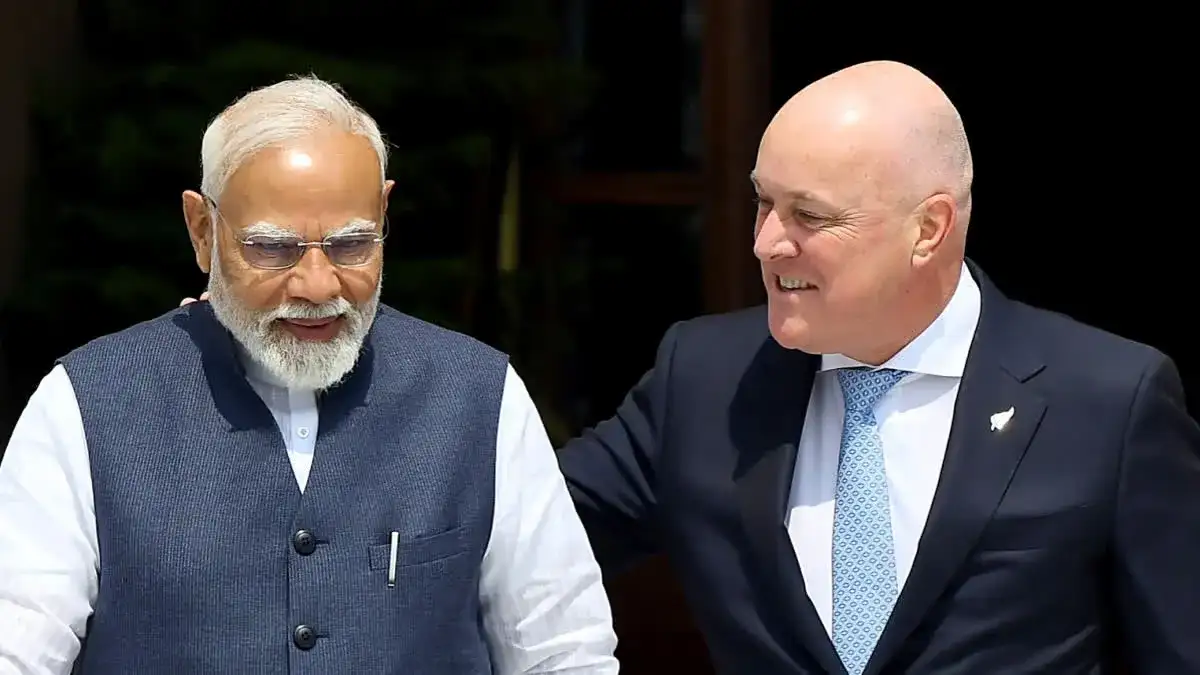
New Zealand Prime Minister Christopher Luxon confirmed on Friday, July 3, 2026, that Indian Prime Minister Narendra Modi will conduct his maiden official visit to the country during the week of July 6–12, 2026. This trip serves as the centerpiece for the formalizing of a Free Trade Agreement (FTA) between the two nations.

Core Insight: The agreement grants India 100% duty-free access to the New Zealand market, while Wellington secures entry into the Indian economy amidst ongoing global trade volatility.

Economic Objectives and Scope
The bilateral movement centers on shifting trade relations into a formalized structure. Officials indicate the agreement functions as a tool for immediate economic growth and long-term integration.
| Strategic Goal | Mechanism |
|---|---|
| Market Access | 100% duty-free access for Indian exports |
| Growth Strategy | Alignment with Indo-Pacific economic goals |
| Trade Volume | Aiming to double bilateral trade in the coming years |
"India is of enormous importance to New Zealand’s economic prosperity," said Christopher Luxon, noting the necessity of the partnership in a climate of "rising global trade uncertainty."
Contextual Background
The visit follows significant groundwork laid earlier this year, specifically a May 6, 2026, briefing by New Zealand Trade and Investment Minister Todd McClay. Negotiations for this "high-quality" Trade Agreement have been presented as a milestone in shifting New Zealand's focus toward large-scale, high-growth Asian economies.
Read More: Taiwan Holds Nantou County Drills to Prepare for State Collapse

For India, the visit aligns with a broader strategy to solidify presence in rules-based Pacific markets, moving beyond traditional regional trade alliances to secure diverse, high-income partners. The specific itinerary and exact meeting dates for the coming week are expected to be finalized through standard diplomatic channels.