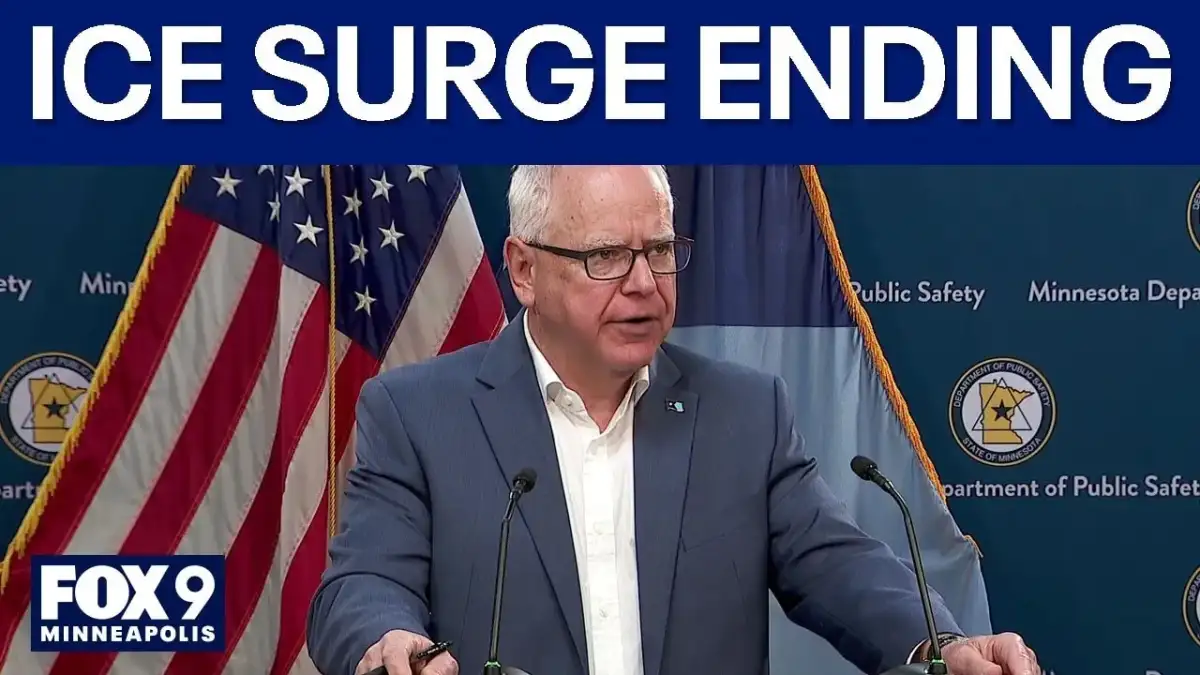
Stakes Raised Over Minnesota Business Aid
Governor Tim Walz has put forth a proposal for a $10 million relief package intended to aid Minnesota businesses. This initiative aims to provide financial support, specifically in the form of forgivable loans, to companies experiencing economic hardship. However, the plan has quickly become a point of contention, with critics raising serious alarms about potential avenues for fraud, a concern that has already plagued the state. The debate highlights a critical juncture where the need for business support clashes with the imperative to safeguard public funds, particularly in light of recent, significant financial improprieties.
Context of the Proposal
Governor Walz's proposal comes in the wake of "Operation Metro Surge," a federal immigration enforcement operation in Minnesota. The governor's office states that this operation has had a detrimental impact on some businesses, leading to revenue losses. The relief package is designed to offer forgivable loans ranging from $2,500 to $25,000 to eligible businesses that can demonstrate substantial revenue loss during specific dates linked to the operation.
Read More: FIFA World Cup 2026 Revenue Reaches $15 Billion With New Ticket Prices
The proposal is slated to be presented to the state legislature during its upcoming session. While the governor's office has indicated that the federal government should bear the costs associated with the federal operation, it appears to be preparing for the possibility that federal reimbursement may not materialize, thus necessitating a state-level legislative solution.

Evidence of the Proposal and Reactions
Several news outlets have reported on Governor Walz's proposal:
Governor Walz announced a $10 million relief package for small businesses affected by "Operation Metro Surge." The package includes forgivable loans for businesses demonstrating revenue loss tied to the operation. (Article 1, 3, 5, 7, 13)
The Minnesota Department of Employment and Economic Development is collaborating with private sector partners to find ways to support small businesses. (Article 5)
Governor Walz has also called on the federal government to reimburse Minnesota for damages attributed to the federal immigration surge. (Article 4)
The proposal is expected to face challenges in the upcoming legislative session. (Article 2)
Escalating Fraud Concerns
A significant point of opposition to the proposed relief package centers on the prevalence of fraud scandals within Minnesota. Critics argue that the structure of the proposed aid could create new opportunities for illicit activities.
Republican Lawmakers' Stance: Several Republican lawmakers have voiced strong opposition, characterizing the proposal as a "new avenue for fraud." (Article 2) House Majority Whip Tom Emmer, R-Minnesota, has asserted that the federal government's actions are responsible for damaging the state. (Article 2)
Historical Fraud Scandals: Opponents frequently reference past instances of financial impropriety in the state. This includes a daycare fraud scandal and reports of overseas terror groups benefiting from misused welfare funds, with luxury purchases linked to convicted fraudsters. (Article 1) President Trump has claimed that such scams have cost taxpayers over $19 billion. (Article 1)
Legislative Response to Fraud: In response to large-scale fraud, a Republican lawmaker has introduced legislation, the "WALZ Act," aimed at preventing further waste of taxpayer dollars. (Article 6) This bill seeks to give the U.S. Department of Health and Human Services less discretion in overlooking sudden increases in billing, which are often indicators of fraud, especially in large entitlement programs. (Article 6) Governor Walz himself has previously announced legislative packages and initiatives targeting state fraud, including the establishment of a new fraud investigations unit and proposals to criminalize certain fraudulent actions. (Article 8)
Federal Scrutiny: Congressional committees have also focused on fraud schemes in Minnesota, with Republicans on the House Oversight Committee launching an investigation into Governor Walz's handling of fraud cases. (Article 9, 10) Testimony before these committees has alleged that officials may have resisted addressing systemic financial impropriety and that whistleblowers have faced retaliation. (Article 9)
Contrasting Views on Impact and Responsibility
The assessment of who or what is responsible for the economic hardship and how to address it presents a divergent landscape between the governor's office and his critics.
Read More: MN Governor Walz Does State Work on Memorial Day

Governor Walz's Perspective: Governor Walz frames the relief package as a necessary measure to support businesses impacted by federal actions, specifically "Operation Metro Surge." He views the federal government as being responsible for these impacts and expects federal reimbursement. (Article 3, 4) He also initiated efforts to combat fraud, proposing a legislative package and a fraud investigations unit. (Article 8)
Critics' Perspective: Critics, particularly Republicans, contend that the federal government's withdrawal of troops from Minnesota, rather than federal immigration actions, has led to the situation requiring taxpayer-funded relief. (Article 2) They emphasize the state's history of fraud and argue that the proposed package would exacerbate these issues rather than solve them. (Article 1) Some have directly accused the Walz administration of turning a "blind eye to crime" despite numerous reports of fraud. (Article 9)
Expert Analysis and Related Actions
While direct quotes from independent experts on the specific $10 million proposal are limited in the provided text, the broader context of fraud and governmental response offers insights.
Nature of Fraud: A former federal prosecutor described a significant fraud scheme in Minnesota as being notable for its scale and the ease with which it was carried out. (Article 6) This ease was attributed, in part, to incentives for officials to avoid scrutiny due to political sensitivities. (Article 6)
Governmental Response to Fraud: Governor Walz has announced a legislative package aimed at targeting state fraud and has stated that his administration has been working to crack down on fraud for years, seeking more authority from the legislature. (Article 8, 12)
Political Ramifications: The ongoing investigations into fraud scandals have had political consequences, with some reports indicating they complicated Governor Walz's bid for a third term, and he ultimately decided not to seek reelection. (Article 11) A group of Republican legislators has called for Governor Walz's resignation amidst these investigations. (Article 12)
Findings and Implications
Governor Tim Walz has proposed a $10 million relief package for Minnesota businesses experiencing economic hardship, which he attributes to federal immigration operations. This proposal involves forgivable loans designed to assist affected companies.
However, the initiative is met with strong opposition from Republican lawmakers and other critics who argue that the state's troubled history with financial fraud makes such a package a high-risk venture, potentially opening new avenues for illicit activities. These concerns are amplified by ongoing federal and state investigations into large-scale fraud scandals within Minnesota, which have already cost taxpayers substantial sums and led to political repercussions for the governor.
Read More: Hunter Region Gets $12 Billion Train Factory
The situation presents a complex dynamic:
The need to support businesses facing demonstrable economic losses.
The imperative to prevent public funds from being exploited through fraud, especially given past experiences.
The political tensions surrounding the assessment of responsibility for economic impacts and the handling of fraud allegations.
Moving forward, the legislative session will be crucial in determining the fate of the proposed relief package. The extent to which safeguards can be implemented to mitigate fraud risks, alongside the political will of lawmakers, will dictate the outcome. The ongoing fraud investigations will likely continue to cast a shadow over such financial proposals.
Sources Used:
Article 1: Minnesota Gov. Tim Walz slammed over proposed $10M ‘relief package’ for businesses impacted by Trump’s immigration crackdown - Published 4 hours ago - https://dnyuz.com/2026/02/13/minnesota-gov-tim-walz-slammed-over-proposed-10m-relief-package-for-businesses-impacted-by-trumps-immigration-crackdown/
Article 2: Tim Walz Wants Taxpayers to Give $10M in Forgivable Loans to Riot-Torn Businesses - Published 11 hours ago - https://townhall.com/tipsheet/scott-mcclallen/2026/02/12/tim-walz-wants-taxpayers-to-give-10m-forgivable-loans-to-businesses-n2671241
Article 3: Gov. Walz proposes $10 million relief package for small businesses impacted by Operation Metro Surge - Published - https://www.fox9.com/news/gov-walz-10-million-relief-small-businesses-operation-metro-surge-feb-12
Article 4: Walz calls on federal government to reimburse Minnesota for 'damage' - Published - https://www.washingtonexaminer.com/policy/immigration/4456454/walz-calls-federal-government-reimburse-minnesota-damage-surge/
Article 5: Walz proposes $10 million for Minnesota businesses affected by ICE surge - Published 10 hours ago - https://www.kaxe.org/local-news/2026-02-12/walz-proposes-10-million-for-minnesota-businesses-affected-by-ice-surge
Article 6: GOP lawmaker unveils WALZ Act after billions lost in Minnesota fraud scandal - Published - https://www.foxnews.com/politics/gop-lawmaker-unveils-walz-act-after-billions-lost-in-minnesota-fraud-scandal
Article 7: Walz proposes $10 million in emergency relief for Minnesota businesses affected by ICE surge - Eden Prairie Local News - Published 13 hours ago - https://www.eplocalnews.org/2026/02/12/walz-proposes-10-million-in-emergency-relief-for-minnesota-businesses-affected-by-ice-surge/
Article 8: Gov. Tim Walz announces legislative package targeting state fraud - Published January 4, 2025 - https://www.cbsnews.com/minnesota/news/walz-legislative-package-fraud/
Article 9: Minnesota lawmakers highlight fraud schemes at hearing before House committee - Published January 7, 2026 - https://www.cbsnews.com/news/minnesota-fraud-schemes-house-oversight-hearing/
Article 10: ICYMI: Walz's $9 Billion Problem: Minnesota Delegation Demands Answers on Massive Fraud Scandal - Published January 5, 2026 - https://rsc-pfluger.house.gov/media/press-releases/icymi-walzs-9-billion-problem-minnesota-delegation-demands-answers-massive
Article 11: Minnesota Gov. Tim Walz ends reelection bid amid welfare fraud scandal | CNN Politics - Published January 6, 2026 - https://www.cnn.com/2026/01/05/politics/tim-walz-minnesota-reelection
Article 12: Group of Minnesota GOP legislators calls on Gov. Walz to resign amid fraud investigations - Published December 30, 2025 - https://www.cbsnews.com/minnesota/news/minnesota-republicans-demand-walz-resign-fraud/
Article 13: Walz Proposes $10 Million Relief Package for Minnesota Businesses Affected by ICE Operations - Published 12 hours ago - https://www.theepochtimes.com/us/walz-proposes-10-million-relief-package-for-minnesota-businesses-affected-by-ice-operations-5984513