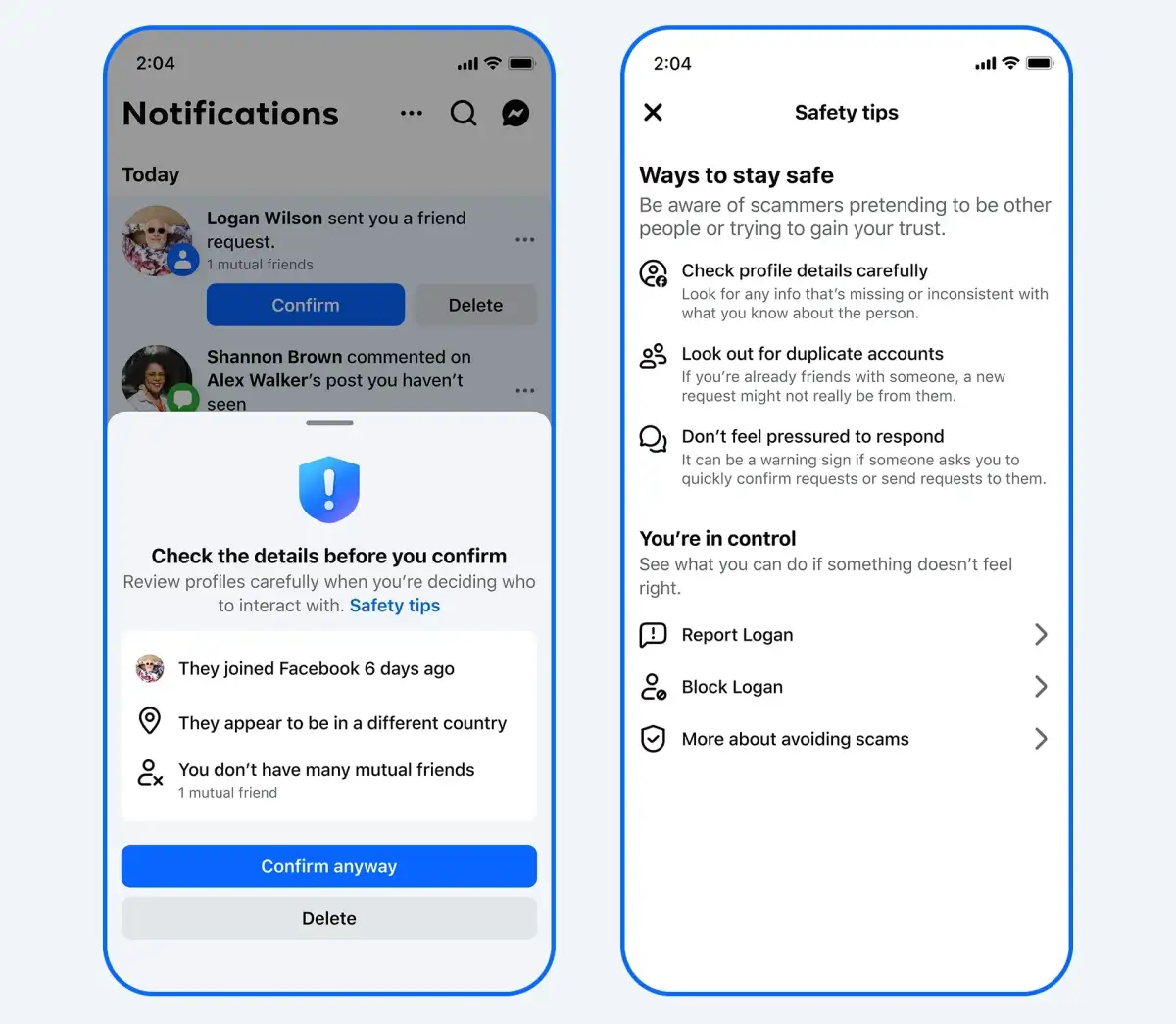
Meta, the parent company of Facebook, WhatsApp, and Messenger, is implementing a suite of new tools, powered by artificial intelligence, to proactively identify and flag scams. This move signals a shift toward real-time intervention rather than solely relying on post-incident removals. The technology aims to analyze various forms of communication, including text and images, to detect sophisticated fraudulent patterns and warn users before they engage with suspicious content.
New AI systems are being integrated across Facebook, Messenger, and WhatsApp to identify and flag messages and accounts exhibiting scam-like behavior.

Across its services, Meta is introducing new alerts and warnings designed to intercept fraudulent activities. On WhatsApp, users will receive notifications for unusual device-linking requests, a common tactic used by scammers to gain unauthorized access. Messenger is seeing an expansion of its advanced scam detection capabilities to more countries. This feature will analyze conversations for patterns associated with scams, such as dubious job offers, and prompt users to consent to an AI review of recent chat messages. Facebook will also begin displaying alerts for suspicious friend requests, adding another layer of user protection.
Read More: Chrome mimeHandler API lets extensions handle file types
"Criminals use increasingly sophisticated measures to defraud people on our platforms and across the Internet." - Meta Official Statement
Meta's AI tools are reportedly capable of identifying impersonations of brands and celebrities, as well as detecting deceptive links. These capabilities are intended to enable quicker takedowns of fraudulent operations. The company also stated that its systems are designed to find and remove malicious accounts, referencing past efforts that included the removal of millions of fraudulent advertisements.

The company's announcement also touches upon collaborations with law enforcement agencies. Meta mentioned a joint disruption operation with the FBI, the DOJ Scam Center Strike Force, and the Royal Thai Police, alongside dismantling scam centers in Nigeria with the UK's National Crime Agency. These partnerships appear to be part of a broader strategy to combat organized fraudulent activities.
While the new tools are being lauded for their proactive approach, the reliance on AI for scanning user communications naturally brings privacy considerations to the forefront. The specifics of how much data is being analyzed and for how long, particularly in Messenger's AI scam review process, remain a point of potential concern, though Meta indicates that some on-device machine learning may be employed for Messenger's scam detection, meaning the analysis occurs locally rather than on Meta's servers. Meta is also running awareness campaigns, working with partners to educate users on recognizing and avoiding scams, and is expanding advertiser verification to enhance transparency.
Read More: AI Claims It Can Find Online Grooming Today