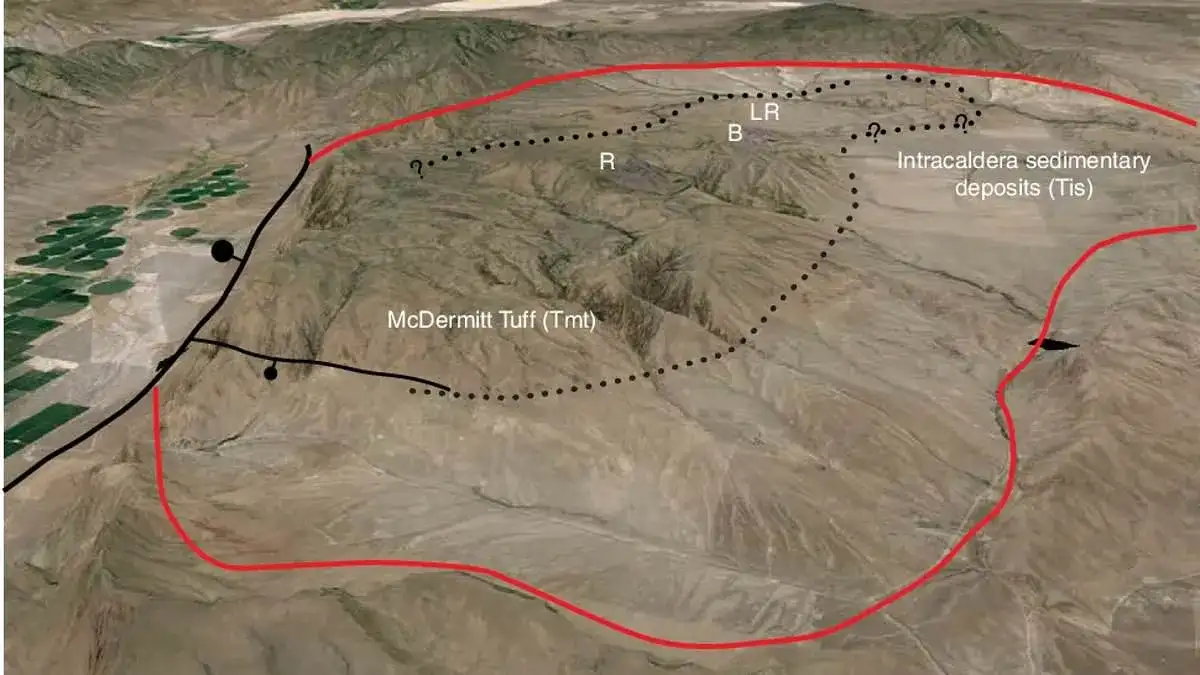
McDermitt Caldera holds potentially world's largest deposit
Geologists have identified a colossal lithium reserve beneath the McDermitt Caldera, straddling the Nevada-Oregon border. Preliminary estimates suggest this deposit, formed from lithium-rich clays within the ancient supervolcano, could contain roughly 40 million metric tons of the metal. This discovery, noted in multiple scientific reports and industry analyses, represents a significant shift in the search for critical minerals. The estimated value of this lithium motherlode has been pegged at over $1.5 trillion.
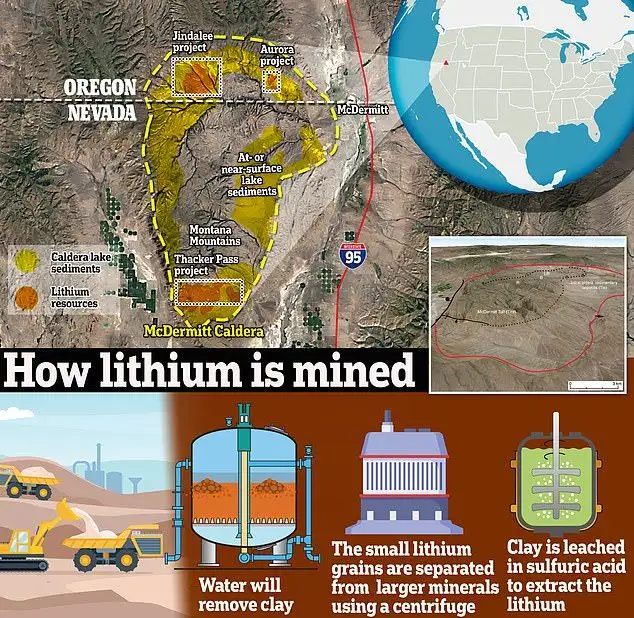
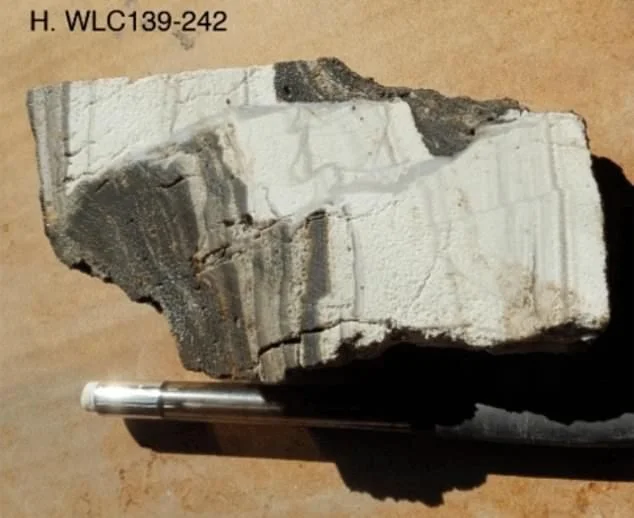
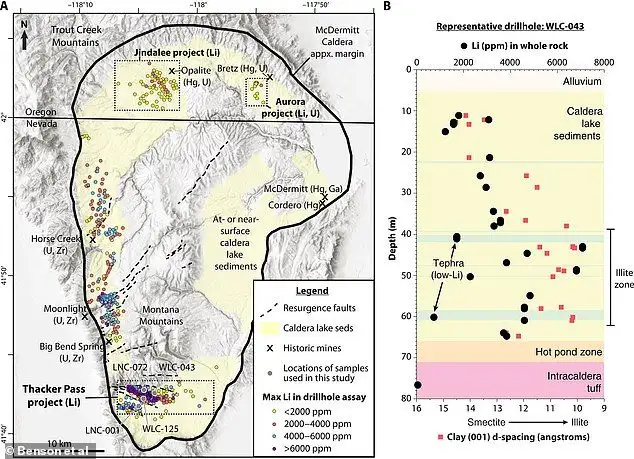
While concentrations of lithium have been observed in the area since the 1970s, recent findings indicate a unique formation process. Volcanic ash, leached by alkaline lake waters, formed magnesium-rich clays. A subsequent phase is believed to have concentrated these minerals into exceptionally dense pockets, creating what scientists describe as the richest lithium clays ever identified.
Path to Extraction Fraught with Challenges
The sheer scale of the McDermitt deposit presents a compelling case for exploitation, yet significant hurdles remain. Currently, no commercial-scale claystone lithium mine operates in the U.S., and the economic viability of extraction at McDermitt is unproven. Furthermore, the extraction process itself carries considerable environmental implications.
Read More: Solaris Energy SEI Stock Price Forecast Reaches $91.98 by July 2027
"Lithium extraction also harms the soil and causes air contamination."
Concerns have been raised regarding the substantial water requirements for lithium processing, with estimates suggesting over 500,000 liters of water are needed per ton of lithium. Research into less invasive processing technologies is ongoing, but none have been deployed at a commercial scale for these specific clay formations.
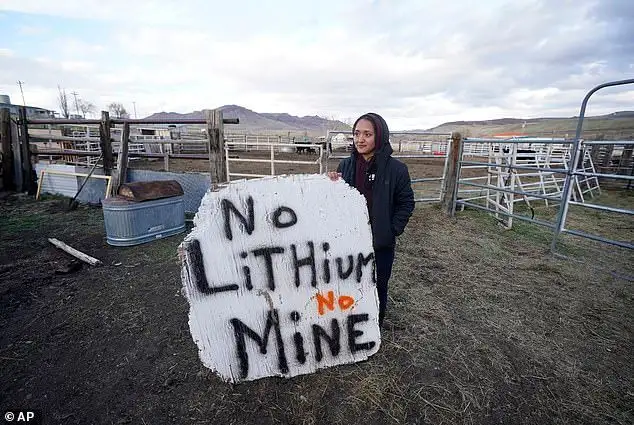
The Bureau of Land Management (BLM) has yet to release a final environmental impact statement concerning full-scale mining operations.
Strategic Designation and Future Potential
The strategic importance of lithium, a key component in battery technology, has spurred efforts to accelerate the project. The McDermitt Lithium Project has been designated for 'FAST-41' permitting, a federal initiative designed to expedite infrastructure projects deemed of strategic value.
The unusual characteristics of the McDermitt deposit, including its shallow geometry and high grades, translate to a potentially lower strip ratio – meaning less waste rock for each ton of lithium extracted. This aspect is considered a critical metric for mine feasibility. The discovery also suggests that similar caldera basins might hold further untapped lithium potential, prompting a re-evaluation of mineral exploration strategies in volcanic terrains.
Read More: Summer AC Settings: Save Money by Raising Thermostat