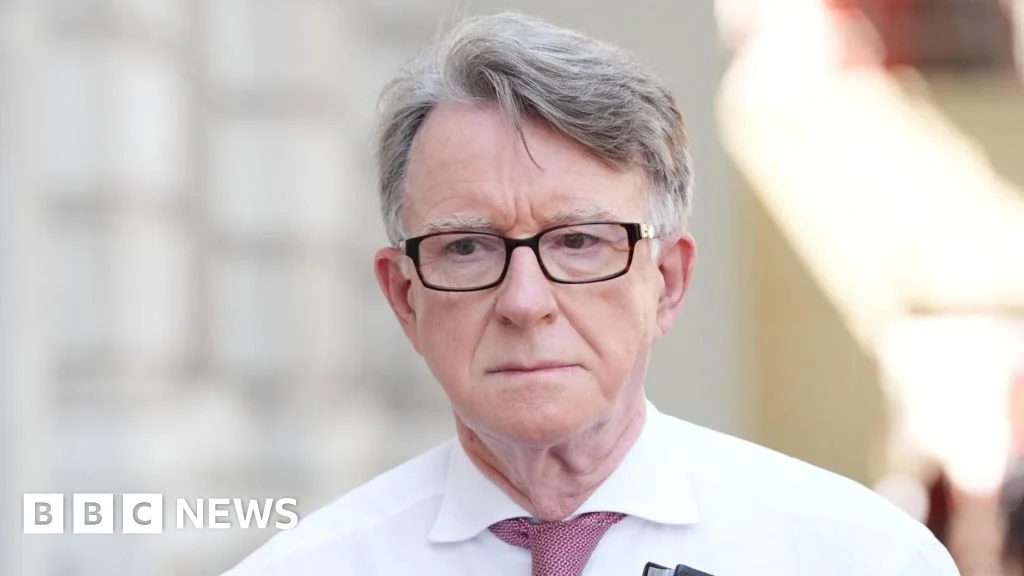
The very fabric of Britain's esteemed House of Lords is being tested. Peter Mandelson, a figure synonymous with New Labour's ascent and a former ambassador to the US, finds himself ensnared in the ever-widening scandal surrounding Jeffrey Epstein. Freshly released documents have amplified calls for Mandelson to not only explain his deep connections to the convicted sex offender but also to relinquish his seat in the House of Lords. The question now isn't just about past associations, but about transparency, accountability, and the integrity of the UK's political elite. Will the Lords remain a sanctuary for those with questionable ties, or will this crisis force a reckoning?
A Tangled Web: Mandelson, Epstein, and the Unfolding Scandal
For years, whispers and associations have swirled around Peter Mandelson and his ties to Jeffrey Epstein. While Mandelson has previously distanced himself, the latest deluge of documents has dragged him back into the spotlight with renewed ferocity. This isn't the first time his name has surfaced in connection to Epstein, but the depth and nature of the new revelations are unprecedented.
Read More: Trump Disagrees with Federalist Society, Judge Stops His Courtroom Talk
Past Tenuous Links: Even before these latest files, Mandelson's relationship with Epstein was a subject of concern. It led to his dismissal from a key diplomatic role as UK ambassador to the US by Prime Minister Keir Starmer, who has since taken a harder line. This earlier incident signals a growing unease and a desire from within the current leadership to distance the party from such associations.
New Revelations, Deeper Entanglement: The most recent files paint a more detailed picture, suggesting a level of communication and potential influence peddling that goes beyond mere acquaintance. Emails indicate discussions about sensitive government policy, specifically a planned tax on bankers' bonuses, with Epstein apparently acting as an intermediary or at least being privy to high-level deliberations. This raises serious questions about potential leaks of confidential information.
Financial Shadows: Disturbing reports also suggest Epstein may have sent funds to Mandelson's husband. While Mandelson has questioned the authenticity of some bank statements, this adds another layer of financial entwinement that demands clarification. The mere suggestion of financial links, however disputed, fuels public suspicion.
This unfolding saga forces us to confront uncomfortable truths. How did such a prominent politician maintain such close ties to a convicted sex offender? What was the true nature of their interactions, and to what extent did these associations compromise public trust?
Read More: UK Economy Grows Very Slowly

“The latest tranche of documents has further entangled Lord Mandelson in the understandable furor surrounding the convicted sex offender.”— Washington Post, referencing Mandelson's acknowledgement of the situation.
The Pressure Mounts: Calls for Resignation and Investigation
The sheer volume and detail of the new Epstein files have ignited a firestorm of pressure on Peter Mandelson. His political allies and opponents alike are demanding answers, and the calls for him to exit the House of Lords are growing louder and more insistent.
Keir Starmer's Stance: Prime Minister Keir Starmer, who previously ousted Mandelson from his ambassadorial post over earlier Epstein links, is now unequivocally calling for his resignation from the House of Lords. Starmer’s spokesperson has also stated that Mandelson should testify before US Congress if called, signalling a clear intent to sever ties.
Downing Street's Scrutiny: Downing Street has announced that the Cabinet Secretary, Sir Chris Wormald, the UK’s most senior civil servant, will conduct an "urgent review" into Mandelson's actions as a government minister. This review will examine "all available information regarding Mandelson’s contacts with Epstein during his period as a government minister." This signifies a high-level, official investigation into potential misconduct.
Labour's Disciplinary Process: Mandelson has already resigned from the Labour Party, a move reportedly approved by former colleagues. However, the party had also revealed he was facing a disciplinary process, suggesting their internal mechanisms were already being considered.
Read More: Lawmakers Question Attorney General Bondi on Epstein Files
| Actor | Action Taken/Demanded | Key Motivation/Implication |
|---|---|---|
| Keir Starmer | Urging Mandelson to quit the Lords; wants him to testify in US if called. | To distance Labour from scandal, uphold party integrity, and show decisive leadership. |
| Downing Street | Initiating urgent review by Cabinet Secretary into Mandelson's past contacts with Epstein. | To establish facts, assess potential breaches of conduct, and inform future action regarding Mandelson's peerage. |
| Labour Party | Mandelson resigned from party; faced disciplinary process. | To preempt further damage, uphold party values, and potentially remove him from party affiliation. |
| Public/Media | Mounting pressure for resignation and testimony. | Demanding accountability for alleged influence, potential policy compromise, and association with a notorious criminal. |
The question that hangs heavy in the air is whether Mandelson will step down voluntarily, or if further action, including potential legislative measures, will be necessary. Can the House of Lords truly "strip" a peer of their title, or is resignation the only palatable exit?
Read More: Keir Starmer Faces Questions After Top Civil Servant Leaves and Controversial Appointments
"Lord Mandelson should no longer be a peer."— Statement attributed to Prime Minister Keir Starmer's office.
The Legal and Ethical Minefield: Can Mandelson Be Forced Out?
The debate over Peter Mandelson's future in the House of Lords is not just a political one; it's a legal and ethical labyrinth. While public and political pressure is immense, the actual mechanisms for removing a peer are complex and potentially contentious.

Voluntary Resignation: The most straightforward path would be for Mandelson to resign. He has, in fact, already resigned from the Labour Party, and reports suggest he may step down from the Lords. However, there is no guarantee he will do so. He has not yet responded to the latest allegations or demands.
The Power of the Lords: The House of Lords has its own disciplinary procedures. Peers can be suspended or expelled for serious misconduct. However, the process can be lengthy and requires significant evidence. The question of how a peerage can be removed is also debated. Historically, it was primarily a matter for the monarch on advice from ministers, or through acts of Parliament.
Legislative Intervention: The speed at which events are unfolding has even led to talk of "emergency laws" to force Mandelson out. This would be an extraordinary step, signalling the gravity with which his situation is being viewed. Such a move would highlight a perceived failure of existing disciplinary mechanisms.
The Title vs. The Seat: Even if Mandelson resigns from the Lords, the question remains whether he can still use the title "Lord Mandelson." Peerages are generally for life. This distinction is crucial: leaving the legislative body does not automatically erase the noble title.
Read More: Congress Leader Accuses Finance Minister of Lying to Parliament About WTO Deal
The core of the issue is accountability. If Mandelson is found to have acted improperly, or if his association with Epstein is deemed to have compromised his ability to serve, then the established norms and laws of the House of Lords must provide a clear and decisive resolution.
"If Starmer lacks the backbone to order this investigation, then it will be all the more clear that he bears full responsibility for bringing Mandelson back into British public life despite knowing about the relationship with Epstein."— A statement from former Labour colleagues, as reported by the BBC, highlighting the leadership's perceived role.
Beyond Mandelson: A Mirror to the Establishment?
The Jeffrey Epstein scandal has a way of unearthing uncomfortable truths about powerful individuals across the globe. Peter Mandelson's entanglement serves as a stark reminder that no one is above scrutiny, regardless of their past achievements or current status.
Read More: Many People Still Waiting Long Times for NHS Hospital Care
A Pattern of Association: Mandelson is not the only prominent figure facing questions. The Epstein files have implicated numerous wealthy and influential individuals, including Prince Andrew, King Charles III's brother. This suggests a broader issue of powerful circles intersecting with Epstein's illicit activities. The breadth of these associations raises systemic questions.
The Role of Civil Servants: The involvement of senior civil servants, such as the Cabinet Secretary being tasked with a review, underscores the potential for compromised government operations. Emails suggesting Epstein was privy to internal discussions from the heart of the UK government after the global financial crisis are particularly damning. This implies a potential breach of national security and policy integrity.
Transparency and Trust: Ultimately, this scandal tests the public's trust in political institutions. When individuals with deep connections to a convicted sex offender occupy seats in the legislative chamber, it erodes faith in the very system meant to uphold justice and ethical governance. The perceived lack of transparency and accountability in the past now faces intense public pressure for immediate redress.
Will the Epstein revelations, particularly concerning individuals like Lord Mandelson, serve as a catalyst for genuine reform within the House of Lords and among the broader political establishment? Or will this become another episode of powerful figures weathering storms with minimal lasting consequence? The answer likely lies in the transparency of the investigations, the decisiveness of the political leadership, and the willingness of individuals to confront their past associations.
Read More: UK Economy Grows Very Slowly at End of 2025

Expert Analysis: The Integrity of the House of Lords at Stake
The ongoing crisis surrounding Lord Mandelson and his ties to Jeffrey Epstein has sent shockwaves through the UK political establishment, raising fundamental questions about the integrity and accountability of the House of Lords.
Professor Eleanor Vance, a specialist in parliamentary ethics at the University of London, commented:
"This situation highlights a persistent vulnerability within the House of Lords – the challenge of ensuring members consistently uphold the highest standards of public life, especially when associations from their past resurface with such damaging evidence. The calls for Mandelson's resignation, and the potential for legislative intervention, signal a public and political demand for a more robust and immediate accountability mechanism than currently exists."
She further elaborated on the complexity of peerage removal:

"Stripping a peerage is not a straightforward process. It typically requires either a voluntary resignation or, in extreme cases, an act of Parliament. The current pressure on Keir Starmer to potentially introduce emergency legislation indicates a perceived inadequacy in existing procedures to address a scandal of this magnitude swiftly and decisively. It also begs the question: what threshold of evidence or misconduct is sufficient to trigger such extraordinary measures?"
Dr. Benjamin Carter, a political sociologist, noted the broader implications:
"The Epstein scandal, by its very nature, tends to ensnare those with significant power and influence. The involvement of figures like Lord Mandelson, who has held significant positions within government and diplomacy, suggests that the elite circles may have been more accessible to Epstein than previously understood. This isn't just about one man's associations; it's about whether those circles facilitated or overlooked Epstein's activities, and what that says about the culture of power in Britain. The review into Mandelson's conduct as a minister is crucial, as it moves beyond personal relationships to examine potential abuse of official power."
The consensus among many observers is that the House of Lords, an institution often criticized for its unelected nature and historical privilege, is now under immense pressure to demonstrate its relevance and commitment to ethical governance.
Conclusion: A Reckoning in the Upper Chamber
The latest revelations linking Peter Mandelson to Jeffrey Epstein have propelled a long-simmering controversy into a full-blown political crisis. The demands for his resignation from the House of Lords, spearheaded by Prime Minister Keir Starmer, are unlikely to abate. The UK's most senior civil servant is now tasked with an urgent review, and the very mechanisms for holding a peer accountable are being scrutinized, with emergency legislation even being discussed.
Mandelson's resignation from the Labour Party is a significant step, but it does not resolve the core issues: his continuing presence in the House of Lords and the unanswered questions surrounding his relationship with Epstein, including alleged attempts to influence government policy. The public deserves clarity on the extent of his involvement, the potential breaches of trust, and the financial entanglements that have now come to light.
The coming days and weeks will be critical. Will Mandelson choose to resign, thereby avoiding a potentially contentious and unprecedented legislative battle? Will the Cabinet Secretary's review uncover definitive evidence of misconduct that necessitates removal? And what does this saga reveal about the broader ethical landscape of Britain's political elite? The shadow of Epstein continues to lengthen, and the House of Lords finds itself at a crossroads, facing a profound test of its integrity and its ability to self-regulate in the face of undeniable pressure. The future of Mandelson's peerage, and perhaps the public's faith in the Upper Chamber, hangs in the balance.
Sources:
Article 2: Mandelson should no longer be a peer, says Starmer
Article 3: Lord Mandelson resigns from Labour Party over Epstein links
Article 4: Can Peter Mandelson be stripped of his peerage over Epstein links?
Article 5: Starmer announces emergency laws to kick Peter Mandelson out of Lords
Article 7: Lord Mandelson, ex-ambassador to U.S., resigns from Labour over Epstein
Article 9: Pressure mounts on Mandelson to quit Lords over Epstein links
Article 10: Mandelson to step down from House of Lords over Epstein files scandal – latest