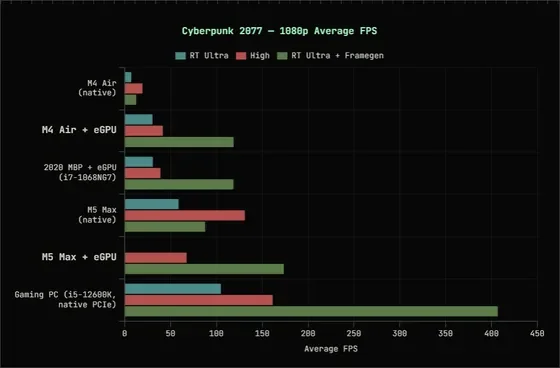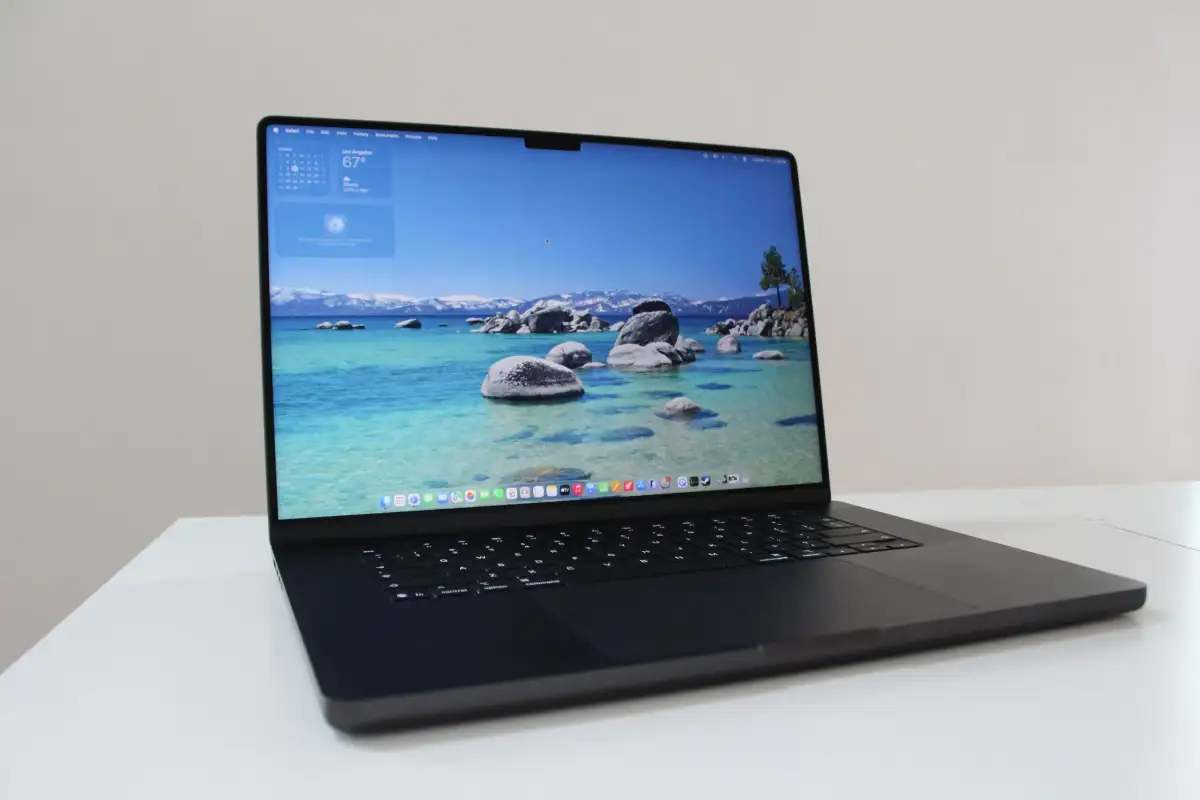
Apple's latest iteration, the 16-inch MacBook Pro equipped with the M5 Max chip, presents a significant leap in computational power, pushing the boundaries of what was previously considered attainable on portable hardware. Early assessments highlight the M5 Max's monstrous performance, with some benchmarks indicating speeds that challenge existing testing methodologies. The sheer processing velocity means tasks like AI generation are drastically accelerated, potentially cutting down processing times by over 30% compared to previous generations. This newfound speed extends to unexpected areas, with gaming performance described as surprisingly smooth.
Beyond the raw computational muscle, the M5 Max MacBook Pro incorporates crucial upgrades to its connectivity, boasting 'Wi-Fi 7' and 'Bluetooth 6' via Apple's new 'N1 wireless chip'. Storage also sees an uptick, with the 'M5 Max' model starting at a substantial '2TB' of internal storage, a marked increase from prior configurations. The underlying architecture of the M5 Pro and M5 Max chips has also been re-engineered, employing a 'Fusion Architecture' that splits CPU and GPU cores onto separate silicon dies before packaging them together. This allows for configurations like the 'M5 Max' to feature an 18-core CPU paired with a 40-core GPU.
Read More: Chrome mimeHandler API lets extensions handle file types

However, this amplified capability comes at a cost. The M5 Max MacBook Pro models are positioned with higher starting prices, a reflection, the company suggests, of current component cost fluctuations. While performance is undeniably a central theme, some analyses point out that beyond the chip, much of the laptop's design and functionality remains largely unchanged from its predecessors. This raises questions about the overall value proposition for users not pushing the absolute limits of performance.
Architectural Shift and Connectivity Enhancements
The 'M5 Pro' and 'M5 Max' chips represent a departure from Apple's previous monolithic chip designs. Both utilize an 18-core CPU die, but the 'M5 Max' distinguishes itself with a more potent 40-core GPU die, compared to the 'M5 Pro's' 20-core GPU. This division into separate CPU and GPU silicon pieces, united by the 'Fusion Architecture', appears to be a key element in achieving the reported performance gains.
Read More: How to fix iCloud storage full alert on iPhone on 7 April 2026
In parallel with these internal advancements, the new MacBook Pro line-up embraces future-proof wireless standards. The integration of 'Wi-Fi 7' and 'Bluetooth 6' signifies an effort to provide faster and more reliable wireless communication, a necessary component for increasingly data-intensive applications and devices.
Performance Metrics and User Experience
Benchmark results, while sometimes described as "outrageous," consistently place the 'M5 Max' MacBook Pro significantly ahead of previous generations. Some comparisons suggest that users upgrading from models older than the 'M3 Max' will experience a "night-and-day difference." SSD read and write speeds have seen particularly dramatic improvements, with reported increases of up to 86% for reads and 123% for writes compared to equivalent previous models, reaching speeds as high as 17.8 GB/s in write operations.

The battery life, a perennial concern for high-performance laptops, appears to have seen slight improvements across the new models, with one report detailing "over 21 hours" of usage for the 'M5 Pro' variant. While gaming is noted as surprisingly smooth, the primary focus remains on professional creative workflows and demanding computational tasks.
Read More: BEREC Asks for Mobile Network API Ideas from Developers
Considerations for Purchase
The decision to acquire an 'M5 Max' MacBook Pro hinges on a user's specific needs and tolerance for cost. While the performance gains are substantial, particularly for those utilizing on-device AI or engaging in heavy video editing and 3D rendering, the elevated price point warrants careful consideration. Some analysts suggest that for many users, configurations featuring the 'M5 Pro' chip may offer a more balanced performance-to-price ratio, providing excellent power without the premium associated with the fully maxed-out 'M5 Max'.

It is worth noting that older aftermarket 'Max' models can still compete in terms of raw processing power, but often fall short in terms of the extended battery life offered by these newer, more integrated chip designs.
Background
Apple's MacBook Pro line has historically served as a platform for the company's most advanced silicon. The introduction of the 'M5' generation, following the 'M4' and 'M3' series, continues this trend of iterative performance enhancement and architectural evolution. The shift to the 'Fusion Architecture' represents a notable change in how Apple designs its high-end chips, moving towards a more modular approach. The new models run on 'macOS Tahoe', signaling the latest iteration of Apple's desktop operating system. The pricing strategy, with increased starting costs for both the 'M5 Pro' and 'M5 Max' models, aligns with industry-wide trends of rising component prices.
Read More: iOS 27 to Feature New Siri in Dynamic Island