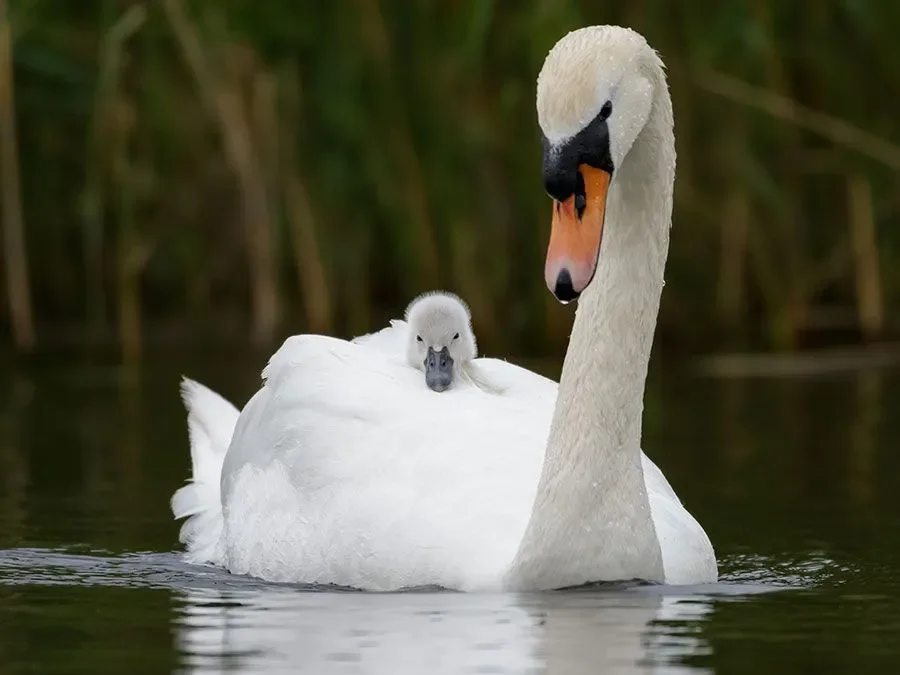
Lovebirds, a group of nine distinct species, are recognized for their strong, enduring pair bonds that often last a lifetime. These avian relationships are characterized by mutual grooming, food sharing, and close physical proximity, suggesting a deep and consistent connection between mates. Observations indicate these behaviors extend beyond the initial courtship phase, playing a role in maintaining the strength of their bonds throughout their lives. The tendency for these birds to remain together, engaging in shared activities and demonstrating what appears to be mutual reliance, provides a lens through which to examine the dynamics of long-term partnership.
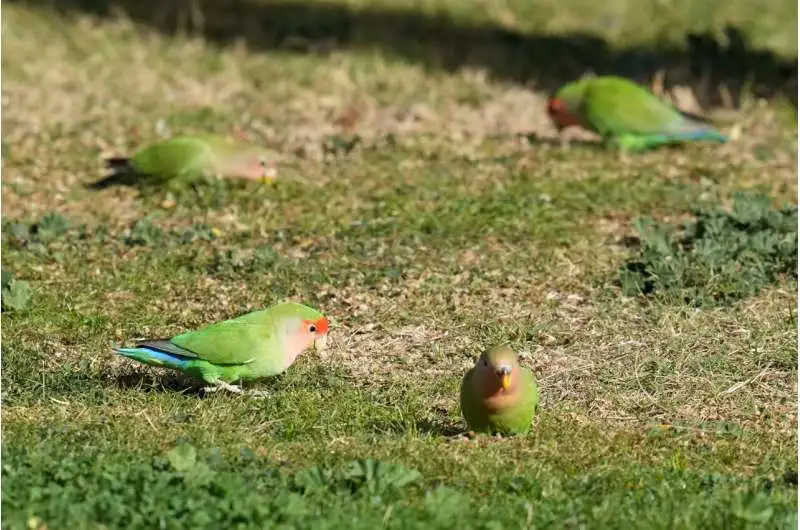
Observed Behaviors and Bond Maintenance
The name "lovebird" is derived from their notable propensity to form lifelong partnerships. This is evidenced by several consistent behaviors:

Mutual Grooming: Individuals are observed to clean their mate's feathers, particularly areas difficult for the bird to reach on its own. This grooming is not limited to a specific period but occurs throughout the pair's duration.
Food Sharing: Mates frequently feed each other, a behavior that also persists beyond the initial mating season and serves to reinforce their connection.
Proximity: Lovebirds are noted to perch very close to one another, often described as cuddling, indicating a constant desire for physical closeness and comfort within the pair.
Ritualistic Displays: While specific details vary, some species engage in courtship rituals or dances that continue even after mating. These actions appear to serve as a method for reaffirming their connection year after year.
The Concept of Lifelong Monogamy in Avian Species
The commitment observed in lovebirds aligns with the broader phenomenon of lifelong monogamy found in certain bird species. This avian monogamy is often characterized by:
Read More: Orangutan Mothers Plan Playdates for Babies in Borneo
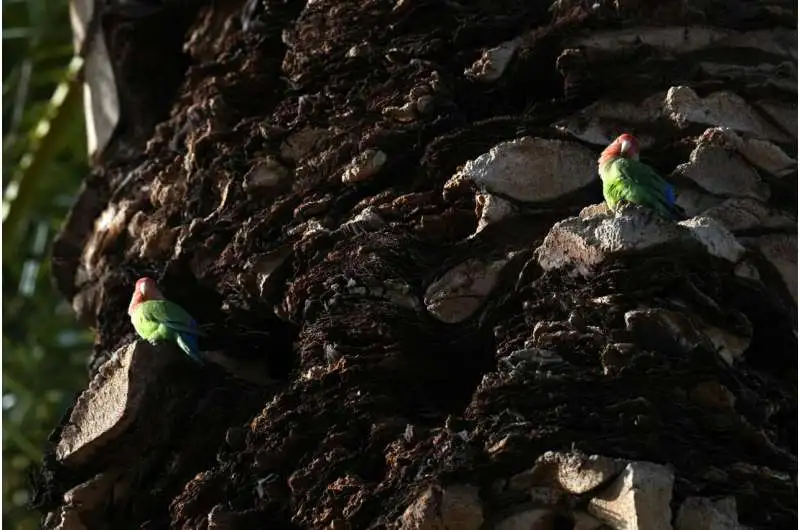
Exclusive Pairing: Pairs tend to select a single mate for life.
Annual Reunion: Many species return to the same nesting territories year after year to reunite with their established partner.
Shared Responsibilities: These pairs often raise young together, dividing duties and supporting each other in survival and reproductive efforts.
Communication: Complex vocalizations and body language are employed by bonded pairs for coordination and maintaining their relationship.
Lessons for Human Relationships: Interpreting Avian Behavior
From the observed behaviors of lovebirds, certain parallels are drawn to principles that may foster strong human relationships. These include:
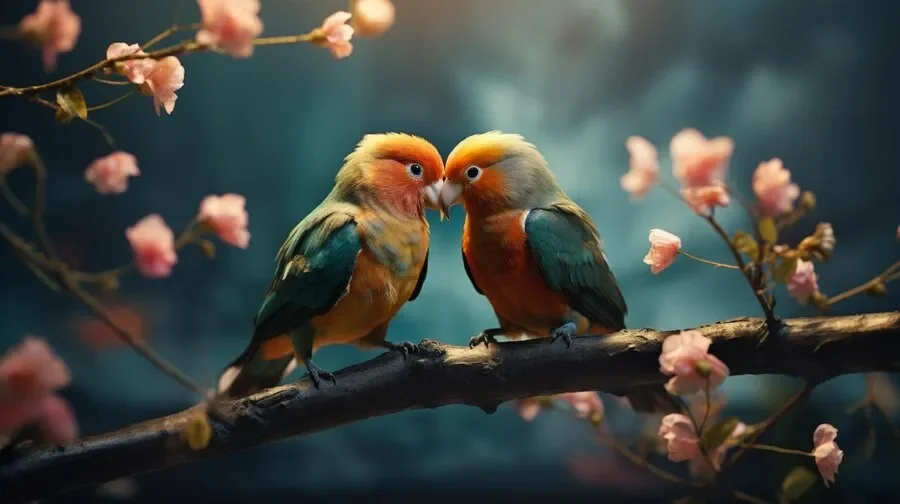
Nurturing Growth: The consistent care lovebirds provide for each other suggests that supporting a partner's development is crucial for a thriving partnership.
Unconditional Affection: The ongoing nature of their affectionate behaviors implies a form of love that is not contingent on specific circumstances.
Foundation of Trust: The seamless cooperation and mutual reliance seen between mates point to trust as a fundamental element.
Respect for Space: Despite their closeness, it is noted that affection does not preclude a respect for individual space, suggesting boundaries are important.
Love as a Journey: The lifelong nature of their bonds signifies that love is an ongoing process, marked by shared experiences, challenges, and growth over time.
Complexities and Potential Inconsistencies
While the moniker "lovebird" and observed behaviors strongly suggest lifelong fidelity, some sources introduce nuance:
Bonding Time: It is noted that these connections are not formed instantaneously, implying a developmental period for pair bonding.
Aggression: Interestingly, some lovebird species are described as exhibiting surprising aggression, particularly in certain contexts. The extent to which this aggression impacts their pair bonds is not fully elucidated.
Mate Selection: Questions arise regarding the specific mechanisms and criteria by which lovebirds choose a mate, a process that likely influences the longevity of the bond.
Expert Insights on Avian Bonding
Experts highlight that lifelong monogamy in birds, including species like lovebirds, is a significant evolutionary strategy. These enduring bonds facilitate successful reproduction and chick-rearing by ensuring a stable partnership with shared knowledge and commitment to a territory. The consistent investment in each other, through actions like mutual feeding and grooming, reinforces the pair's cooperation and resilience over many years. This dedication contributes to the raising of multiple generations, a testament to the efficacy of their long-term mating systems.
Conclusion and Implications
The study of lovebirds provides a compelling example of lifelong pair bonding in the avian world. Their consistent behaviors of mutual care, grooming, and close proximity suggest a deep and sustained commitment between mates. While these observations offer insights into principles that may be applicable to human relationships, it is important to acknowledge that avian behavior operates within its own biological and ecological framework. Further investigation into the factors influencing mate selection and the management of aggressive tendencies within species would offer a more complete understanding of these complex avian partnerships. The conservation status of some lovebird species also presents a broader challenge, impacting the continued observation and study of these fascinating birds.
Read More: Why bird songs stop different species from mating as of April 2026
Sources Used:
phys.org: Provides foundational information on lovebird behavior, including grooming, feeding, and proximity, and their namesake characteristic of lifelong bonds. https://phys.org/news/2026-02-lovebirds-rare-birds-life.html
emperyquotes.com: Frames lovebird behaviors as lessons for human relationships, emphasizing concepts like nurturing, unconditional love, trust, respecting boundaries, and love as a journey. https://www.emperyquotes.com/blog/top-15-lessons-we-can-learn-lovebirds-love-and-relationships
smithsonianmag.com: Confirms the lifelong devotion of lovebirds and mentions their intelligence and varied nest-building techniques, alongside a note on potential aggression. https://www.smithsonianmag.com/science-nature/14-fun-facts-about-lovebirds-from-their-lifelong-devotion-to-surprising-aggresion-180949742/
rpets.in: Directly addresses the question of whether lovebirds truly bond for life and touches upon the time commitment involved in bonding and mate selection processes. https://www.rpets.in/articles/2264/lovebirds-aren-t-just-a-name-do-they-really-bond-for-life
timespets.com: Discusses lifelong mates by comparing lovebirds with albatrosses, highlighting continuous courtship rituals, shared responsibilities, grief upon separation, and mutual protection and communication in bonded pairs. https://timespets.com/behavior-decoder/true-love-these-birds-have-it-figured-out/articleshow/122832538.html
avibirds.com: Explains avian monogamy and lists birds that mate for life, describing lifelong bonds, annual reunions at nesting sites, and the maintenance of pair bonds year-round. https://avibirds.com/birds-that-mate-for-life/

:strip_icc()/GettyImages-688951857-586d7be13df78c17b6e3a3cb.jpg)