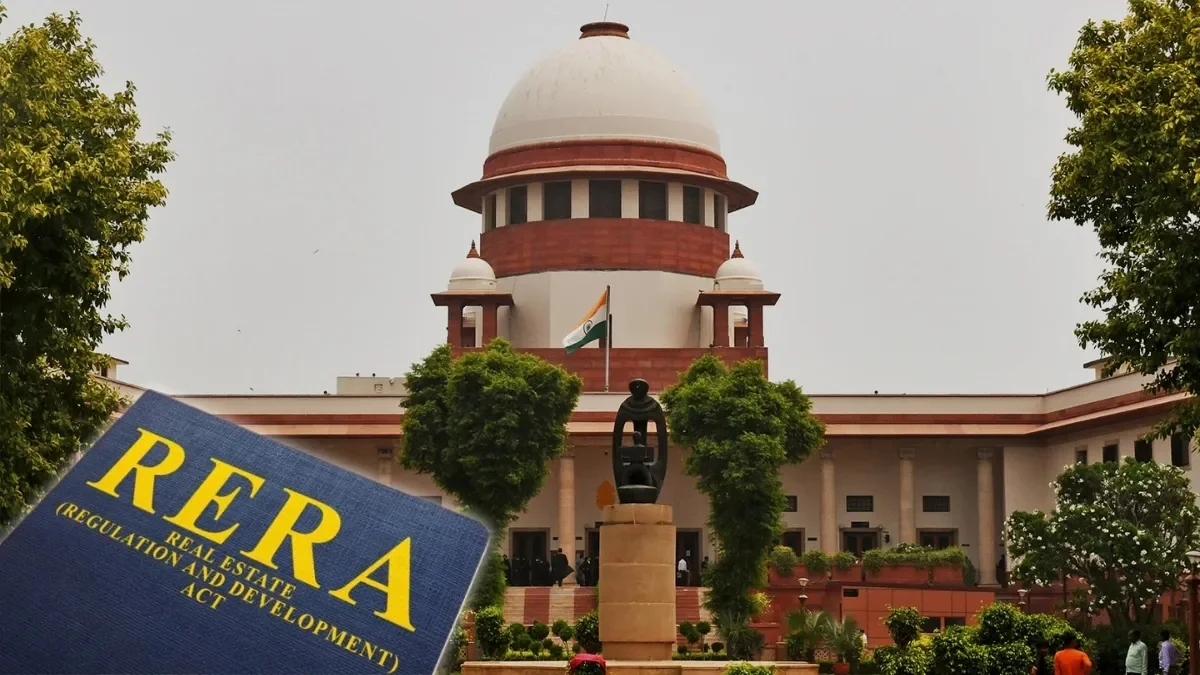
The Supreme Court has voiced strong criticism regarding the functioning of Real Estate Regulatory Authorities (RERA), suggesting that the institution might be better abolished. The court indicated that these authorities appear to serve defaulting builders more than homebuyers, prompting a call for states to re-evaluate the fundamental purpose behind RERA's establishment.

Background of RERA and Court Proceedings
RERA, the Real Estate (Regulation and Development) Act, was enacted with the aim of protecting the interests of homebuyers and bringing transparency and accountability to the real estate sector. However, recent observations from the Supreme Court suggest a significant departure from this intended purpose.
The Supreme Court bench, comprising Chief Justice of India Surya Kant and Justice Joymalya Bagchi, made these remarks.
The observations arose during a hearing concerning an appeal against a Himachal Pradesh High Court order.
The High Court had previously stayed a state government notification to shift the Himachal Pradesh RERA office from Shimla to Dharamshala.
The Supreme Court set aside the High Court's interim stay, permitting the Himachal Pradesh government to proceed with relocating the RERA office. This move, however, remains subject to the final decision of the High Court.
Judicial Concerns Regarding RERA's Performance
The Supreme Court's remarks indicate a profound disappointment with how RERA authorities are operating. The core of the criticism centers on the perceived failure of these bodies to fulfill their mandate of protecting homebuyers.
Read More: Mohun Bagan Leads Kerala Blasters 1-0 at Half-time in ISL Opener
Facilitating Defaulting Builders: The court explicitly stated that RERA appears to be doing "nothing except facilitating defaulting builders" (Article 6, 9). This suggests that the existing mechanisms may inadvertently benefit those who fail to meet their obligations to buyers.
Questioning Purpose: Justices Surya Kant and Joymalya Bagchi urged states to "reflect on the purpose behind introduction of the RERA Act" (Article 5, 7). This implies a need for a fundamental re-evaluation of whether RERA is achieving its intended objectives.
Potential for Abolition: The court openly mused that it might be "better to abolish" RERA if its current functioning primarily benefits builders (Article 1, 4, 5, 7, 10, 11, 12). This strong statement underscores the perceived ineffectiveness of the current regulatory framework.
Homebuyers' Perspective
Groups representing homebuyers have long voiced similar concerns about RERA's effectiveness. The Forum for People’s Collective Efforts, instrumental in RERA's enactment, stated that the authority has strayed from its core mandate.
Read More: Pam Bondi's Testimony in Epstein Case Faces Questions
Homebuyers' bodies have consistently highlighted how RERA has become a "refuge for defaulting builders" instead of a protective measure for consumers (Article 1, 11).
There are calls for stronger and more consistent enforcement across states, stricter action against non-compliance, and greater institutional capacity to better serve homebuyers (Article 8).
Industry Response and Potential Implications
The Supreme Court's strong remarks have prompted reactions from within the real estate industry. Niranjan Hiranandani, Managing Director of Hiranandani Group and Chairman of NAREDCO, has called for a re-examination of RERA.
Hiranandani urged a review to "give it more teeth" (Article 8).
He emphasized RERA's importance for ordinary citizens seeking to buy homes, contrasting it with capital markets that serve larger companies.
There is an acknowledgment that the industry must ensure such negative perceptions do not persist.
The Himachal Pradesh RERA Office Relocation Case
The Supreme Court's comments on RERA's efficacy were made in the context of a specific case involving the relocation of the Himachal Pradesh RERA office.
Read More: New Fund to Help Cities Grow Using Market Money
The Himachal Pradesh government had issued a notification to shift the RERA office from Shimla to Dharamshala.
The Himachal Pradesh High Court had initially stayed this notification.
The Supreme Court, however, intervened, setting aside the High Court's stay order and allowing the state to proceed with the relocation. This decision was made contingent on the final outcome of the writ petition pending before the High Court.
Conclusion
The Supreme Court's strong pronouncements signal a critical juncture for the Real Estate Regulatory Authorities across India. The bench's observation that it may be "better to abolish" RERA suggests a deep-seated concern that the institution is failing to protect homebuyers and may, in fact, be aiding defaulting developers. This has led to calls for states to fundamentally re-evaluate the purpose and implementation of RERA. The case of the Himachal Pradesh RERA office relocation provided the immediate backdrop for these pointed remarks. The judiciary's stance highlights an urgent need for reform to ensure that RERA effectively serves its intended beneficiaries – the homebuyers.
Sources
Hindustan Times: https://www.hindustantimes.com/real-estate/supreme-court-says-its-better-to-abolish-rera-as-it-benefits-only-defaulting-builders-101770892389348.html
BusinessToday (Article 1): https://www.businesstoday.in/real-estate/story/better-abolish-them-supreme-court-says-rera-does-nothing-only-helps-defaulting-builders-515982-2026-02-13
NDTV Profit: https://www.ndtvprofit.com/india/is-rera-going-to-be-shut-down-supreme-court-questions-its-effectiveness-11000498
The Times of India: https://timesofindia.indiatimes.com/india/rera-only-facilitating-builders-in-default-sc/articleshow/128284797.cms
Business Standard: https://www.business-standard.com/industry/news/supreme-court-rera-defaulting-builders-real-estate-regulation-sc-1260212009221.html
BusinessToday (Article 2): https://www.businesstoday.in/india/story/after-supreme-court-observation-niranjan-hiranandani-urges-re-examination-of-rera-516126-2026-02-13
Rediff: https://www.rediff.com/business/report/sc-slams-rera-better-to-abolish-it/20260213.htm
Pune Pulse: https://www.mypunepulse.com/supreme-court-says-better-to-abolish-rera-as-it-helps-defaulting-builders/
Read More: Lawsuit Filed Over Historic Golf Course Work