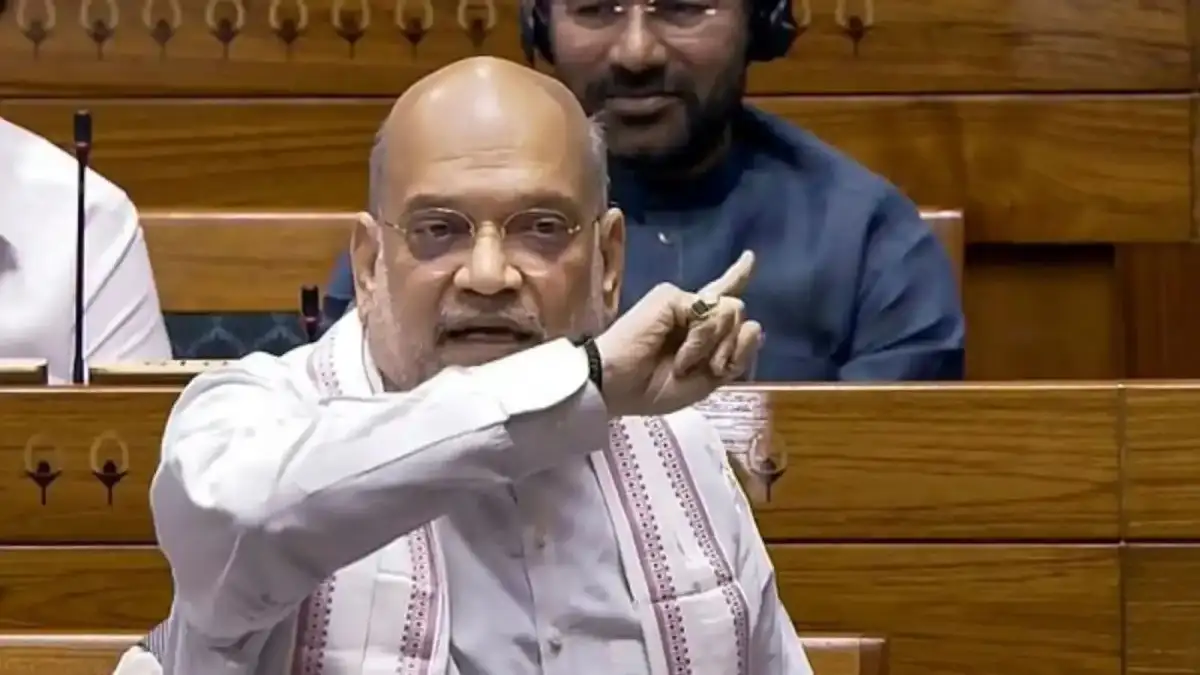
The Constitution Amendment Bill, proposed to increase Lok Sabha seats to 850 and facilitate delimitation based on pre-2026 census data, was defeated in the Lok Sabha. The bill failed to secure the necessary two-thirds majority for a constitutional amendment. This outcome effectively halts the government's immediate plans to redraw electoral boundaries and expand parliamentary representation.

Union Home Minister Amit Shah argued that opposition to delimitation is effectively opposition to increasing seats for Scheduled Castes (SC) and Scheduled Tribes (ST) communities. He accused the Congress of historically obstructing delimitation. Conversely, Congress leader Rahul Gandhi asserted that the bill was not about women's empowerment, framing his party's stance as a defense of democracy. He later stated the opposition had "defeated an attack on the Constitution."

Political reactions were swift and divided. BJP MPs protested outside Parliament, attributing the defeat to the Congress. Union Minister Giriraj Singh warned that the opposition would "have to pay" for the bill's failure. On the other hand, Priyanka Gandhi Vadra called the outcome a "big win for democracy," and MK Stalin of Tamil Nadu declared it a "defeat for Delhi." Shashi Tharoor echoed this sentiment, calling the outcome a "convincing victory" for the opposition.
Read More: Birmingham Election: No Majority Likely, Council May Need Alliances

Government's Proposed Overhaul
The proposed legislation, including The Constitution (131st Amendment) Bill, 2026, and the Delimitation Bill, 2026, aimed to synchronize delimitation with an expanded Lok Sabha and the implementation of women's reservation. The government had sought to decouple delimitation from the census, allowing it to be based on earlier data and thus expedite the operationalisation of the one-third reservation for women. The Constitution currently limits the Lok Sabha to 550 members, with provisions for up to 530 from states and 20 from union territories. The proposed amendment sought to increase this maximum to 850, with 815 from states and 35 from union territories.

The bills were introduced during a special parliamentary session that began on April 16, 2026. The government's stated intention was to implement these changes, including the women's reservation, before the 2029 general elections.
Opposition's Concerns and Unity
Opposition parties, under the INDIA bloc, had largely signaled their intent to oppose the delimitation bill while supporting women's reservation in principle. Key concerns revolved around the potential for delimitation based on older census data to disproportionately affect southern states, which have achieved better population control. Chief Ministers like MK Stalin of Tamil Nadu had voiced strong objections, alleging the bill was being "bulldozed" without adequate consultation with states. The opposition also questioned the timing of the proposed changes and raised concerns about the definition of 'population' for delimitation purposes, which the bill proposed to leave to Parliament's discretion.
Read More: EVMs Ready for Tamil Nadu and West Bengal Polls on April 23