VETERINARY PANEL RECOMMENDS TRANSFER TO ZOOLOGICAL PARK DUE TO PERSISTENT VISION IMPAIRMENT
Thrissur, Kerala – A tiger named ‘Mangala’, once identified as a cub found abandoned in the Periyar Tiger Reserve (PTR), is slated for relocation to the Thrissur Zoological Park. This decision follows a protracted period of veterinary assessment, culminating in the conclusion that the animal’s severe vision issues, specifically bilateral cataracts and lens luxation, render it unfit for release into the wild. The primary driver for this permanent translocation appears to be the persistent nature of Mangala's eye condition, which has not responded to ongoing treatments, thus posing a significant risk of human-tiger conflict if reintroduced to its natural habitat.
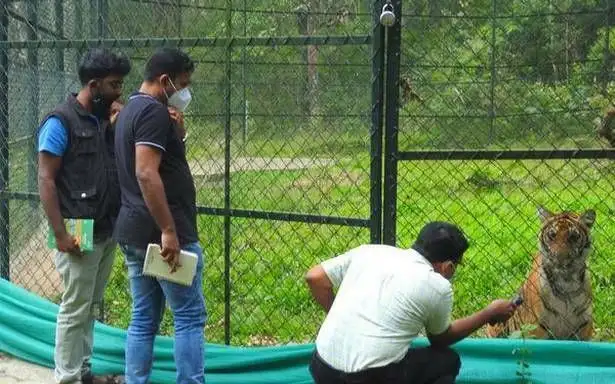
A committee of four veterinarians meticulously examined Mangala’s health, scrutinizing the feasibility of rewilding. Their observations consistently pointed to a lack of clinical improvement in the tiger’s vision despite interventions. This expert panel has deemed eye surgery as the only potential solution, but even then, rewilding has been deemed inadvisable, necessitating permanent care within a captive environment. The Chief Conservator of Forests (Wildlife), Kottayam, and the field director of the PTR have endorsed this recommendation, prioritizing Mangala’s long-term welfare and the mitigation of potential ecological disruptions.
Read More: Orangutan Mothers Plan Playdates for Babies in Borneo
HISTORICAL CONTEXT AND UNMET HOPES FOR REWILDING
The narrative surrounding Mangala has been marked by an initial effort to restore it to its natural habitat. As far back as January 2022, when the tiger was approximately one year and three months old, infantile cataracts were diagnosed. At that juncture, an expert panel had explored novel treatment options, including the potential importation of lanosterol-based eye drops from the United States. This experimental approach was considered, given the perceived difficulties in performing conventional cataract surgery on such an animal, signaling a strong initial desire to rehabilitate Mangala for rewilding. This represented a pioneering effort in the country, with the Forest Department reportedly investing considerable effort to prepare their "adopted daughter" for a healthy return to the wild.

However, subsequent evaluations have evidently revealed that these early interventions were insufficient. The persistence of poor vision, a direct consequence of the bilateral cataracts and lens luxation, has fundamentally altered the trajectory for Mangala. The current assessment leans heavily on the established risk of human-tiger conflict, particularly given that the animal was raised under human care. This raises complex questions about the intersection of conservation efforts, animal welfare, and public safety when an individual animal’s medical condition directly impedes its capacity to survive independently.
Read More: Kerala Health and AYUSH Departments Link for Dengue Control in 2026

BROADER IMPLICATIONS FOR ZOOLOGICAL PARKS AND ANIMAL TRANSLOCATION
The transfer of Mangala to the Thrissur Zoological Park occurs within a broader context of infrastructural development and inter-state cooperation concerning animal management. The Thrissur Zoological Park is undergoing significant expansion and relocation to Puthur, a project aiming to provide enhanced habitats for its residents. This initiative has seen agreements for animal transfers from other states, including Karnataka, with species such as tigers, leopards, and bears being considered. These translocations are part of a larger strategy to manage wildlife populations and improve zoo facilities across the region.
Furthermore, the case echoes instances of other animals being transferred to the Thrissur zoo due to safety concerns. A separate report details the planned relocation of a wounded tiger from Kalikavu to Thrissur zoo, a decision precipitated by local protests following alleged attacks on a rubber-tapping worker. This suggests a recurring pattern where difficult-to-manage or compromised wild animals are ultimately placed in captive environments to ensure public safety and, ostensibly, the animal’s continued care, albeit outside its natural ecosystem.
Read More: Japan Adds 800 Cameras To Track Bears After 5 Deaths This Year