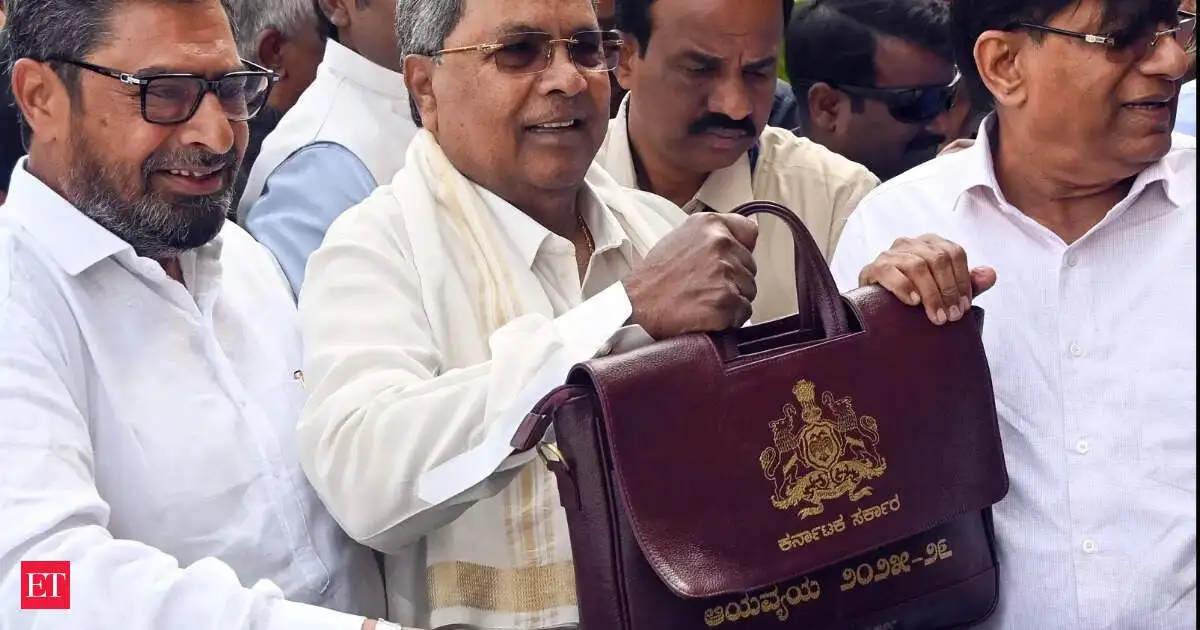
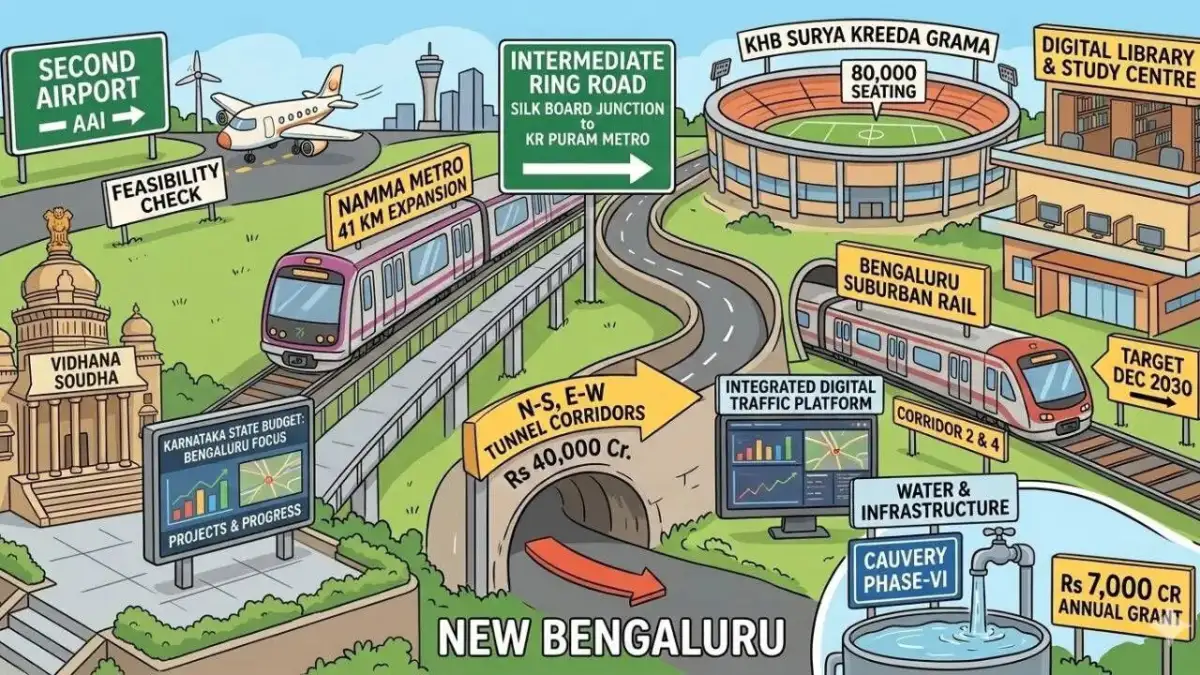
Chief Minister Siddaramaiah presented a ₹4.48 lakh crore fiscal roadmap for 2026, pivoting from immediate social hand-outs to heavy concrete and tarmac. The state plans to split Bengaluru’s air traffic with a second international airport, while funneling ₹200 crore into seven domestic airstrips.

“To uncork Kempegowda International Airport, now the country’s third largest, a second airport will be mapped out following technical advice from the AAI.”
The budget hinges on private-public partnerships (PPP) to build flight schools and assembly lines in smaller cities like Vijaypura and Shivamogga. While the headline numbers suggest a leap into high-tech, the ledger remains anchored by a ₹40,000 crore gamble on underground tunnel roads and a World Bank-funded fight against the city’s recurring floods.
Aviation and The Provincial Push
The government is shifting its gaze away from the capital’s center to the jagged edges of the state. Shivamogga is slated for the state’s first Flight Training Organisation (FTO), utilizing a 3,200-metre runway—the longest in the state after Bengaluru.
Read More: Goldman Sachs predicts 15 million US jobs lost to AI by 2036

Training Grounds: The Shivamogga FTO will occupy 3,500 square metres, aiming to churn out 100 pilots initially.
Infrastructure Debt: ₹1,593 crore has already been bled into the development of seven regional airports to date.
The Assembly Line: Aircraft manufacturing units are planned for Vijaypura under a model where the state provides the dirt and the private sector provides the tools.
| Project Type | Location | Funding/Model |
|---|---|---|
| Second Airport | Bengaluru | Feasibility Phase (AAI) |
| Flight School | Shivamogga | PPP / KSIIDC Support |
| Aerospace Parks | 5 Cities | Industrial Policy |
| Tunnel Roads | Bengaluru | ₹40,000 Cr (BOOT) |
The Industrial Orbit: Aerospace Parks
The state claims to hold 65% of India’s aerospace and defense business. To protect this slice, the administration is mapping "world-class" parks across five hubs: Belagavi, Mysuru, Tumakuru, Chamarajanagar, and Bengaluru.
The goal is to attract ₹45,000 crore in private investment over five years. This isn't just a dream on paper; Collins Aerospace has already anchored a ₹2,915 crore facility in Devanahalli. The state's role has become that of a landlord for global giants, hoping the presence of Boeing and others will trick down into local jobs.
Urban Concrete and Water Logic
Bengaluru’s survival is being sold through a ₹40,000 crore tunnel road network spanning 40 kilometers. This will be built on a Build-Own-Operate-Transfer (BOOT) basis, essentially tolling the future to pay for today’s gridlock.
Flood Mitigation: A ₹5,000 crore "Water Security" program is being launched to stop the city from drowning every monsoon.
World Bank Ties: This resilience project relies on international debt, tying the city's drainage to global interest rates.
Education Repairs: Amidst the billions for runways, ₹3,900 crore is earmarked to upgrade 800 schools, while a smaller ₹75 crore is set aside just for toilets.
Background: The 17th Ledger
This is Siddaramaiah’s 17th budget, a document that attempts to balance the heavy cost of five "Guarantee" welfare schemes with the desperate need for hard infrastructure. The shift toward aerospace and AI marks a pivot toward high-capital industries, as the state looks to move beyond being just a back-office for global software. The reliance on PPP models suggests a government that has the vision for expansion but lacks the liquid cash to build it alone, choosing instead to lease out the state’s growth to the highest corporate bidder.
Read More: Karnataka requests higher Totapuri mango limit for farmers in April 2026