

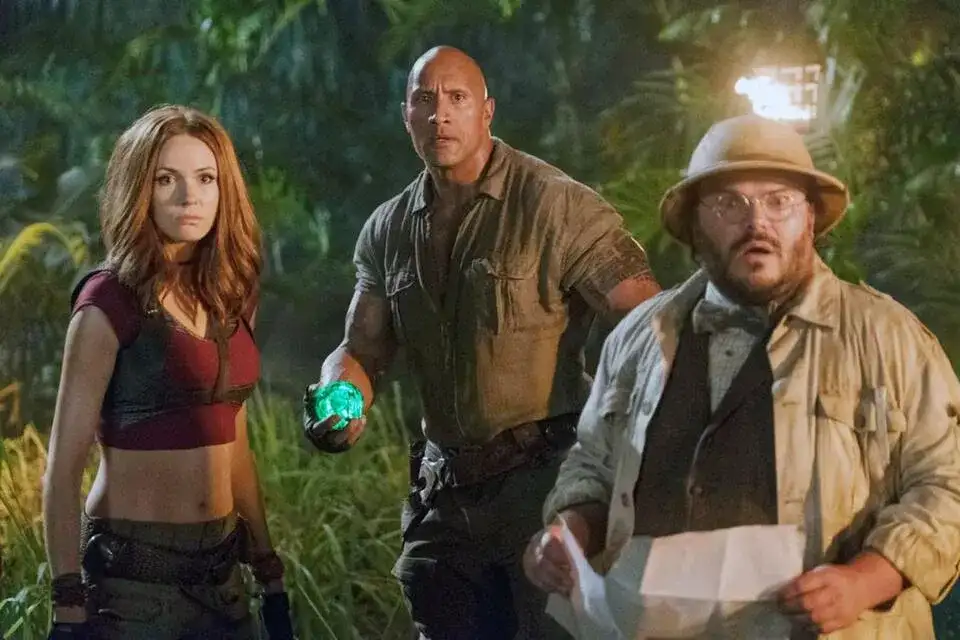
As of April 7, 2026, the four-film Jumanji catalog exists in a state of critical bifurcation. Industry consensus remains split between the 1995 original—anchored by the performance of Robin Williams—and the modernized action-comedy iterations led by Dwayne Johnson, Kevin Hart, and their ensemble.
Core metric for franchise survival remains the ability to transition from board-game-centric suspense to digital, video-game-driven mechanics without shedding audience engagement.
Comparative Market Performance and Reception
| Feature | 1995 Original (Jumanji) | Modern Series (Welcome to the Jungle et al.) |
|---|---|---|
| Primary Driver | Robin Williams (Comedic Anchor) | Ensemble Cast (Action/Persona dynamics) |
| Mechanic | Analog Board Game | Digital Video Game Interface |
| Critical View | Nostalgia-heavy, foundational | High-octane, meta-narrative shifts |
The discourse surrounding these films centers on the evolution of nostalgia versus the commercial utility of a genre pivot. Recent analyses from outlets such as MovieWeb (February 2026) posit that Welcome to the Jungle functions as a rare sequel that surpasses its predecessor in pacing, whereas dissenting perspectives argue that the removal of the original’s "haunted" aesthetic diminishes the series' creative identity.
Structural Divergence in Play
The original 1995 narrative focused on the intrusion of an uncontrollable, maladaptive magical force into suburban reality.
The 2017 reboot and its successors shifted the framing to an immersive video game reality, effectively changing the protagonist's relationship with the threat from "victim of circumstance" to "player within a system."
Distribution shifts, as of June 2025, have solidified these titles as perennial streaming staples, with rights split between platforms like Peacock and Netflix, ensuring consistent, if fragmented, visibility for both eras of the franchise.
Contextual Underpinnings
The tension in this debate stems from how audiences weigh actor-driven legacy against narrative innovation. The original film relies heavily on the singular comedic velocity of Robin Williams, a baseline that newer entries have replaced with a multi-headed star system—a strategy designed to insulate the franchise from the performance volatility of a single lead. While some critiques highlight the perceived loss of the "ancient" atmosphere that defined the 1995 film, market data suggests that the transition to video-game tropes provided a necessary path for the series to scale beyond the constraints of a singular board-game gimmick. The divide persists not because of production quality alone, but because the two styles occupy different functional spaces within the contemporary viewer’s expectation of the "blockbuster" experience.
Read More: The Devil's Rain 4K release sparks debate on cult status

:max_bytes(150000):strip_icc()/MORTAL-KOMBAT-II-LEWIS-TAN-050826-f54556c368f34929b0ed2ea7f658c792.jpg)


:max_bytes(150000):strip_icc():focal(799x0:801x2)/nyc-sky-taylor-swift-travis-kelce-wedding-070326-2dc0d912004b400eac2c8c8b5adeff2a.jpg)