


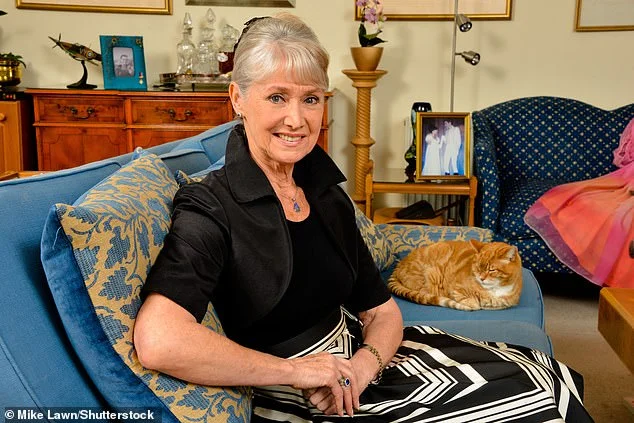
Veteran newsreader Jan Leeming's recent public outcry over a "screaming child" at an upscale restaurant has ignited a fiery debate about parenting standards, the expectations of public spaces, and the evolving social contract. Her blunt assertion – "If you can afford to eat there, get a babysitter!" – has resonated with some, while others decry it as classist and lacking empathy.
This incident, while seemingly trivial, taps into deeper societal anxieties about noise pollution, personal responsibility, and the perceived erosion of civility. Leeming's frustration, born from a spoiled birthday dinner at The Pig at Bridge Place in Canterbury, highlights a growing divide in how people experience shared public spaces.
A Night Marred: Leeming's Account and the Restaurant's Response
The core of the issue lies in a single evening, where Jan Leeming, a recognizable figure from her days as a BBC newsreader, claims her birthday celebration was disrupted by a persistently noisy child. Her account, shared on social media platform X, paints a picture of parental inaction and unhelpful staff.
Read More: Living Room 'Kitchen Gem' Stays Put After Owner Declares 'Never Going Back' on March 15
"If you can afford to eat there, get a babysitter! The parents were oblivious, and the staff were no help. It was my birthday dinner, and the noise ruined it."
Leeming asserts that the child's disruptive behaviour continued unabated, and her subsequent complaint to the receptionist was met with what she perceived as dismissiveness, even alleging that some staff members interacted with the child rather than addressing the disturbance.

The restaurant in question, The Pig at Bridge Place, is described as an "upmarket chain," a detail Leeming emphasizes to support her argument that such establishments should be havens of tranquility, not venues where children's unrestrained noise is tolerated. Her criticism is two-pronged: a direct indictment of "oblivious" parents and a critique of the establishment's perceived failure to manage the atmosphere.
The central tension is the perceived clash between the rights of parents to include their children and the right of other patrons to enjoy a peaceful dining experience.
Echoes of Past Discontent: Is This a New Phenomenon?
This isn't the first time public figures have voiced strong opinions on the behaviour of children in public. Past incidents, though varied in specifics, often touch upon similar themes of etiquette and tolerance.
Read More: Kamal Haasan: Society fails if women and children face peril, says April 25
The "Screaming Child" Phenomenon: The internet is replete with anecdotes and discussions about children whose noise levels are deemed excessive in settings like airplanes, cinemas, and restaurants. This suggests a recurring pattern of frustration among those seeking quiet enjoyment.
Parental Responsibility Debates: Societal views on parenting are constantly debated. While some advocate for child-friendly policies in all public spaces, others argue for a clearer distinction between child-centric environments and those catering to adults seeking different experiences.
Social Media Amplification: Platforms like X (formerly Twitter) have become potent tools for individuals to voice grievances, allowing incidents to gain traction and public attention far beyond their immediate circle.
Leeming herself is no stranger to public commentary, having recently weighed in on current TV newsreaders' speaking styles, suggesting a broader concern with perceived standards. Her history includes a notable incident in 2022 where she bravely fought off a bag snatcher in France, showcasing a resilient spirit that clearly extends to her public pronouncements.
The Restaurant's Stance and Broader Implications
While Leeming's comments have sparked widespread discussion, the response from the restaurant itself, or from other diners present, remains largely unarticulated in the provided reports. However, establishments like The Pig at Bridge Place often navigate a delicate balance:
Family-Friendly Appeal: Many "upmarket" establishments, even those with a sophisticated ambiance, aim to be welcoming to families to broaden their customer base.
Atmosphere Management: The responsibility for maintaining a desired atmosphere typically falls on management, which may involve gentle interventions with disruptive patrons or, in extreme cases, asking them to leave.
The "Child-Free Zone" Debate: There's a growing conversation around dedicated child-free zones in public spaces, from restaurants to flights, reflecting a demand for adult-oriented environments.
Leeming's "get a babysitter" remark implies a tiered access to certain public experiences, contingent on financial means and, by extension, a presumed ability to outsource childcare for specific occasions.
This raises the question: Should higher-priced venues inherently guarantee a quieter, more adult-oriented experience, or is the onus solely on individual patrons to manage their children's behaviour?
A Question of Civility and Expectations
The crux of Leeming's complaint lies in what she perceives as a decline in civility and a lack of consideration for others. Her position is rooted in the idea that certain environments carry unspoken expectations.
Read More: Summer Fruit Salad Preparation Tips for Best Freshness and Texture
Public Spaces, Shared Etiquette: Do we have a collective responsibility to ensure our actions in public spaces do not unduly disturb others, regardless of age?
The "Oblivious Parent" Trope: Leeming's use of the term "oblivious" suggests a belief that parents should be more attuned to their children's impact on their surroundings.
Financial Privilege and Social Norms: Does the ability to afford expensive dining experiences confer a right to a certain quality of ambiance, and if so, how should this be enforced?
This incident also brushes against broader societal trends, such as the increasing visibility of personal lives on social media and the heightened sensitivity surrounding parenting advice.

Deeper Dive: The Economics and Social Dynamics of Dining Out
Jan Leeming's core argument hinges on the economic aspect of dining at an establishment like The Pig at Bridge Place. The implication is clear: if the cost of the meal is significant, the expectation of a certain quality of experience – including peace and quiet – should be correspondingly high.
Price Point as an Indicator of Ambiance:| Establishment Type | Typical Expectation of Noise Level | Typical Expectation of Parental Intervention || :———————————— | :————————————————- | :————————————————————— || Casual Diner/Fast Food | Moderate to High | Low to Moderate || Mid-Range Family Restaurant | Moderate | Moderate || Upmarket/Fine Dining | Low to Very Low | High |
Leeming's perspective suggests that for establishments at the "upmarket" end of the spectrum, a greater degree of quietude should be implicitly guaranteed. Her suggestion to "get a babysitter" is not just a practical solution but a symbolic one, indicating a desire for a child-free zone, or at least a zone where children's behaviour is strictly managed.
Read More: North Carolina Mother Brenda Watts Reappears After 24 Years Missing
This viewpoint can be interpreted through the lens of social capital and lifestyle segmentation. Patrons who choose to dine at such establishments may do so precisely to escape the cacophony of everyday life and enjoy a more refined atmosphere. When this expectation is unmet, it can lead to significant frustration, especially during a personal celebration.
However, this perspective is not without its critics. Opponents argue that:

Children are part of families: Excluding children entirely from "nicer" establishments can be seen as discriminatory and may penalize families who wish to enjoy quality dining experiences together.
The "Babysitter" Solution is Classist: The ability to afford a babysitter is not universal. For some, a special occasion meal might be a rare treat, and the idea of an additional, significant cost to simply enjoy a meal can be perceived as out of touch.
Focus should be on behaviour, not presence: The argument should perhaps be about managing disruptive behaviour, rather than prohibiting children's presence altogether.
The debate thus becomes a microcosm of wider societal tensions: the right to enjoy oneself versus the responsibility to consider others, and the intersection of economic status with social expectations.
Beyond the Restaurant: Other News and Jan Leeming's Public Persona
While the restaurant incident has garnered attention, it's worth noting that the provided data also touches upon other aspects of Jan Leeming's public life and recent news.
Financial Difficulties: Notably, Leeming has spoken publicly about her financial struggles in the past, even participating in "I'm a Celebrity… Get Me Out of Here!" due to being "flat broke." This contrasts with her current pronouncements about affording upscale dining and raises questions about the perceived disconnect between her past circumstances and her current pronouncements on financial privilege.
Resilience and Personal Safety: Her experiences fighting off a bag snatcher in France, and previously being mugged, highlight a life marked by resilience and a willingness to confront adversity. This spirit of standing up for oneself is perhaps what fuels her current public stance on what she perceives as unacceptable behaviour.
Media Savvy and Public Voice: Leeming, a seasoned broadcaster, understands the power of public platforms. Her use of X to voice her complaint is a modern iteration of public discourse, allowing her to share her perspective directly with a wide audience. Her prior criticisms of current TV anchors' speech patterns also indicate a strong opinion on standards and professionalism.
It is interesting to juxtapose her public persona, honed through years of delivering news, with her more personal and critical pronouncements on social media.
Read More: Jamie Lee Curtis, 67, Embraces Freedom After Turning 60
Her voice, once associated with objective reporting, is now a vehicle for expressing personal dissatisfaction and advocating for a particular social norm.
Unanswered Questions and Future Implications
Jan Leeming's forceful critique has undeniably struck a chord, but several questions remain open, inviting further scrutiny and public discussion.
Restaurant Policy and Staff Training: What is the official policy of The Pig at Bridge Place (and similar establishments) regarding disruptive behaviour from children? Were the staff trained to handle such situations, and if so, did they fail in their duty of care to other patrons? Did they try to mediate the situation discreetly, or were they indeed unhelpful as Leeming claims?
Parental Perspective: What was the perspective of the parents involved? Were they genuinely unaware of the disruption, or did they feel their child's behaviour was within acceptable limits for a family-friendly venue? Without their side of the story, it's difficult to assess the full situation.
The Definition of "Oblivious": Leeming labels the parents as "oblivious." This is a subjective assessment. How does one objectively measure obliviousness versus a differing tolerance level for child behaviour in public spaces?
The "Upmarket" Covenant: Does an establishment's price point create an implicit "covenant" with its patrons that guarantees a certain ambiance, and if so, what mechanisms are in place to uphold this? Should there be more clearly designated "adults-only" times or sections in restaurants?
Leeming's Own Financial Circumstances: Given her past financial struggles, how does her current advocacy for "getting a babysitter" reconcile with her own documented experiences? Is this a reflection of changed circumstances, or a belief that such standards should apply universally regardless of individual financial ability?
Impact on Parenting Advice: How will public figures like Leeming influence broader conversations about parenting and acceptable behaviour in public spaces? Will her stance encourage a more assertive approach from diners experiencing similar disruptions?
This incident serves as a potent reminder that public spaces are complex arenas where diverse needs and expectations intersect. The debate ignited by Jan Leeming's experience underscores the ongoing societal negotiation around civility, responsibility, and the evolving nature of shared environments. It compels us to consider not just what happened, but why it elicited such a strong reaction and what it reveals about our current social fabric.
Sources:
Article 1: Jan Leeming takes aim at parents as 'screaming child' ruins dinner
Article 2: Mum of eight claimed £15k of benefits for children not living with her
Article 3: Spared jail, architect who stole £160k from sister with dementia
Article 4: Veteran newsreader Jan Leeming, 83, takes swipe at current TV anchors
Article 6: Ex-BBC newsreader Jan Leeming fights off bag thief in French village
Article 8: Viciously mugged in France, Jan Leeming has lost none of her spirit
Article 10: BBC newsreader Jan Leeming, 80, details being mugged in France
Article 11: After five husbands, Jan Leeming reveals her libido is still there
Article 12: BBC Two - Cash in the Celebrity Attic, Series 1, Jan Leeming



:max_bytes(150000):strip_icc():focal(749x0:751x2)/jamie-lee-curtis-2-cf2865eec0714947b28ee1ec8e5d41eb.jpg)


