)
The recent Bangladesh general election results, particularly the gains made by Jamaat-e-Islami in districts bordering West Bengal, have sparked security concerns in India. With the West Bengal Assembly elections approaching in 2026, the consolidation of Jamaat's influence in these border regions has led to heightened vigilance among Indian security agencies. The outcome has been interpreted by some as a potential precursor to increased illegal immigration and a shift in the regional political landscape, prompting New Delhi to re-evaluate its strategies.

Context of the Bangladesh Election and Jamaat's Performance
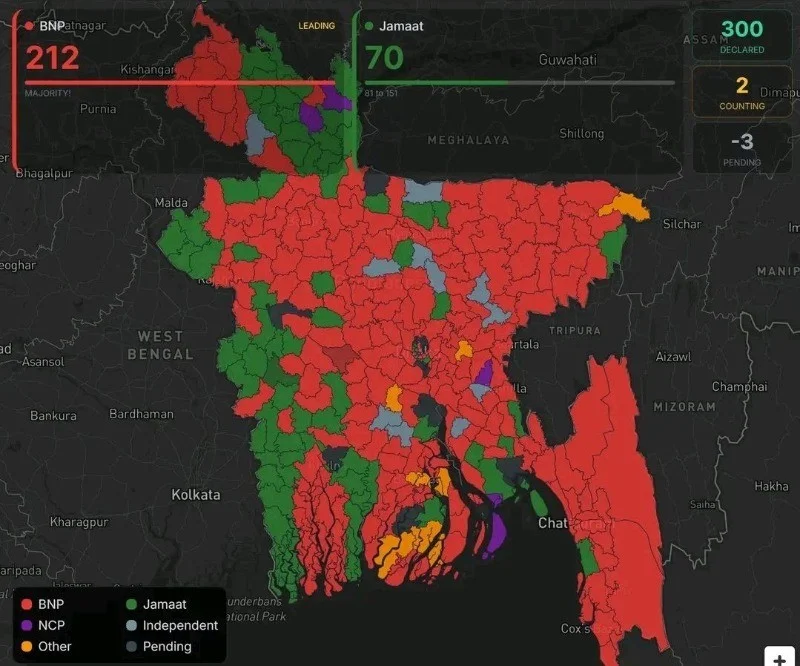
The Bangladesh general election concluded recently, with the Bangladesh Nationalist Party (BNP) and its allies securing a significant majority, reportedly over 200 seats. Within this broader coalition, Jamaat-e-Islami and its allies achieved notable success, winning an estimated 70-77 seats. A key aspect of this electoral outcome is the strong performance of Jamaat in districts that share a border with India, specifically West Bengal.
Read More: Pentagon Chief Pete Hegseth Demands Army Chief Randy George Resign During Iran Conflict

Geographic Concentration: Jamaat's victories are concentrated in border districts such as Satkhira, Lalmonirhat, Panchagarh, Rangpur, Dinajpur, and Chapai Nawabganj. These areas directly face sensitive regions within West Bengal, including the Siliguri Corridor.
Timing and Significance: The results emerged shortly before the campaigning for the 2026 West Bengal Assembly elections intensifies, placing the Jamaat's border surge under scrutiny.
Past Actions: Jamaat-e-Islami has a history that includes being banned in Bangladesh and allegations of engaging in activities detrimental to India, such as facilitating large-scale illegal immigration.
Evidence of Jamaat's Electoral Gains and Border Focus
Multiple reports highlight the specific areas where Jamaat secured victories and their proximity to the Indian border.

Seat Tally: Jamaat-e-Islami and its allies are reported to have won a total of 76 seats in the Bangladesh general election. A significant portion of these wins, estimated at 51 or more, are located in districts bordering India.
Border District Victories:
Satkhira district: Jamaat candidates reportedly swept all four parliamentary constituencies in Satkhira.
Rangpur region: Jamaat emerged as a dominant force, winning multiple seats, including five in Rangpur district.
Other key bordering districts: Lalmonirhat, Panchagarh, Dinajpur, and Chapai Nawabganj are also noted for Jamaat's successes.
"Red-Shaded Continuous Strip": An infographic shared by the BJP's West Bengal wing depicted a continuous strip of Jamaat's wins from Satkhira to Rangpur, directly opposite sensitive Indian border areas.
Consolidation of Influence: Reports suggest Jamaat has been quietly working in these districts for years, consolidating its presence along the India-Bangladesh border.
Security Concerns and Implications for India
The electoral performance of Jamaat-e-Islami in the border regions has prompted Indian security agencies and policymakers to raise concerns.
Illegal Immigration: There is an apprehension that Jamaat's increased influence in border areas could lead to a surge in illegal immigration into India, particularly through West Bengal. This concern is amplified by reports of a focus on large-scale illegal immigration by Jamaat in the past.
Radical Consolidation: The victory of a group described as a "radical Islamist group" in border districts raises fears of radical consolidation in areas proximate to India's sensitive northeastern states.
Minority Safety: The potential impact on Hindu minorities in the border districts of Bangladesh has also been raised, with fears that they may face increased pressure as Jamaat gains local political legitimacy.
Shifting Political Ecosystem: The consolidation of Jamaat's influence in border-facing seats is seen as altering the local political ecosystem, which can affect intelligence cooperation and border management.
"Greater Bangladesh" Fears: The rise of Islamists along the border has fueled fears of a push towards a "Greater Bangladesh," although this remains a point of interpretation.
West Bengal Election Dynamics
The timing of these election results, close to the 2026 West Bengal Assembly elections, has led to speculation about its impact on the political narrative in India.
BJP's Stance: The BJP's West Bengal wing has highlighted the election results, framing it as a significant security worry and a risk posed by Islamists along the border.
Hindu Consolidation: Political scientists suggest that Jamaat's strong performance in bordering seats could be used by the BJP to further consolidate Hindu votes in West Bengal.
Heightened Vigil: Indian agencies are reportedly keeping a close watch on the areas where Jamaat registered victories, anticipating potential increased illegal immigration efforts ahead of the West Bengal elections.
Jamaat's Stated Position vs. Perceptions
While security concerns are prominent, Jamaat's public statements and past actions present a complex picture.
Pledged Friendly Relations: The Ameer of Jamaat-e-Islami, Shafiqur Rahman, had pledged that his organization would maintain friendly relations with India. These statements are being analyzed by experts as potentially strategic responses to domestic and regional politics.
Past Activities: However, Jamaat's historical association with anti-India activities and alleged involvement in illegal immigration efforts remain a significant factor in how its recent electoral surge is perceived in India.
Allegations of Election Process Concerns: It is noteworthy that Jamaat-e-Islami itself has raised "serious questions" about the Bangladesh election process, adding another layer to the interpretation of its electoral gains.
Expert Analysis and Interpretations
Academicians and security analysts in India are closely examining the implications of Jamaat's electoral success.
Strategic Significance: Experts believe that Jamaat's gains in border constituencies are more significant than the overall seat count, as control and influence in these districts directly impact border security and local administration.
Altered Regional Strategy: The resurgence of Jamaat in border areas is prompting New Delhi to recalculate its entire strategy concerning Bangladesh.
"Silent Work": The observation that Jamaat has been "quietly working in these districts for several years" suggests a long-term strategic approach to consolidating its influence.
Political Science Perspectives: Political scientists like Biswanath Chakraborty view the results as a potential catalyst for escalating Hindu consolidation in Bengal, while others like Panchali Sen emphasize that security and terrorism should remain India's primary concerns despite Jamaat's stated willingness for bilateral relations.
Conclusion and Future Outlook
The electoral surge of Jamaat-e-Islami in Bangladesh's border districts facing West Bengal has created a palpable sense of unease within India's security establishment. The concentration of victories in these sensitive regions, coupled with Jamaat's historical record, has triggered heightened vigilance.
Read More: President Trump declares Iran military objectives near completion after 33 days of conflict
Active Monitoring: Indian security agencies are closely monitoring the India-Bangladesh border and the specific areas where Jamaat has achieved electoral success.
Pre-election Vigil: The proximity of these results to the 2026 West Bengal Assembly elections means that any potential fallout, such as increased illegal immigration or cross-border political mobilization, will be viewed through the lens of the upcoming polls.
Policy Reassessment: India's foreign policy and security apparatus are likely engaged in a reassessment of their approach to Bangladesh, factoring in the strengthened presence of Jamaat in strategically important border regions.
Complex Relationship: The situation presents a complex challenge, requiring India to navigate its diplomatic relations with Bangladesh while addressing legitimate security concerns stemming from the electoral outcomes along its eastern frontier.
Sources Used and Their Context:
zeenews.india.com: Provides an overview of the BJP's perspective, highlighting security risks and fears of radical consolidation and illegal immigration.
telegraphindia.com: Focuses on how the Jamaat's wins are impacting Bengal politics and discusses the geographic concentration of these victories relative to West Bengal's border districts.
news18.com: Offers an exclusive look at Jamaat's strongest clusters along the border and the implications for Hindu minorities, referencing intelligence assessments.
india.com: Details the number of Jamaat seats bordering India and mentions the organization's promise of friendly relations with India, while noting expert opinions on the statement's careful construction.
indiatoday.in (Article 5): Contrasts the BNP's national sweep with Jamaat's quiet consolidation in border districts, highlighting fears of violence and a reassessment of India's strategy.
indiatvnews.com: Explains the historical context of Jamaat's anti-India activities, lists constituencies where it won, and notes India's mixed reactions to the election results.
prokerala.com: Reports on Indian agencies closely watching border areas where Jamaat won and the likelihood of increased illegal immigration efforts ahead of West Bengal elections.
indiablooms.com: Discusses the ideological backdrop that worries India and the significance of Jamaat's control in border constituencies for law enforcement and intelligence cooperation.
hindustantimes.com (Article 9): Reports concerns from Indian academicians and intelligence officers regarding Jamaat's wins in border districts and its implications despite a stated shift in public posture towards India.
idrw.org: Similar to prokerala.com, it notes Indian agencies' close watch on Jamaat's border victories and anticipated efforts to increase illegal immigration.
timesofindia.indiatimes.com: Maps out the shared border areas between West Bengal and Bangladesh where Jamaat has won seats, emphasizing the worrying nature of these victories for India.
indiatoday.in (Article 12): Provides specific election results for a few Dhaka constituencies, showing instances of Jamaat winning against BNP candidates. (While not directly about border wins, it illustrates Jamaat's electoral presence.)
republicworld.com: Details Jamaat's sweep in specific border constituencies like Satkhira and its strong presence in the Rangpur region.
sentinelassam.com: Mirrors the content of prokerala.com and idrw.org regarding Indian agencies' vigilance and expected increase in illegal immigration efforts.
nenews.in: Highlights the worrisome distribution of Jamaat's wins in border districts across multiple Indian states, including West Bengal, Assam, Meghalaya, and Tripura.
news9live.com: Identifies the border areas where Jamaat emerged victorious, including Satkhira, Kushtia, parts of Khulna, and the Rangpur region, and poses questions about the impact on India.
aljazeera.com: Provides general context about the Bangladesh election, including the campaigning period and the political landscape. (Limited relevance to the specific border security issue but frames the election.)