

Experts Sound Alarm Over Escalating Conflict, Potential for Wider War
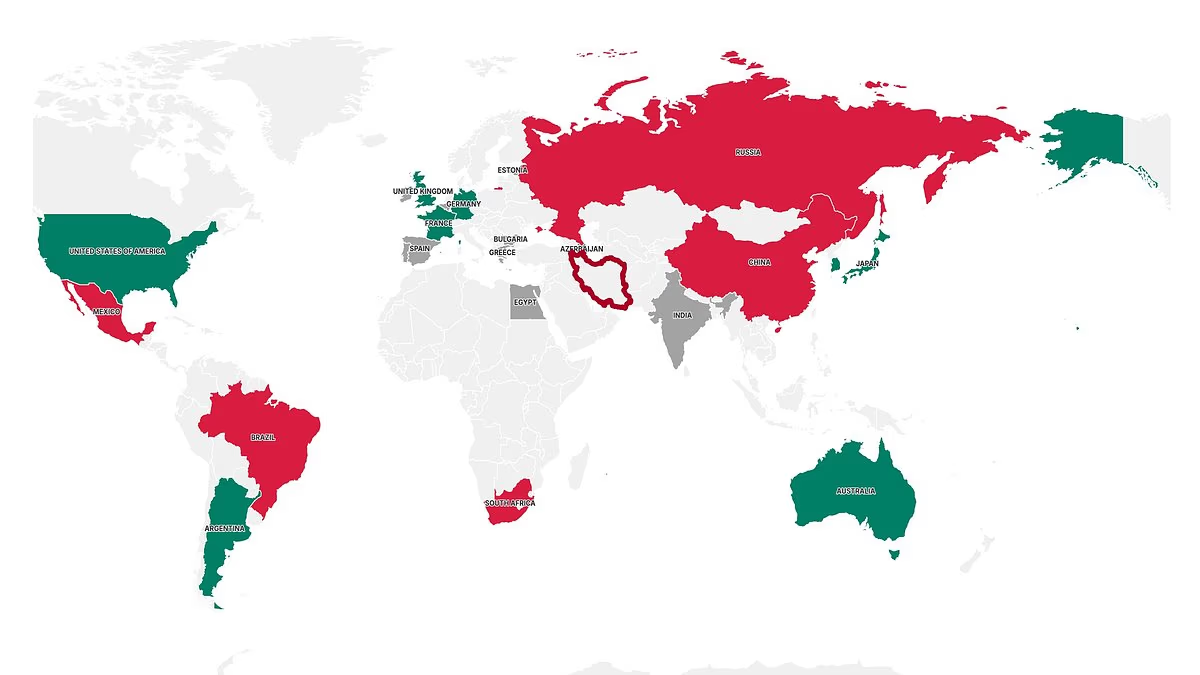
Military experts warn that the conflict involving Iran has reached a critical juncture, with some asserting that World War III has "never been closer." The current situation is described as a dangerous flashpoint, drawing stark divisions among global players. While some nations stand firmly with the United States, others are seen as privately backing Iran, despite official neutrality.
The escalating war has already exacted a significant toll, notably on global oil prices, causing volatility in markets. Reports indicate civilian casualties, with Bahrain confirming a woman killed in an Iranian attack on a residential building. Economic repercussions are a recurring theme, impacting the global economy and causing significant concern over the cost of living.
Shifting Alliances and International Condemnation
Official responses vary widely. Some leaders prioritize international law, condemning the US and Israel's strikes on Iran as a "war of choice." This sentiment is echoed by numerous international relations scholars who overwhelmingly oppose the US decision to attack Iran, suggesting the move was "ill-advised."
Read More: BBC Boss Tim Davie Quits in London After Donald Trump Video Edit Scandal in March 2024

On the other hand, nations like Japan and South Korea are described as "rock-solid US allies" and are positioned against Iran. Conversely, there are claims that South America, while officially neutral, will "privately support Iran."
Statements of Resolve and Unsettling Rhetoric
Amidst the heightened tensions, rhetoric from figures like Donald Trump has been noted. He has claimed the conflict would be over soon but that the US "hasn't won enough" yet, also threatening Iran with "fire and fury" over the Strait of Hormuz. Such statements have been met with a range of reactions, including claims that Trump is sending "mixed messages on the state of the Iran war."
Read More: Dubai Airport Drone Strike on Feb 28 2026 Halts Flights for Passengers
Meanwhile, Iran's new supreme leader, identified as the son of Ayatollah Ali Khamenei, has made symbolic gestures, including signing his name on a missile aimed at Israel.

A World on the Brink? Expert Opinions Diverge
Concerns are mounting about the potential for a wider conflagration. One former Nato commander has warned that US and Israeli strikes on Iran could serve as the "final catalyst for a third world war." In such a scenario, the involvement of major powers and their potentially catastrophic weaponry is a significant fear.
Other experts describe the current global climate as a "pre-war era," where miscalculation, hubris, or misunderstandings, alongside deliberate actions, could ignite a broader conflict. There is a concern that the US may be "sleepwalking" into such a situation, with warnings that the nation is "underprepared" and lacks sufficient leadership for the challenges ahead. The growing "cooperation and collaboration" between Russia, China, Iran, and North Korea is also cited as a serious concern, adding to the instability in both the Middle East and the Indo-Pacific.
Read More: Oil Prices Over $100 a Barrel After Iran Conflict, Trump Calls Critics 'Fools'
Background: A World of Intertwined Conflicts
The current crisis unfolds against a backdrop of existing global tensions. The 'pre-war era' assessment comes as analysts grapple with potential flashpoints beyond the Middle East. The involvement of Russia and China in joint military drills, for instance, signals broader geopolitical realignments. The ongoing conflict in Ukraine also remains a significant factor, with discussions about military aid and potential broader conflicts involving Nato members. The idea of a world war is framed by the potential for simultaneous conflicts in Europe, Asia, and the Middle East, all involving major powers equipped with devastating weapons.