
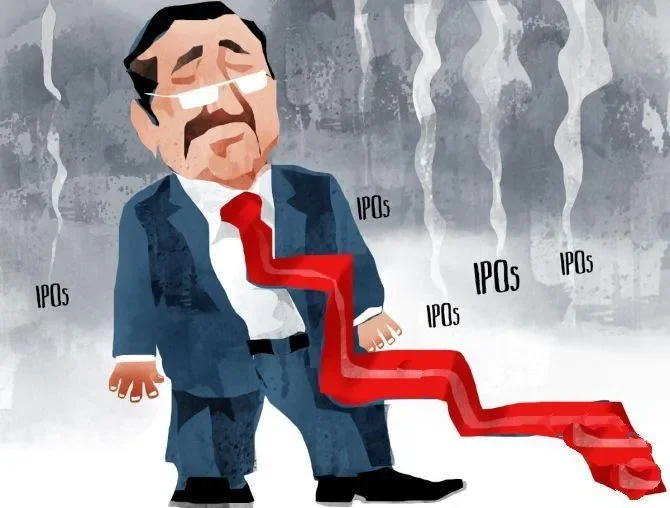
In a market landscape marked by a noticeable slowdown in initial public offerings (IPOs), investors are increasingly diverting capital towards yield-generating instruments like Real Estate Investment Trusts (REITs) and Infrastructure Investment Trusts (InvITs). This pivot underscores a growing preference for predictable cash flows and what are perceived as attractive returns, especially as the equity primary market experiences a lull. The trend is further amplified by recent regulatory shifts, notably the Securities and Exchange Board of India's (SEBI) reclassification of REITs as equity instruments. This move, aimed at enhancing liquidity and aligning Indian markets with global practices, has broadened their appeal, particularly for domestic mutual funds actively seeking stable income streams.
InvITs, too, are scaling up, serving as a crucial financing tool for infrastructure development. While specific returns for privately placed InvITs can be complex to calculate, publicly listed entities have presented a mixed picture. Nonetheless, the sector is experiencing significant capital inflow. For instance, Vertis Infrastructure Trust, backed by private equity major KKR, and Cube Highway Trust, an I-Squared Capital entity, are among those planning public floats. InvITs have distributed substantial amounts—over ₹78,000 crore since inception, with ₹10,000 crore disbursed in the first half of fiscal year 2026 alone. Projections suggest annual capital inflows into private InvITs could surge from an estimated ₹7,000–10,000 crore to ₹25,000–50,000 crore in the coming years.
Read More: Australia 2026 Budget: Tax Changes May Raise Capital Gains Tax Rates
SEBI's decision to classify REITs as equity was rooted in their "equity-like characteristics"—namely, higher liquidity, greater tradability, and closer alignment with international market norms. Globally, REITs are an established component of equity markets, and this reclassification is expected to improve liquidity and potentially lower the cost of capital for developers. The implications for investors are significant: mutual funds can now treat REITs as equity investments, which could unlock considerable inflows from equity-oriented schemes. This broadens the investor base beyond accredited investors participating through the flexible Alternative Investment Fund (AIF) framework.
Read More: Tim David fined 30% match fee for gesture after RCB win
Shifting Investor Allocations
The heightened interest in REITs and InvITs coincides with a broader investor search for stable income. While the equity primary market struggles, these yield-focused instruments offer a compelling alternative. This shift reflects a structural change in household savings, with a growing portion moving towards formal financial assets. Union Finance Ministry officials have emphasized that expanding platforms like REITs and InvITs is vital for fostering entrepreneurship, infrastructure development, and job creation in India.
Despite the increasing investor appetite, challenges persist. A key concern for InvITs remains their limited liquidity and subdued trading activity on stock exchanges. This can dampen investor enthusiasm, even though approximately 19 privately listed InvITs rarely see any transactions. Nonetheless, the operational performance of both InvITs and REITs has shown consistent improvement in recent years, making them an increasingly important asset class in investor portfolios.
Read More: Australia 2026 Budget: New Tax Rules for Property Owners Tonight
Market Dynamics and Future Outlook
The operational performance of InvITs and REITs has seen consistent improvement, making them attractive for a diverse range of investors, including companies, pension funds, and private equity players. The market is actively exploring ways to deepen capital pools for these instruments. For example, Vertis InvIT is considering a public listing to tap into these domestic markets. The cumulative road monetisation, bolstered by these structures, is expected to reach around ₹1.3 trillion, significantly exceeding previous figures and budgeted targets.
India's economic ascent, moving from the 10th to the 5th largest economy in five years, has created a fertile ground for capital market growth. With over 21 crore demat accounts now active across nearly all of India's pin codes, the formalization of savings is evident. REITs and InvITs are positioned to play a critical role in this ongoing transformation, providing essential mechanisms for capital mobilization required for the nation's developmental objectives.
Read More: Titans vs Sunrisers Ahmedabad: Who Wins Crucial Playoff Spot?
Background:
Real Estate Investment Trusts (REITs) and Infrastructure Investment Trusts (InvITs) are collective investment vehicles that own income-generating real estate or infrastructure assets. They allow individuals to invest in large-scale, income-producing real estate and infrastructure projects without directly owning the physical assets. Both operate similarly to mutual funds but focus on specific asset classes.

REITs typically invest in commercial real estate, such as office buildings, shopping malls, hotels, and industrial parks. They derive income from rent collection and property appreciation.
InvITs, on the other hand, focus on infrastructure assets like roads, power transmission lines, ports, and telecom towers. Their income is generated from toll collection, user fees, and asset usage charges.
The distinction between publicly-listed and privately-placed entities is crucial. Publicly-listed REITs and InvITs trade on stock exchanges, offering liquidity. Privately-placed versions are not publicly traded and often have limited liquidity, relying on secondary markets for transactions.
Read More: Michael Burry Warns of Nasdaq 100 Crash Soon
SEBI's recent reclassification of REITs as equity instruments signifies a move to harmonize Indian regulations with international standards, aiming to boost investor participation and market liquidity. This change allows mutual funds to classify their REIT holdings as equity, potentially driving significant capital inflows.