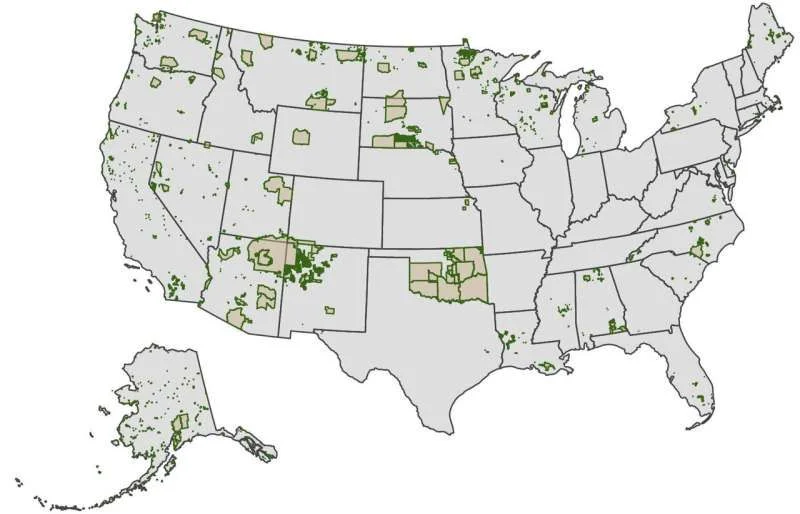
A significant majority of fatal police violence involving American Indian and Alaska Native (AIAN) individuals occurs on or within a ten-mile radius of reservations. This finding emerges despite AIAN populations comprising a smaller percentage of residents in these immediate areas. The research further indicates differences in policing practices and justifications for stops on tribal lands compared to off-reservation encounters.
Federal, state, and tribal law enforcement agencies are linked to the majority of these on-reservation deaths, while municipal and county police are more frequently involved in incidents occurring more than ten miles from reservations. An alarming observation from the data reveals that police provided no reason for stopping one in five individuals killed on reservations.
Geographic Disparities and Policing Patterns
The concentration of fatal police violence near reservations is striking. Roughly three out of four deaths (73%) involving AIAN people occurred on or within 10 miles of reservations, even though only about 40% of AIAN people live in these areas. This percentage increases to 50% when individuals identifying as multiracial AIAN are included.
Read More: State Commission reviews Dalit issues in Chittoor, Andhra Pradesh
This geographic clustering suggests a complex interplay of jurisdictional issues and policing strategies. While on-reservation incidents often involve federal, state, or tribal police, off-reservation fatal encounters (>10 miles away) are predominantly attributed to municipal and county police forces.
Underlying Factors and Future Inquiry
Researchers posit that "entrenched patterns of disinvestment in Indigenous communities, coupled with complex jurisdictional policing models and routine police harassment on tribal lands," may contribute to these heightened fatality rates. The study also notes a lack of transparency regarding fatal encounters, with law enforcement agencies sometimes denying requests for documents related to these incidents.
Future research is called for to explore the specific drivers behind this geographic disparity in deaths. Additionally, investigations are needed into the psychological and physical health impacts of fatal police violence on Indigenous communities. The potential effects of alternative approaches, such as Indigenous-led healing and wellness initiatives as substitutes for traditional policing in addressing crime and poverty, warrant examination.
Read More: University of Toronto Rescinds Buffy Sainte-Marie's Degree Over Ancestry Claims
Data and Methodology
The findings are based on analyses of data from the 'Mapping Police Violence' database and the U.S. Census Bureau. The research aims to highlight extreme racial and ethnic inequities in fatal police violence rates and understand how "structural racism shapes police violence risk."
The study's methodology specifically examined whether AIAN people living on or near reservations face elevated rates of fatal police violence compared to those residing further away. While the data focused on the U.S. mainland, it noted the absence of reported AIAN police violence deaths in Hawai'i during the study period.