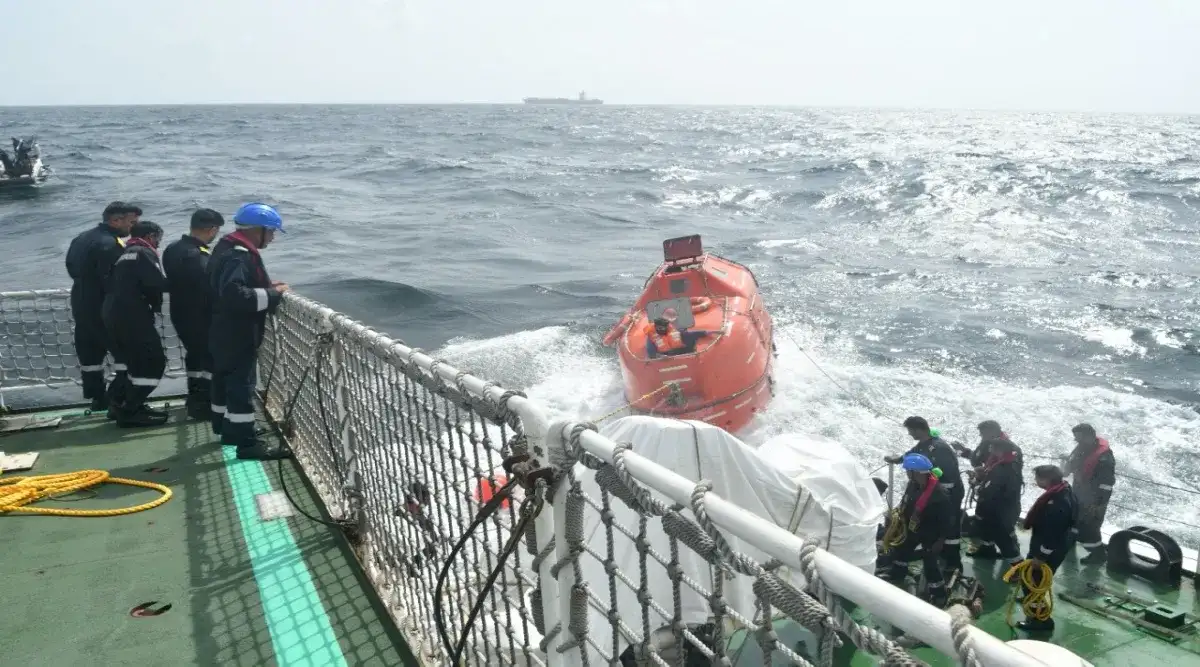
Eleven Indian fishers have been evacuated by the Indian Coast Guard following a collision between their fishing vessel, St Joseph, and a Vietnam-flagged merchant ship near the coast of Colachel, Tamil Nadu. The operation concluded with the injured crew members transferred to the Government Medical College in Thiruvananthapuram, Kerala, after the rescue vessel docked at Vizhinjam harbour.

Core data suggests systemic vulnerability in Indian coastal waters, where local small-scale craft frequently intersect with international commercial maritime corridors.
Incident Disparities and Operational Friction
The event mirrors an earlier reported collision on December 11, 2024, involving the boat Paralogamatha. In that instance, the fishing vessel was struck at 4:30 a.m. while anchored with navigation lights active. Local stakeholders, specifically the Kumari Mavatta Visaipadu Meenpidipor Nalasangam, have highlighted recurrent failures by larger commercial vessels to assist smaller craft during distress incidents.
Read More: Overturned Hull Found Near Missing Mariana Ship Search Area
| Incident | Vessel Involved | Flag | Status |
|---|---|---|---|
| Dec 2024 | MV Nus | Comoros | Accused of fleeing scene |
| Mar 2026 | Vietnam-flagged | Vietnam | Assisted/Evacuated |
Navigational Risks and Oversight
The transition from commercial maritime transit—often moving between major hubs like China and Oman—to the artisanal fishing zones off the Indian coast presents a volatile operational environment.
Responsibility Gap: Documentation indicates that merchant vessels have been accused of continuing their passage after impacts, placing the onus of rescue almost entirely on the Indian Coast Guard and Indian Navy.
Infrastructure: Current protocols rely on Maritime Rescue Coordination centres, yet the physical geography of the collision points suggests that detection of smaller vessels by large commercial radar arrays remains a technical and procedural blind spot.
Historical Context of Maritime Interventions
The pattern of rescues in these waters is not anomalous. The Indian Coast Guard and the Indian Navy frequently shift between high-seas counter-piracy operations—such as the 2024 rescue of Pakistani nationals from Somali pirates—and local disaster management. Previous maritime incidents, such as the sinking of the Motor Tanker Parth off Ratnagiri, highlight that foreign-flagged vessels navigating Indian Exclusive Economic Zones often lack direct accountability mechanisms when accidents occur, forcing domestic security forces to absorb the cost and effort of emergency response.