Observations on Relationships Before Marriage
The Indian Supreme Court recently commented on the nature of physical relationships before marriage, describing individuals in such situations as "strangers." This observation arose during a hearing for a bail plea where a man was accused of rape, claiming a false promise of marriage. The court's remarks suggest a cautious stance, questioning the basis of trust and physical intimacy when individuals are not yet married.
The court was hearing a bail plea of a man accused of rape.The man's defense involved a claim of marriage promise.Justices expressed surprise regarding pre-marital physical relationships.
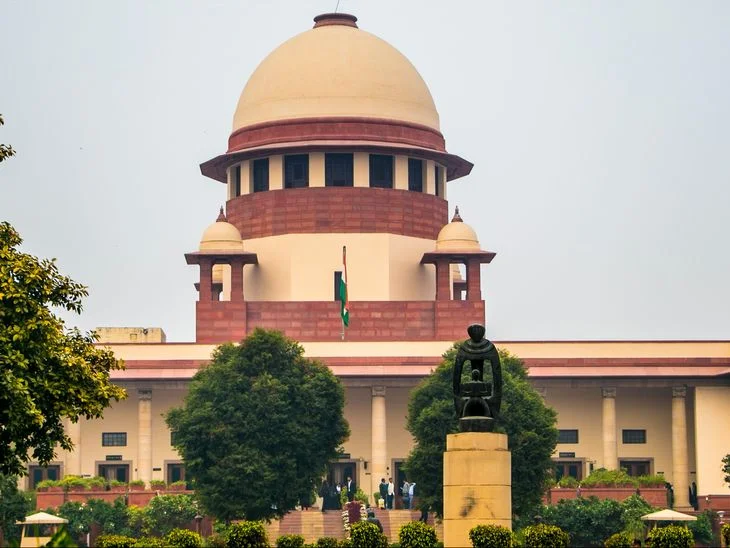
Context of the Hearing
The case involved a petitioner seeking bail. He is accused of engaging in physical relations with a woman based on a promise of marriage, a promise that was allegedly not fulfilled. The Sessions Court and the Delhi High Court had previously denied his bail applications.
Read More: BJP Says More Minority Votes in Local Elections
During the proceedings, Justice B.V. Nagarathna, alongside Justice Ujjal Bhuyan, reviewed the details. Justice Nagarathna specifically questioned the premise of physical intimacy between a man and a woman before marriage, stating, "We fail to understand how they can be indulging in physical relationship before marriage." She added that a boy and a girl are essentially strangers before marriage and that trust should not be assumed in such circumstances.

The petitioner is accused of rape based on a promise of marriage.Previous bail applications were dismissed by lower courts.Justices Nagarathna and Bhuyan presided over the hearing.Justice Nagarathna articulated surprise at pre-marital physical relations.
Court's Stance on Trust and Pre-Marital Relations
The Supreme Court's remarks indicate a view that the trust often associated with married couples should not be extended to individuals in a pre-marital physical relationship. The justices emphasized that before marriage, a man and a woman are to be considered as strangers.
Read More: Supreme Court to Decide on Women's Religious Place Entry

The court suggested that trust should not be assumed before marriage.
Individuals in pre-marital relationships were referred to as strangers.
Observations on Personal Choices
In a related query, Justice Nagarathna also questioned the woman's actions, specifically her travel to Dubai before marriage, implying it might be inconsistent with a strict adherence to marital customs. This question suggests an examination of the individuals' conduct and their stated beliefs regarding marriage.
Justice Nagarathna questioned the woman's travel to Dubai.The question implied a potential inconsistency in behavior.

Broader Legal Context
The Indian Supreme Court's comments come amidst broader discussions about personal relationships and legal interpretations. While these specific remarks were made within the context of a criminal case, they highlight judicial perspectives on the societal and personal dimensions of pre-marital intimacy.
The court's comments were made during a bail hearing for a rape accusation.The case involved allegations stemming from a broken promise of marriage.
Expert Commentary
Legal analysts observe that the court's statements may reflect a traditional viewpoint on marriage and relationships. However, the application of these views in legal proceedings can be complex, as the law often grapples with evolving societal norms and individual autonomy. The distinction between consent, coercion, and the nature of promises in relationships remains a focal point in such cases.
Read More: Player Likes Winning More Than Big Score
Legal observers note a potential reflection of traditional views.
The interplay of societal norms and legal interpretations is complex.
Consent and the nature of promises are critical in relationship cases.
Conclusion and Implications
The Supreme Court's remarks on pre-marital physical relationships serve as an advisory, urging caution. The court's characterization of individuals as "strangers" before marriage underscores a view that the established bonds and trust of matrimony are distinct. This perspective could influence how courts assess cases involving promises of marriage and subsequent allegations of misconduct.
The court advised caution regarding pre-marital physical relationships.
Individuals were characterized as strangers before marriage.
The statements may impact the evaluation of cases involving marriage promises.
Sources:
newsbytesapp.com: https://www.newsbytesapp.com/news/india/supreme-court-advises-caution-in-physical-relations-before-marriage/story (Published: 59 minutes ago)
bhaskarenglish.in: https://www.bhaskarenglish.in/national/news/supreme-court-physical-relations-before-marriage-strangers-trust-137221595.html (Published: 1 hour ago)
Read More: Supreme Court Looks at New Data Law and Your Right to Know