The Supreme Court of India has scheduled a pivotal hearing by a nine-judge bench to examine complex questions regarding women's access to religious places and the broader implications of religious freedom. This high-stakes legal proceeding, commencing on April 7, 2026, will revisit the controversial Sabarimala Temple entry case and extend to other petitions concerning discrimination against women within various religious communities. The outcome could significantly reshape the balance between individual rights, the rights of religious groups, and constitutional guarantees of equality in India.
Background of the Dispute
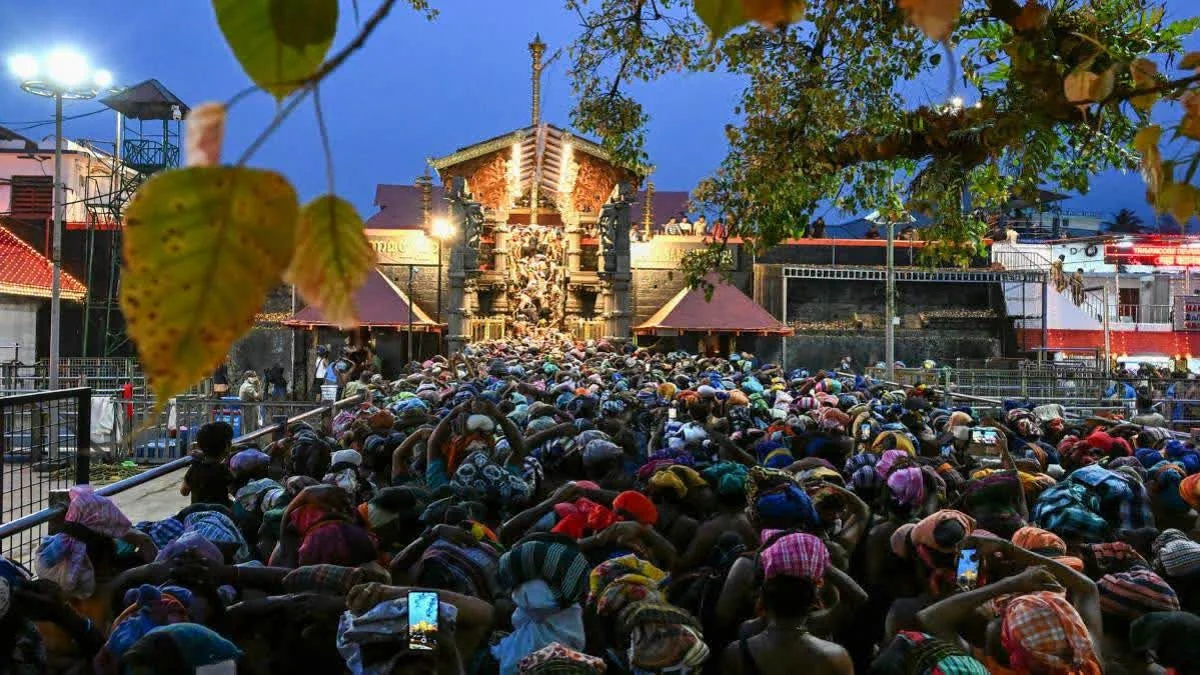
A series of legal challenges has brought to the forefront the issue of women's rights in religious contexts. Central to this is the Sabarimala Temple entry case in Kerala, where a previous Supreme Court decision had allowed women of all ages to enter the shrine. However, this ruling faced significant opposition and review petitions. Beyond Sabarimala, the nine-judge bench will also consider pleas related to:
Read More: India's Top Court Says People Are Strangers Before Marriage
The entry of Muslim women into mosques and dargahs.
The barring of Parsi women married to non-Parsi men from Agiaries (fire temples).
The practice of female genital mutilation among the Dawoodi Bohra community.
The court's intention is to address the interplay between Article 25 of the Constitution (freedom of conscience and religion) and Article 26 (freedom to manage religious affairs). This will involve clarifying the scope of religious freedom for individuals versus the rights of religious denominations to manage their own affairs.

The Legal Framework and Timeline
The Supreme Court has established a detailed schedule for the hearings, aiming for a thorough examination of the issues.
Written Submissions: All parties are required to file their written arguments by March 14, 2026.
Arguments - Supporting Review: The review petitioners and those who support the review of previous verdicts will present their arguments from April 7 to April 9, 2026.
Arguments - Opposing Review: Parties who oppose the review petitions will be heard from April 14 to April 16, 2026.
Rejoinder Submissions: Final rebuttals and additional submissions will be taken up on April 21 and April 22, 2026.
Read More: Supreme Court Looks at New Data Law and Your Right to Know
The court has appointed Krishna Kumar Singh as the nodal counsel for parties supporting the review of the Sabarimala verdict. Shashwati Pari has been appointed as the nodal counsel for those opposing the review. Senior advocates K Parameshwar and Shivam Singh have been appointed as amicus curiae (friends of the court) to assist the bench.
Broader Implications and Key Questions
The bench's deliberations are expected to have far-reaching consequences, impacting religious practices and women's rights across India. Key questions the court will grapple with include:
How should the court interpret the scope of fundamental rights concerning religious freedom?
What is the precise relationship between individual religious liberty and the collective right of religious groups to govern themselves?
To what extent can religious customs and practices be challenged on grounds of gender equality and non-discrimination?
Read More: India Holds Big AI Meeting to Talk About Deepfakes
The Solicitor General, appearing for the Centre, has indicated support for the review of the Sabarimala verdict, suggesting the government's stance in this complex matter. The proceedings aim to provide a definitive interpretation that could guide future cases and influence societal norms regarding women's roles within religious institutions.
Evidence and Filings
The Supreme Court's directives for written submissions by March 14, 2026, indicate that parties are expected to present comprehensive legal arguments and any supporting documentation. The appointed nodal counsels and amicus curiae will play a crucial role in organizing and presenting these submissions effectively to the nine-judge bench.
Nodal Counsel (Supporting Review): Krishna Kumar Singh
Nodal Counsel (Opposing Review): Shashwati Pari
Amicus Curiae: K Parameshwar, Shivam Singh
The Centre, through the Solicitor General, has indicated its support for reviewing the Sabarimala verdict, a position that will likely be formally articulated in their submissions.
Sources Used
Hindustan Times: https://www.hindustantimes.com/india-news/9judge-sc-bench-to-hear-pleas-on-discrimination-against-women-at-religious-places-101771223251281.html - Provides an overview of the bench's formation and hearing schedule.
Rediff: https://www.rediff.com/news/report/9-judge-sc-bench-to-hear-sabarimala-women-entry-plea-in-april/20260216.htm - Highlights the scope of religious freedom under Article 25 and 26 to be examined.
ETV Bharat: https://www.etvbharat.com/en/bharat/supreme-court-9-judge-bench-to-hear-sabarimala-reference-issues-from-april-7-enn26021602165 - Details the specific dates for arguments and rejoinder submissions.
Law Trend: https://lawtrend.in/supreme-court-sets-clock-for-sabarimala-review-9-judge-bench-to-begin-marathon-hearings-on-april-7/ - Emphasizes the strict timeline and pre-hearing directives.
Onmanorama: https://www.onmanorama.com/news/kerala/2026/02/16/sabarimala-temple-women-entry-supreme-court-nine-member-bench.html - Confirms the hearing start date and the appointment of a nodal counsel.
CNBC TV18: https://www.cnbctv18.com/india/sc-says-9-judge-bench-will-hear-pleas-on-discrimination-against-women-at-religious-places-from-april-7-ws-l-19850911.htm - Mentions the impact on other cases, including those involving Muslim and Parsi women, and the Dawoodi Bohra community.
Deccan Herald: https://www.deccanherald.com/india/supreme-courts-9-judge-bench-to-hear-petitions-seeking-sabarimala-verdict-review-from-april-7-3900413 - Provides information on the review petitions for the Sabarimala verdict.
Read More: Women Face Health Risks and Prison for Abortion Denials