)
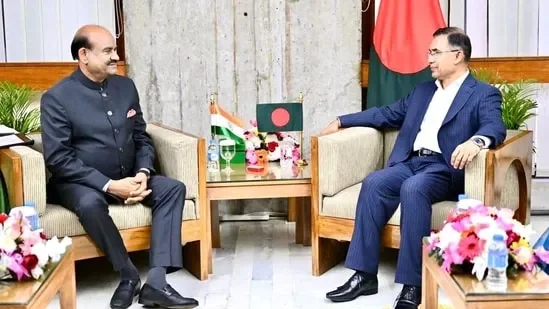
India has moved to re-establish high-level diplomatic ties with Bangladesh following the swearing-in of Tarique Rahman as Prime Minister. On February 17, 2026, Lok Sabha Speaker Om Birla traveled to Dhaka to represent the Indian government at the ceremony. During this visit, Birla delivered a formal letter from Prime Minister Narendra Modi. The letter congratulated Rahman on his party's win and invited him to visit New Delhi. This event marks a significant change in how the two neighbors interact. For the past 18 months, official contact was limited while an interim government held power. The invitation suggests that India is ready to work with the new administration to improve a relationship that has recently been difficult.
Transition of Power in Dhaka
The swearing-in follows the general elections held on February 12, 2026, where the Bangladesh Nationalist Party (BNP) secured a two-thirds majority.
Read More: Taiwan Holds Nantou County Drills to Prepare for State Collapse
Timeline: The results were declared on February 13, leading to the fast formation of a new government.
The Ceremony: In a break from tradition, the event took place at the South Plaza of the Jatiya Sangsad (Parliament) instead of the President's house.
Key Actors: President Mohammed Shahabuddin administered the oath to Tarique Rahman and his 49-member cabinet.
The Cabinet: The new government includes 25 cabinet ministers and 24 state ministers, including representatives from minority communities.
"India stands ready to support Bangladesh's efforts to build a democratic, progressive, and inclusive nation." — Om Birla, Speaker of the Lok Sabha.
Evidence of Diplomatic Outreach
Investigative records and official statements confirm a direct effort by New Delhi to normalize relations.
| Type of Evidence | Details |
|---|---|
| Official Correspondence | A personal letter from PM Modi to Tarique Rahman was delivered by hand. |
| Direct Invitation | The letter invited Rahman, his wife Dr. Zubaida, and daughter Zaima to India. |
| Public Statements | Om Birla posted on social media (X) confirming a "constructive meeting" with the new PM. |
| Regional Context | Birla also met with leaders from the Maldives and Bhutan on the sidelines of the event. |
India’s proactive stance is highlighted by the speed of the invitation, sent only four days after the election results were finalized.
Shift in Diplomatic Engagement
The Indian government had not held high-level talks with Dhaka for nearly 18 months. During that time, Nobel laureate Muhammad Yunus led an interim government. Analysts noted that New Delhi viewed the interim administration as unelected, which led to a "cooling" of ties.
The question remains: will the transition from an interim body to a mandate-backed government resolve previous security and strategic disagreements?
Some reports suggest the previous 18 months saw a "downturn" in cooperation, which this visit seeks to fix.
Internal Political Balance
While the BNP won a landslide, the internal political landscape is complex.

The Jamaat-e-Islami party reportedly achieved its best-ever performance in the polls.
Some groups, such as the Jamaat Ameer, have claimed the current transition ignores the "July Uprising" that led to the exit of former leader Sheikh Hasina.
In a move to show continuity, the new government inducted Khalilur Rahman, a security adviser from the interim regime, as a technocrat minister.
Regional Competition for Influence
India is not the only regional power moving quickly to engage with Tarique Rahman.
Chinese Premier Li Qiang sent a congratulatory message through the Chinese Embassy.
Representatives from Pakistan also attended the ceremony.
This competition suggests that the new government in Dhaka will have multiple options for international partnerships.
Expert Analysis
Experts suggest that the invitation is a strategic move to protect India's interests. Political analysts cited by LiveMint indicate that the invitation is an "opportunity to stop the relations from getting worse."
Read More: Tibetan Permafrost Thaw Releases Ancient Carbon, Risks Climate Tipping Point

Riaz Hamidullah, Bangladesh’s High Commissioner to India, stated that both leaders are looking for "people-centric" cooperation. He noted that Rahman expressed a strong interest in strengthening ties with New Delhi.
However, some observers point to the presence of Sheikh Hasina in India as a potential point of tension. Since she is currently in self-exile there, the new BNP government may eventually raise questions regarding her status, though no official requests have been made yet.
Findings and Implications
The investigation into recent events reveals a clear attempt by both nations to move past recent tensions.
Strategic Pivot: India has signaled it will work with the BNP despite historical preferences for the Awami League.
Stability Over Ideology: The focus of the meeting between Birla and Rahman was on "peace, stability, and prosperity," suggesting a pragmatic approach to neighborhood policy.
Inclusivity: The inclusion of minorities in Rahman's cabinet may be a signal to India regarding the safety of Hindus and other groups in Bangladesh.
Next Steps: The diplomatic community is now waiting for Tarique Rahman to accept the invitation. A visit to New Delhi would likely involve discussions on trade, border security, and the status of transit agreements established under the previous administration.
Read More: FBI Analysts Review Georgia 2020 Election Data in Fulton County
Used Sources and Context
Zeenews India: Details on Om Birla delivering the invitation and the inclusion of Rahman's family. Link
LiveMint: Context on the 18-month gap in relations and the role of the interim government. Link
NDTV: Specific quotes from PM Modi's letter and details on Rahman's return from exile. Link
India Today: Information on the 49-member cabinet and the presence of foreign dignitaries like the Chinese Premier. Link
The Hindu: Report on Birla's meetings with other regional leaders (Maldives, Bhutan) in Dhaka. Link
Hindustan Times: Confirmation of Om Birla’s social media statements regarding the "constructive meeting." Link