


The agency created after 9/11 for national security now finds itself at the center of a complex and often heated discussion about immigration in the United States.
The U.S. Immigration and Customs Enforcement (ICE) agency was established in 2003 as part of a larger government reorganization following the September 11, 2001 terrorist attacks. Its initial purpose was tied to national security, with a focus on counterterrorism and border control. However, over time, ICE's role has evolved, making it a prominent player in immigration enforcement and a subject of considerable public debate and political attention.
Origins and Evolution of ICE
Following the September 11th attacks, the U.S. government underwent a significant restructuring to address national security concerns. This led to the creation of the Department of Homeland Security (DHS) in 2003, consolidating various agencies. Within DHS, the Bureau of Immigration and Customs Enforcement was formed, later becoming U.S. Immigration and Customs Enforcement (ICE).

Post-9/11 Mandate: ICE was granted a blend of civil and criminal enforcement powers. Its stated mission was to promote homeland security and public safety through enforcing federal laws related to border control, customs, trade, and immigration.
Reframing Immigration: The events of 9/11 influenced how immigration was viewed by the government. A connection between immigration and law enforcement, particularly in the context of counterterrorism, intensified.
Agency Structure: ICE now comprises more than 20,000 personnel and operates through various directorates, including those focused on Homeland Security Investigations (HSI) and Enforcement and Removal Operations (ERO). HSI's mission extends beyond immigration, involving criminal investigations.
The Shifting Focus: From Security to Immigration Enforcement
While initially shaped by a national security imperative, ICE's operations and public perception have increasingly centered on immigration enforcement.
Read More: Cabinet Office Receives Warnings About Antonia Romeo's Past Conduct Before Top Job

Dual Mission: ICE operates with a dual mission of civil immigration enforcement and criminal investigation. This includes conducting workplace and residential raids.
Enforcement Actions: The agency is known for its extensive use of immigration detention, which has sometimes included indefinite detention.
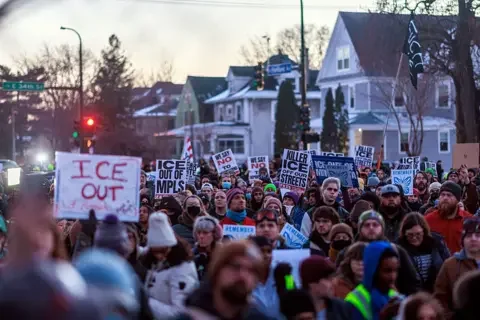
Public Response: ICE's enforcement actions, including raids and detentions, have drawn significant opposition and protests, sometimes leading to disorder. Critics have raised concerns about tactics, including agents wearing masks during operations.
Congressional Oversight and Operational Autonomy
The degree of congressional involvement in managing ICE's operations has been a point of discussion.

Historical Autonomy: For a significant period after its formation, ICE operated with considerable autonomy in defining its operational methods, with Congress providing direction but not granular management.
Increased Scrutiny: Frustration with ICE's operations has led to increased congressional interest and calls for new guardrails and direct intervention in the agency's practices. This is particularly evident in ongoing debates surrounding DHS funding.
Areas of Controversy and Criticism
ICE has become a focal point for debates surrounding immigration policy, leading to criticisms of its practices.
Detention Conditions: Concerns have been raised regarding detention conditions and the long-term use of detention facilities.
Enforcement Tactics: The methods used in immigration raids and arrests have been a source of controversy, with accusations of heavy-handedness.
Perception of Immigration: A broader debate exists about whether the post-9/11 view of immigration primarily as a national security threat is appropriate and effective.
Expert Perspectives
John Sandweg, a former acting director of ICE and former general counsel for DHS, noted that while Congress occasionally provided direction, it largely stayed away from managing ICE's day-to-day operations.
Jessica Vaughan, director of policy studies at the Center for Immigration Studies, has indicated that ICE officials historically aimed to distance themselves from purely immigration enforcement duties.
Other perspectives suggest that immigration enforcement has always been a core focus of the agency since its inception.
Conclusion: A Complex Legacy
ICE's journey from a post-9/11 counterterrorism-focused agency to a central figure in the national immigration debate is marked by its evolving mandate, operational methods, and the public's response. The agency's dual role in homeland security and immigration enforcement continues to place it at the intersection of national security concerns and the complexities of immigration policy, fueling ongoing discussions about its powers, practices, and place within the U.S. government.
Sources Used:
The Conversation: https://theconversation.com/how-the-9-11-terrorist-attacks-shaped-ices-immigration-strategy-275313 - Provides context on the link between 9/11 and ICE's formation, including the reframing of immigration as a national security issue.
Iconic Africa Magazine: https://www.iconicafricamagazine.org/how-ice-evolved-from-post-9-11-security-force-to-immigration-battleground/ - Discusses ICE's evolution, congressional oversight, and differing views on its primary focus.
GovFacts.org: https://govfacts.org/immigration/immigration-enforcement/an-overview-of-u-s-immigration-and-customs-enforcement-ice/ - Offers an overview of ICE's dual mission and mentions enforcement operations and public reputation.
ICE.gov: https://www.ice.gov/history - Official history detailing ICE's creation within DHS after 9/11 and its granted authorities.
BBC News: https://www.bbc.com/news/articles/cp80ljjd5rwo - Covers opposition faced by ICE, its powers, and its operational areas.
Brewminate: https://brewminate.com/the-2003-founding-of-ice-and-the-reimagining-of-american-immigration-enforcement/ - Explains the 2003 founding of ICE and the redefinition of immigration enforcement as part of homeland security.
The Week: https://theweek.com/crime/ice-americas-controversial-immigration-enforcement-agency - Describes ICE as a controversial agency, mentioning its prioritization of removing non-citizens with criminal offenses and partnerships with other law enforcement bodies.





