Bengaluru, India – High-level defense discussions between India and France are set to take place, with the joint production of the HAMMER missile system being a central point of agenda. The upcoming sixth India-France Annual Defence Dialogue, co-chaired by Indian Defence Minister Rajnath Singh and French Minister of the Armed Forces and Veterans Affairs Catherine Vautrin, signals a significant step in the deepening strategic relationship between the two nations. This meeting follows a series of agreements and discussions aimed at enhancing defense industrial collaboration and expanding military-to-military cooperation.
Strategic Importance of the Dialogue
The India-France Annual Defence Dialogue serves as a structured ministerial-level forum to review and guide ongoing defense and security cooperation. This year's dialogue, held in Bengaluru, is particularly notable as it marks Catherine Vautrin's first visit to India since assuming her ministerial role. The long-standing defense relationship between India and France is considered a vital component of their bilateral ties. Beyond the HAMMER missile discussions, the meeting is also expected to address the reciprocal deployment of officers between the Indian Army and French Land Forces, further cementing military exchanges.
Read More: India's Defence Ministry approves ₹52,000 crore on Friday for new Army and Navy tech

The dialogue highlights a commitment to expanding industrial collaboration and strengthening defense partnerships.
Background of HAMMER Missile Collaboration
The move towards joint HAMMER missile production in India is an extension of existing defense cooperation. A Joint Venture Cooperation Agreement (JVCA) was signed in November 2025 between India's state-run Bharat Electronics Limited (BEL) and France's Safran Electronics and Defence (SED). This agreement formalizes the intent to manufacture the Highly Agile Modular Munition Extended Range (HAMMER) smart precision-guided air-to-ground weapon system within India.
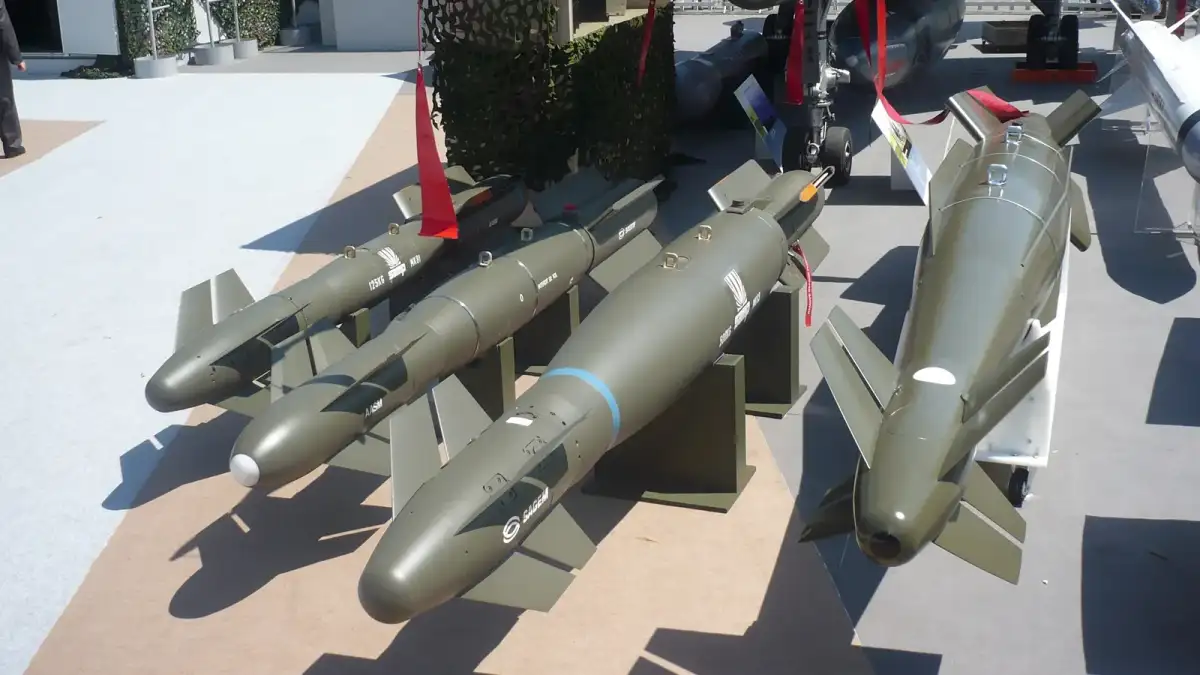
The HAMMER system, also known as a glide bomb, possesses a range of up to 70 km.
Its modular design allows adaptation to various bomb weights, including 250kg, 500kg, and 1,000kg.
The weapon is designed for high accuracy, resistance to jamming, and the ability to penetrate hardened targets.
It is combat-proven and currently in use with French Rafale aircraft.
The JVCA between BEL and Safran is foundational to the localized production of HAMMER missiles.
"Make in India" Initiative Boosted
The joint production of the HAMMER missile is seen as a significant boost to India's "Make in India" defense initiative. This collaboration aims to increase local content in defense manufacturing, with plans to raise it to 60% over time, involving the local production of key sub-assemblies, electronics, and mechanical parts. The BEL-Safran JV will be responsible for the manufacturing, supply, and maintenance of HAMMER munitions in India. This localization is expected to meet the operational needs of the Indian Air Force and Navy, enhancing India's precision-strike capabilities across multiple platforms, including the Rafale, Rafale-M, and the indigenous Light Combat Aircraft (LCA) Tejas.
Read More: India IVF Costs And Social Barriers Limit Access In April 2026

Increased Self-Sufficiency: Reduces reliance on foreign imports for critical defense systems.
Technology Transfer: Facilitates the transfer of advanced manufacturing technologies to India.
Job Creation: Stimulates employment opportunities in India's defense manufacturing sector.
Operational Readiness: Ensures a consistent supply of advanced weaponry for the Indian armed forces.
Localizing HAMMER production is a strategic move aligning with India's defense self-reliance goals.
Expanding Defense Cooperation
The HAMMER missile joint production is part of a broader expansion of defense ties between India and France. The upcoming dialogue is also slated to discuss the renewal of the defense cooperation agreement for another ten years. This demonstrates a long-term commitment to strengthening the strategic partnership. Military-to-military engagement is a persistent feature, evident in regular bilateral exercises like Shakti (army), Varuna (navy), and Garuda (air force). These exercises form the operational backbone of the defense relationship.
Read More: India Approves ₹52,000 Crore Military Hardware Deals

Reciprocal Officer Deployment: Expected announcement regarding the stationing of officers at each other's military establishments.
Renewed Defense Pact: Continuation of the ten-year defense cooperation agreement.
Bilateral Exercises: Ongoing joint military exercises fostering interoperability and understanding.
The comprehensive nature of the defense cooperation extends beyond hardware to personnel exchanges and strategic agreements.
Future Implications and Outlook
The joint manufacturing of the HAMMER missile and the broader strengthening of defense ties with France are expected to have several key implications for India's defense posture. It bolsters India's capacity for precision strikes and enhances its strategic objectives of self-sufficiency in defense manufacturing. The phased transfer of production, with BEL leading final assembly, testing, and quality assurance, indicates a structured approach to integration. As India continues to diversify its defense partnerships and pursue indigenous manufacturing capabilities, collaborations like the one with France are crucial for achieving its long-term defense goals.
Read More: Tamil Cinema Loses K. Bhagyaraj and Bharathiraja, Ending An Era
The collaboration with France on HAMMER missiles is a testament to the evolving defense landscape in India and the growing strategic alignment between the two nations.
Sources Used:
Article 3: HAMMER co-production, defence pact extension on agenda at India-France defence talks
Article 4: India, France to jointly manufacture HAMMER air-to-ground weapons
Article 5: India, France to sign MoU for joint production of hammer missiles - The Tribune
Article 7: India, France to co-produce HAMMER weapons as BEL–Safran ink JV pact
Article 10: BEL & Safran Sign JV to manufacture HAMMER Precision Weapon in India | DD News On Air