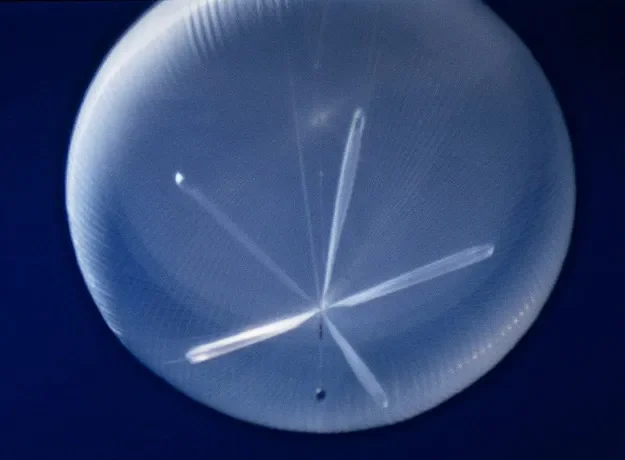
Hyderabad, India - Red Balloon Aerospace (RBA) conducted a trial run of what it claims is India's first indigenous stratospheric super-pressure balloon system on May 13 in Vijayawada. The company states this trial precedes a full launch planned for later this year.

The trial involved testing instruments and payloads, with all associated missions reportedly completed. This development signals a move towards indigenous capabilities in high-altitude balloon technology, a platform RBA suggests can be adapted for various applications.
Balloon System Potential
The company outlined potential uses for the balloon system, including:
Telecommunications
Disaster response
Scientific research
Earth observation
Commercial payload operations
“The main launch is imminent,” stated Dr. C.V.S. Kiran, co-founder and chief executive officer of Red Balloon Aerospace.
Technological Foundation and Ecosystem
Sireesh Pallikonda, Co-founder and Chief Operating Officer of RBA, noted that their VISTA super-pressure balloon systems form the basis for future HELIX airship platforms. The company views the growing Indian aerospace ecosystem as offering significant opportunities for such near-space systems, intended to support strategic, scientific, and commercial needs. The project is presented as reflecting a commitment to a safety-first development approach and building local expertise.
Read More: AI Agents Fail Safety Tests, Risk Digital Disasters
Historical Context: Red Bull Stratos
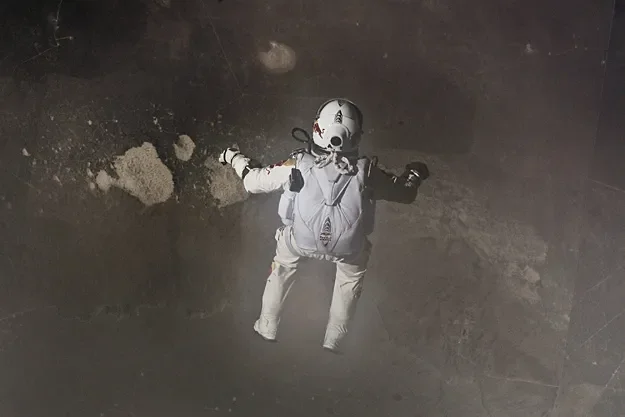
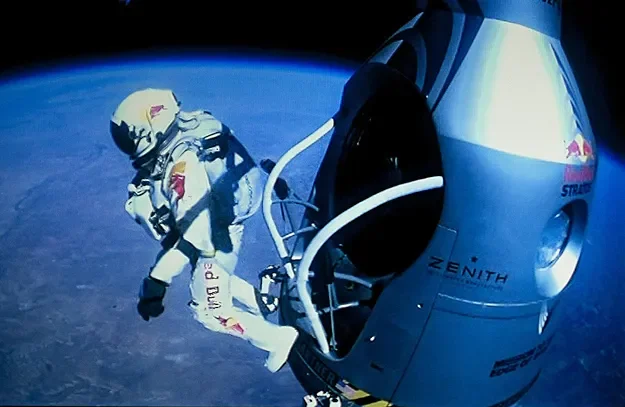
This recent trial echoes earlier high-altitude endeavors, most notably the Red Bull Stratos project. In October 2012, Felix Baumgartner famously jumped from the edge of space after ascending in a helium-filled balloon to an altitude of approximately 39,045 meters (128,100 feet). This event, which aimed to push the boundaries of human capability and advance aerospace knowledge, resulted in Baumgartner breaking several world records, including the highest exit altitude and highest vertical speed in freefall. The Red Bull Stratos mission also explored high-altitude escape systems, the effects of supersonic velocity on the human body, and new technologies for space suits and medicine.
The Red Bull Stratos endeavor, launched from Roswell, New Mexico, involved a team of experts including a Space Shuttle crew surgeon and an Air Force test pilot. It captured global attention and reignited discussions around space tourism and human exploration.
Read More: Jaipur Express Fire at Nampally Station Causes Smoke
Emerging Stratosphere Tourism
Beyond specific projects, the concept of using high-altitude balloons for tourism has been gaining traction. Companies have explored designs for passenger cabins intended to take individuals to the stratosphere, offering views of Earth from altitudes around 30 kilometers. These ventures position balloon flights as a form of premium space travel, with ascent times typically ranging from one to two hours, followed by several hours at altitude before descent.