The integration of artificial intelligence (AI) is rapidly reshaping how water resources are monitored, managed, and protected. This shift promises to enhance efficiency and resilience in the face of climate change, pollution, and growing demand, according to a body of recent research. However, concerns are surfacing about the significant 'water footprint' of the very technologies driving this digital transformation.
AI offers new tools for managing water quality, allocation, and climate adaptation, yet the infrastructure powering AI demands considerable water resources.
A burgeoning field of study highlights AI's potential across the entire water cycle. Innovations span:
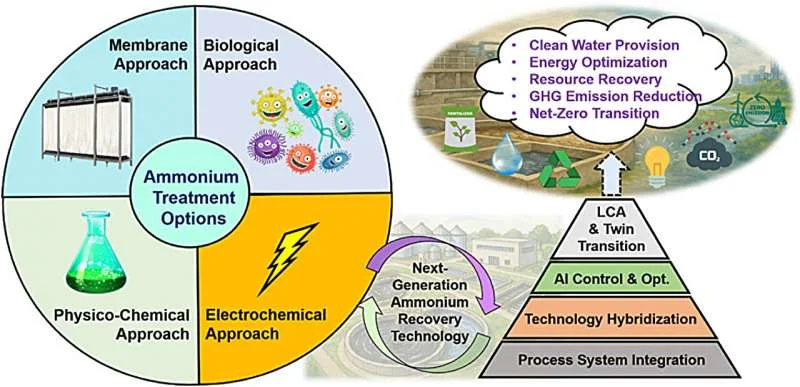
Intelligent Water Treatment: Systems that can learn, adapt, and optimize themselves in real-time, offering a departure from rigid, manual processes. AI can enable automatic adjustments to treatment protocols, particularly crucial during emergency responses to natural disasters threatening water quality.
Precision Agriculture and Irrigation: Optimizing water use in farming through smart irrigation techniques.
Watershed and Groundwater Monitoring: Enhanced oversight of both surface and underground water reserves.
Policy and Decision Support: AI-driven systems aim to aid in formulating effective water policies and making informed decisions on resource allocation and governance.
Flood and Drought Management: Tools for better prediction and response to extreme weather events.
Digital Twins: Virtual replicas of water systems that allow for simulation and optimization of infrastructure.
These advancements are detailed in various academic and industry publications, including the book "AI Innovation for Water Policy and Sustainability" and discussions within the 'MDPI Water' special issue on AI. This digital transition is seen as essential as water demand escalates and resources face increasing pressures.
Read More: PC Gamers Delay Upgrades Due to High Prices
The Unseen Water Cost of AI
While AI presents solutions for water challenges, its own operational demands raise critical questions. Research examining the 'water footprint of AI' points to significant freshwater consumption by data centers, which are the backbone of these digital innovations.
Data centers, particularly hyperscale facilities, rely on water-intensive cooling systems. This consumption can intensify localized water stress, especially in arid regions, creating competition for scarce resources.
The water use associated with AI can be categorized into three key areas:
Direct Consumption: Water used directly in cooling systems to dissipate heat generated by servers.
Indirect Electricity Use: The water embedded in the production of the electricity that powers these data centers.
Indirect Hardware Embodiment: Water consumed during the manufacturing of the physical components (chips, servers, etc.) used in AI infrastructure.
This reality necessitates a multidisciplinary approach to AI governance, aligning technological progress with sustainable water stewardship. Key priorities include fostering cooling technology innovation, improving AI model efficiency through compression and algorithmic refinement, and integrating data center planning within broader regional water management strategies. Transparency regarding water usage at both the infrastructure and AI model levels is also deemed crucial.
Read More: Switch to Solid Bars To Cut Bathroom Plastic Waste
Uneven Digital Adoption
The global adoption of these digital water innovations is not uniform. Varying economic conditions, regulatory landscapes, and specific water-related challenges contribute to differing rates of uptake across regions. Despite these disparities, the overarching trend points towards a future where smarter, more digitalized water systems are fundamental to managing our most precious resource.
Background
The convergence of artificial intelligence and water management is a recent development gaining significant traction. Publications exploring this nexus have appeared throughout 2024 and 2025, with ongoing discussions in early 2026. This reflects a growing awareness of both the potential benefits AI offers to address water scarcity and pollution, and the environmental costs associated with the underlying digital infrastructure. Authors like Manish Kumar Goyal, Sachidanand Kumar, and Akhilesh Gupta have contributed to codifying AI's role in water policy, while organizations like Veolia Institute and Schneider Electric blog are exploring practical applications and implications. The journal MDPI Water has dedicated special issues to the topic, underscoring its academic importance.
Read More: Why Generative Engine Optimization Matters for PR in May 2026